Tips for co-packer selection and preparation: Part 2
 Print
 Email
How to select and hire a contract packaging or contract manufacturing company to process and package your food or beverage product.
As was mentioned in “Tips for co-packer selection and preparation: Part 1” article, sometimes the capital and responsibility of a new food production facility are beyond your capacity or you need to focus your limited time and financial resources on marketing and sales instead of production.
Due to this, you may decide to hire a co-packer, known as a contract packaging or contract manufacturing company, to process and package your food or beverage product. Co-packers can be processing companies that have excess processing capacity or a company that only processes products for other companies. Below are additional tips to selecting the best co-packer to match your needs.
Packaging services
Labeling, packaging, and palletizing
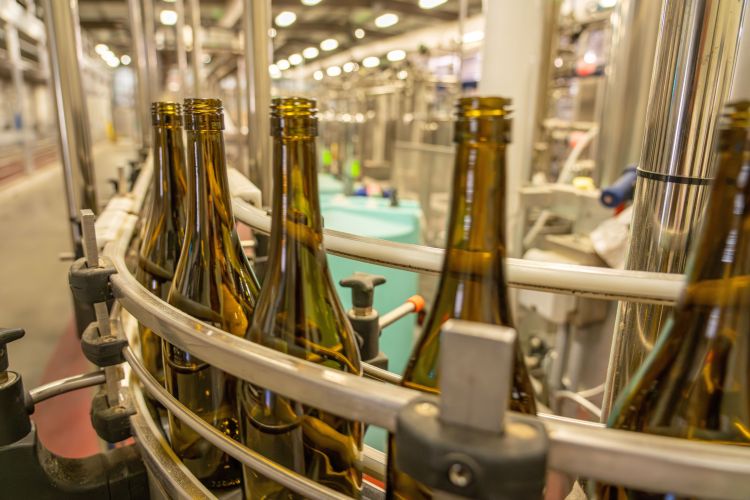
Each co-packer will have specific equipment for packaging, as covered by Brady et al. in the University of Arkansas research bulletin, “Choosing and Using a Co-Packer.” Based on this equipment, the co-packer may only be able to package certain types, sizes and shapes of containers. Make sure the co-packer has a packaging solution that meets your needs. Can the co-packer source the package and at what price, compared to your source?
Just like packaging, Brady et al. highlights that each co-packer also has specific equipment and a process for labeling. Determine if the co-packer can refer you to a labeling company, if they require you to use their labeling company or if they will be able to run your current labels on their machines.
Consider:
- Does the co-packer provide additional services like developing Nutrition Facts labels?
- Do they have access to a lawyer for label reviews if needed?
- Will the co-packer cover any costs for improper labeling should they experience malfunctions with their machine?
If any retail buyers of your product have specific needs related to the size or wrapping of your pallet, Brady et al. suggests having a discussion about this with the co-packer and put it in writing in the contract. Many co-packers will know how to palletize your product in a way that meets most industry requirements.
Storage, distribution and marketing
Storage and distribution of finished product
Once the product is packaged and labeled, you as the product owner are usually responsible for storing the finished product and paying for distribution. Some co-packers have storage that you can rent on a weekly or monthly basis. Identify which distributors pick-up product there and learn more about them to understand if they fit your needs.
Before any product run is approved, make sure you know where and how long you will store your product, as well as who will ship it and when.
Buyers and brokering services
Marketing your product in the wholesale market is one of the most time consuming and challenging aspects of a food business. Since co-packers already have industry contacts, you should ask the co-packer which buyers and brokers they could introduce you to in order to market your product to retail chains and/or institutional markets, as recommended by Stephen F. Hall in the resource, “Sell Your Specialty Food.” Discover whether this service is provided for an additional fee or is included in your contract.
Costs, insurance and the contract
Payment structure and total cost
Working with a co-packer requires some significant capital upfront. Ask the co-packer for a quote of what the initial costs will be and whether that is to duplicate your recipe once or the cost of a minimum run. The cost will be different per type of product and per co-packer.
For example, if the minimum run for a sauce product is 400 cases and you have 12 units in a case, this equals 4,800 units of product that will be produced. Make sure you understand the total units set to be produced and the cost.
It is not unusual that the package and label will end up costing more than the ingredients, according to “Choosing and Using a Co-Packer” by Brady et al. Regardless of whether you are paying for ingredients, packaging, labeling or finished product, remember that the larger the order, the lower the overall unit price.
Ensure that the co-packer can provide you with the case cost for your product in writing before the product is produced. Understand what the payment policy will be. Normally 50% down is required when the order is placed and the balance is due in full before the co-packer will release your product.
Other co-packers may ask for 10% down. Regardless of the initial amount required, do not pay in full up front. You will have little recourse if you are dissatisfied with the product.
Insurance
Most food retailers and restaurants require liability insurance on products they purchase. Check to see if the co-packer will list your company as an additional insured party, which would allow your product to be covered by their insurance policy. There is normally a small fee for this, but it will give you the required coverage and save you a significant amount of money compared to buying your own liability insurance.
Written agreement
A written agreement greatly decreases the chances of a misunderstanding. Items to discuss with an attorney and/or accountant are:
- Regulatory compliance of the co-packer
- Ingredient specifications
- Quality control and monitoring by the co-packer
- Completion/delivery dates by the co-packer and liability issues
Make sure the agreement covers, at a minimum, these six points (if not more):
- Business parties involved
- Quantity of the product to be produced
- Recipe and process requirements
- Quality of the product to be produced with the specifications noted
- Price to be paid and the related manner of payment and deadlines
- Deadline for production completion
Finally, the Oklahoma State University “Food Processing Using a Co-Packer” fact sheet by Rodney Holcomb and Robert Kerr recommends having your attorney and/or accountant review the contract before signing to ensure the agreement is satisfactory to legally and financially protect you in the event of business or regulatory issues.
Back-up plan
Check to see if the co-packer is part of a consortium agreement with other processors to ensure coverage if they aren’t able to produce your product. If not, some business owners have suggested that companies always have a backup co-packer that is capable of producing their products.
Otherwise, you risk leaving your business success in the hands of one co-packer. This can be achieved by having two co-packers produce your product, although at different volumes with the lower volume co-packer being your back-up.
See “Tips for co-packer selection and preparation: Part 1” for the first part of this two-part article series.
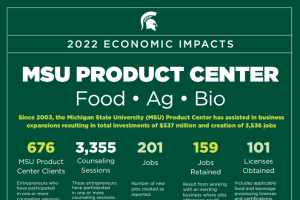
MSU Product Center
MSU Extension and the MSU Product Center assist entrepreneurs and businesses to develop products and services in the packaged food and agriculture markets. Its team of experts consult with clients on a one-on-one basis, helping new entrepreneurs navigate from concept development to launch and beyond. The MSU Product Center also offers specialized services such as labeling, packaging, and nutritional analysis. If you are interested in business counseling from the MSU Product Center, please visit the website at canr.msu.edu/productcenter.