Tips for co-packer selection and preparation: Part 1
 Print
 Email
How to select and hire a co-packer to process and package your food or beverage product.
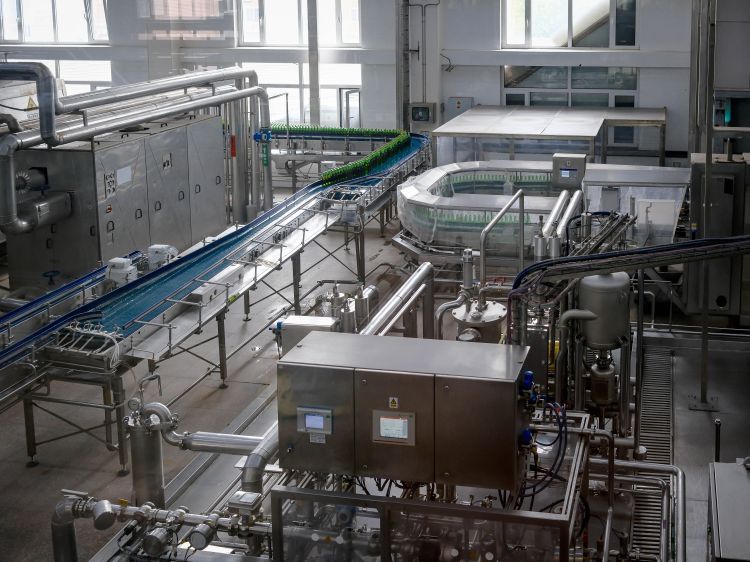
Is the capital and responsibility of a new food production facility beyond your capacity? Do you need to focus your limited time and financial resources on marketing and sales instead of production? If so, then perhaps it’s time to look for a co-packer.
Co-packing, known as contract packaging or contract manufacturing, involves hiring another company to process and package your food or beverage product. Co-packers can be processing companies that have excess processing capacity or a company that only processes products for other companies.
As you look for a co-packer, consider where the co-packer is located in proximity to your business. Your time and travel costs are important factors to consider since you will be meeting with the co-packer two to three times before the first run to have the recipe and process finalized. If the company doesn’t have a process for testing each run for taste, you may be traveling to the co-packer to evaluate your product for approval each time they produce your product. Plan for a five‑ to six‑month timeline from your first inquiry with a co-packer to producing your initial market‑ready batch.
According to Rodney Holcomb for Oklahoma State University Extension, before starting your discussion with the co-packer, consider asking for a confidentiality agreement or non-disclosure agreement (NDA) regarding details about your recipe, product and marketing. Expect a confidentiality request from the co-packer as well.
In the resource “Sell Your Specialty Food,” author Stephen F. Hall shares that co-packer’s operation usually includes three main service areas: product development, food processing, and food packaging. This article will give you some key considerations as you interview co-packers and prepare your company for this change in operation.
Product development services: Recipe commercialization and protection
Your recipe will need to be put into a commercial formulation if it’s not already. If the co-packer is hired to do this, they will need to work with you to change your recipe to make it commercially less expensive and less time consuming to make. For example, instead of using fresh tomatoes, the co-packer may want to use canned tomatoes, sauce and/or paste.
In addition to a different recipe formula, commercial processes such as heating, agitation of ingredients, holding the product at high temperatures, carbonation and pumping the food into a package can all result in a different final product than what you are used to, according to Pamela Brady et al. in the University of Arkansas research bulletin, “Choosing and Using a Co-Packer.”
If you have a beverage, co-packers often require the pH, Brix, and carbonation targets to already be defined. Having these specifications upfront speeds up formulation, ensures the co-packer can assess whether their equipment is compatible and prevents costly reformulation later.
After your formula and process has been agreed upon, it may take two to three processing runs to get a final acceptable formula and process. To protect your final formulation and process, make sure the co-packer is willing to sign an NDA or contract stating they will keep any formulation confidential.
It will also be important to ensure that any contract states that the recipe formula and process the co-packer finalizes will be owned by your company, not the co-packer. Keep this agreement updated as updates to the formula and process are made. It is critical that you ensure you have a copy of the current recipe and process in the event you need to change co-packers, create a second flavor, etc.
Food processing services
Production capabilities
Co-packers vary in what products they are able to produce, so make sure their capabilities match your product’s needs. For instance, if your product needs to be packaged when it is hot, ensure that the co-packer can hot-pack. If your product is classified as a low-acid or acidified product, you will need to check into whether the co-packer is able to produce a product with these classifications.
Verify the co-packer has the necessary certifications to produce your product, such as Better Process Control School certification. If your product is a going to be classified as a supplement due to its adaptogen use, labeling claims or dosing, ensure that the co-packer can produce it under U.S. Food and Drug Administration (FDA) regulations and that they have experience with FDA audits.
Facility tour
Request a tour of their facility along with a recent inspection or audit report when you visit the co-packer for the interview. Take notice of the cleanliness of the facility as well as the friendliness and skill level of the production staff. The Michigan State University Product Center, through MSU Extension, has a Co-Packer Assessment tool to help you with this process; check with your Innovation Counselor for a copy.
References
Ask the co-packer to provide a list of companies for you to contact for references. Although the co-packer may refer you to their best customers, most businesses will give you an honest review. The MSU Product Center has a Co-Packer Assessment tool to help you with this process; check with your Innovation Counselor for a copy.
Ingredient sourcing
Since many co-packers have the ability to purchase ingredients in large quantities from reliable sources, they can consistently get ingredients at a lower cost. Understand whether the co-packer orders the ingredients for your product and determine whether these ingredients meet your specifications for quality. For instance, you may require each ingredient have a Certificate of Analysis (COA) to meet retailer requirements for selling your product.
If you are responsible for ordering the ingredients, check to see if they have the storage room to receive and store your ingredients before they produce your product. Make sure your agreement on this matter is covered in the contract.
Meeting regulations
Co-packers can help you navigate the complete process of meeting federal, state and local regulations. Stephen F. Hall, in the resource “Sell Your Specialty Food,” recognizes this as especially helpful if you are a small business and you are just entering the wholesale market. If you already know the regulations you need to follow, be sure to identify whether the co-packer has the capability to meet them, as outlined by Brady et al.
Food safety and quality specifications
Have the co-packer explain how they will continually make your product to meet your specifications, whether it is through employee training, process controls, etc. Include all specifications for product quality or food safety in the contract.
If the processing of your product requires a Hazard Analysis and Critical Control Points (HACCP) plan, ensure the co-packer can follow the plan. Food safety specifications that your product must meet might include pH, packing temperatures, heat-processing requirements, cooling times or temperatures. Food quality specifications that you may want your product to meet could include color, content separation, piece size, texture or others.
In addition, Brady et al. highlight the importance of learning what system the co-packer uses for batch or lot-coding and verifying the adequacy of a recall plan, should there be a food safety or quality issue detected. Also, determine if the co-packer is verifying the product taste. Otherwise, you may want to check this before making a final payment to insure it meets your specifications. Based on whether your wholesale accounts require food safety and quality certifications, you may also want to check if they are Safe Quality Food (SQF) certified or when they expect to be.
Production timeline, minimum run and capacity
Determine if the co-packer also produces their own product and how this affects your production timeline, so you don’t risk having your product put on the back burner while they meet their own production needs.
Based on your business plan projections for one year, be prepared to discuss how much product will be needed and when. If you are just starting out, you may want a smaller co-packer that offers a smaller minimum run. Otherwise, according to Brady et al., the minimum run of a larger co-packer could result in too large of a financial investment for a start-up company and too much product to store, market and sell before it expires.
If your product has a seasonal increase in sales, can the co-packer keep up with the higher production needs at that time? If you are a rapidly growing company, determine if the co-packer can grow with you as your sales increase. Most major co-packers can grow with you and produce your product in larger quantities.
Be cautious not to commit to volumes you will have a difficult time paying for or selling. Be aware that some co-packers will charge for inventory space that you are taking for extended periods of time as the product waits to be sold. Make sure you can participate in the initial production of your recipe that results in a packaged product.
See “Tips for co-packer selection and preparation: Part 2” for the second part of this two-part article series.
MSU Product Center
MSU Extension and the MSU Product Center assist entrepreneurs and businesses to develop products and services in the packaged food and agriculture markets. Its team of experts consult with clients on a one-on-one basis, helping new entrepreneurs navigate from concept development to launch and beyond. The MSU Product Center also offers specialized services such as labeling, packaging, and nutritional analysis. If you are interested in business counseling from the MSU Product Center, please visit the website.