


How to wash fruits and vegetables to remove dirt, pathogens and chemical residue
 Print
 Email
Best methods for washing fruits and vegetables.
Have you ever bought an apple from the store, gotten in your car, wiped the apple on your shirt and eaten it while you drive to your next destination? Did you wipe the apple because you thought it was dirty or just to give it that nice shine? Do you think wiping it on your shirt made it clean? It is important to wash all produce before eating it, but there is often confusion and conflicting recommendations on the best way to clean fruits and vegetables. Do you run produce under water? Soak it? Use produce washes or cleaning products? Or is wiping on your shirt good enough?
Let’s explore what food safety standards, including Michigan State University Extension recommend by following these simple rules when cleaning produce:
- Always wash your hands with warm water and soap for at least 20 seconds and be sure the countertop and utensils and tools are clean before washing produce.
- The best time to wash produce is immediately before eating or cooking the product, not when it is brought home from the store or farmers’ market. You should avoid washing and then storing produce because it creates a perfect, moist habitat for microbes to grow. This can also speed up the spoilage of produce by leaving it wet in the fridge.
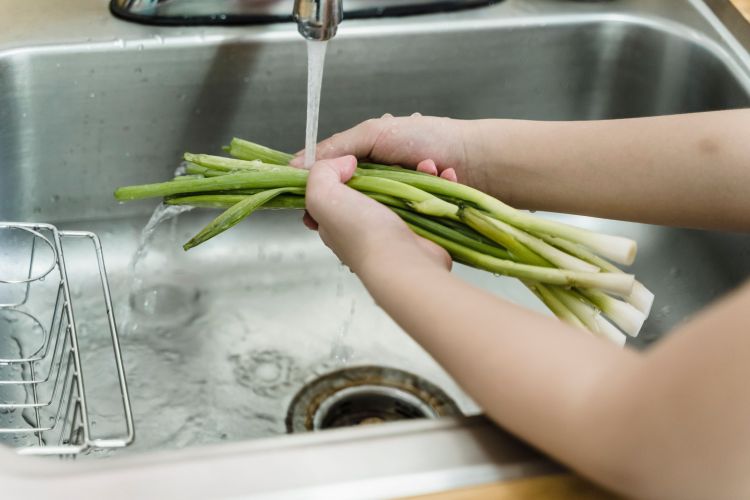
- It is best to wash produce under cool, running water that is within 10 degrees of the temperature of the produce. Soaking produce in a sink of water can lead to cross-contamination if your sink has not been sanitized. Or, even if one piece of produce is contaminated, now the whole sink of water and the other produce is contaminated. Using running water only ensures that dirt and germs are washed down the drain, not pooling in the sink.
- If the produce is labeled, “pre-washed” it is not necessary to wash again.
- Using manufactured “fruit washes,” detergents or bleach is not recommended. These products may leave a residue, alter the quality of the product or leave an unpleasant taste. Detergents or soaps are not meant for human consumption and can be absorbed into the pores of the produce. If vinegar, baking soda or produce washes are used, it does not lead to an unsafe product as these are edible, but there is no clear evidence that they work better than washing under running water.
- Use a brush to clean produce with firm textured surfaces, such as melons, potatoes and root vegetables. Gentle brushing under running water will help remove dirt particles trapped in the crevices.
- Wash all fruits and vegetables, even if you are going to peel them, such as an avocado for example. Not many people wash avocados because you don’t eat the peel. You do, however, cut through the peel with your knife and anything (germs and/or pesticides) on the outside of the peel will be transferred to the edible portion via your knife. Similarly, if you are eating an orange, your hands are peeling it and then touching the edible portion, thus transferring any germs from the skin to the flesh and into your mouth.
Pathogens are not the only reason to wash produce, but it is also important to wash off residue from any chemicals or other environmental hazards. The Environment Working Group publishes a list of produce they refer to as “the dirty dozen.” This is a list of foods that ranked highest when tested for pesticide residue. The challenge with information like this is how it can create unfound fear in regard to consuming healthy fruits and vegetables. According to University of Arkansas Extension Horticulture and Pesticide Specialists, “overall the amount of residue on our food is very small and presents very low risk based on the amount present and the amount of fruits and vegetables we eat on a daily basis.” This means the benefits of consuming nutrient-laden produce far outweighs the possible risk.
Ultimately, washing produce can be beneficial for reducing pathogens and pesticide residue on produce and can help reduce the chance of getting a foodborne illness from fresh fruits and vegetables. Remember though, that washing only reduces the number of germs present, and proper handling, storage and cooking practices need to be maintained throughout the food preparation process.
So, what about that apple you wiped on your shirt? It is not enough and it is not recommended you make a habit of that being the only method of cleaning produce.
For more information on food safety, visit MSU Extension's Safe Food & Water website.


