New Honey Bee Teaching Pavilion Dedicated at MSU Pollinator Performance Center
 Print
Print Email
EmailDonor-funded facility expands hands-on education, outreach and training opportunities while celebrating the legacy of a passionate Michigan beekeeper.

EAST LANSING, Mich. — Michigan State University's College of Agriculture and Natural Resources (CANR) and Department of Entomology celebrated the dedication of a new Teaching Pavilion at the MSU Pollinator Performance Center on Thursday, Oct. 8.
Located at the MSU Pollinator Performance Center within MSU Campus Farms, the new pavilion will serve as an outdoor classroom and gathering space for students, researchers, beekeepers, veterinarians and community members participating in educational programs and hands-on training.
The project was made possible through a gift from Hubbard, whose support was inspired by her long-time friendship with Dr. Meghan Milbrath, associate professor in the Department of Entomology and faculty advisor of the MSU Pollinator Performance Center.
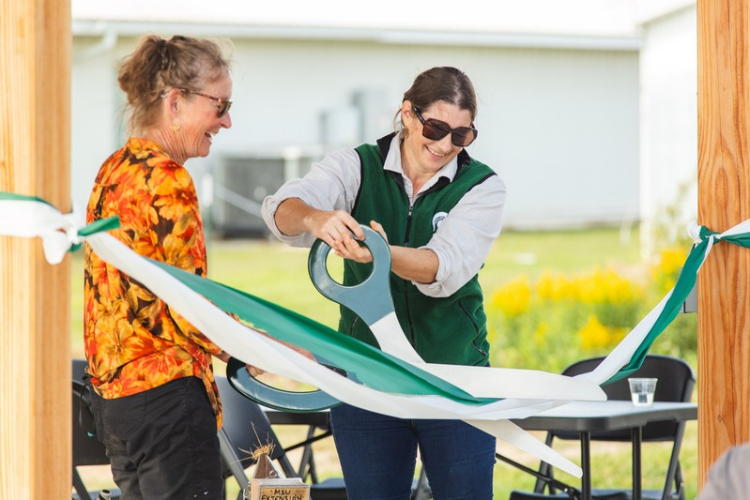
"I cannot emphasize enough that Dr. Meghan Milbrath was the catalyst and motivation for all of this," Hubbard said. "She has greatly and positively influenced my beekeeping journey, and I wanted to expose more folks to her magic while honoring my late husband."
The Pollinator Performance Center supports pollinator research, teaching and Extension programming throughout Michigan. The center provides dedicated facilities, equipment and expert honey bee management that support faculty, students and researchers while helping meet the educational needs of Michigan's beekeeping community.
Milbrath said the new pavilion addresses an important need for hands-on instruction. "The new Teaching Pavilion will greatly expand our ability to provide hands-on teaching and extension to students and stakeholders," she said. "Beekeeping is best taught through in-hive experiences, and before the pavilion, we did not have a safe, accessible and comfortable place to do so."
The facility will support instruction for students in the College of Veterinary Medicine's honey bee medicine clerkship, members of the MSU Pollinators Club and College of Veterinary Medicine Honey Bee Club, as well as local beekeepers, veterinarians, Michigan Department of Agriculture and Rural Development inspectors and visiting scholars.
"It will be so easy and comfortable for us to teach," Milbrath said. "The new space will allow us to teach and learn in comfort, with shade and fans and seats, rather than standing in a field in full sun."
The dedication also highlighted the personal story behind the gift.
Hubbard's beekeeping journey began while helping her first husband, Tom Sonday, after he was diagnosed with cancer. After his passing, she continued and expanded her beekeeping operation. Later, she introduced her seconf husband, Marshall Beachler, to beekeeping, and together they managed approximately 50 bee colonies throughout southwest Michigan.
"Marshall quickly became a devout student and devoted beekeeper," Hubbard said. "He was a natural who was soon comfortable and capable." The couple became acquainted with Milbrath through Michigan's beekeeping community and occasionally assisted with field research, developing a friendship rooted in education and a shared commitment to pollinator health.
"I have attended numerous conferences and classes where Dr. Milbrath was presenting," Hubbard said. "She is engaging, humble, approachable and absolutely knows the subject matter."
When opportunities to support the Pollinator Performance Center were discussed, the idea of a teaching pavilion immediately resonated with Hubbard. "Because of Dr. Milbrath's work, I would do about anything to support her efforts," Hubbard said. "The pavilion was high on her list of things that would be helpful."
The pavilion creates a dedicated learning environment where participants can gather before entering the apiary, discuss hive management practices and gain practical experience working directly with bees.
"There is no better classroom than in the hive itself," Hubbard said. "Students are always telling me about the webinars they've watched and the classes they've taken, but nothing compares to actually getting into colonies."
As a longtime beekeeping instructor, Hubbard said the pavilion will help create more opportunities for meaningful experiential learning. "With one of every three bites of food requiring a pollinator, education is essential," she said.
The pavilion also serves as an enduring tribute to Beachler's life and legacy. His passing around the time of the COVID-19 pandemic was sudden and unexpected, and opportunities to celebrate his life were limited.
"I hope students learn that an ordinary person far from the arena of academics or research can make an impact in a little corner of the world," Hubbard said. "Most of us hobbyists are motivated by trying to be better caretakers of our little corner of the world."
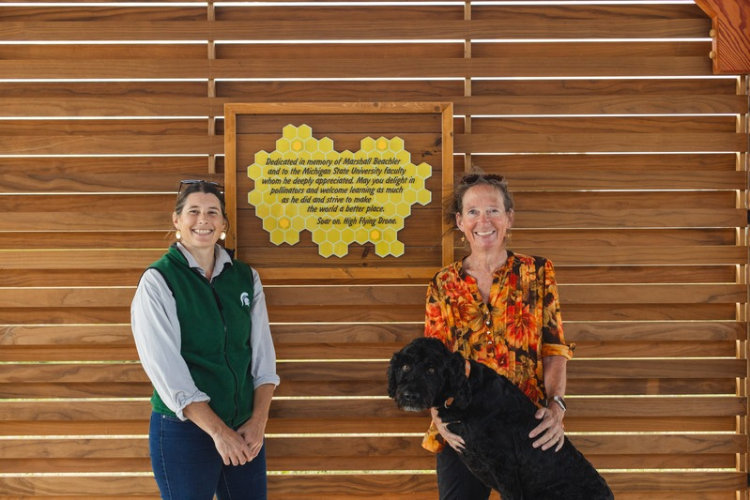
Milbrath noted that donor support plays a critical role in helping the Pollinator Performance Center advance its teaching, research and outreach mission. "Donor support is invaluable," Milbrath said. "Flexible support allows us to respond to new stakeholder needs and helps provide the resources required to keep our programs running."
Learn more about the MSU Pollinator Performance Center here.