


Learn to Identify Plants and Animals
Aquarium and water garden are filled with plants, fish, crayfish, snails and much more. Research has shown that sometimes these organisms are accidentally mislabeled by suppliers and shipped to retailers who offer them for sale. Its important for retailers and hobbyists to know about Michigan's regulated species so they can ensure they aren't taking care of an invasive species by accident. Unfortunately plants and animals common in trade can also be difficult to identify.
Identification Assistance
Local invasive species specialists with Cooperative Invasive Species Management Areas (CISMA) may also be able to assist in the identification of water garden and aquarium plants and animals. There is a CISMA in every county. Find yours on the Michigan Invasive Species Coalition website. Learn more about CISMAs and the variety of services they offer here.
A Field Guide to Michigan Crayfish published by the DNR highlights native and invasive crayfish in Michigan and includes a user-friendly dichotomous key. Another crayfish resource is the Great Lakes Almanac to Invasive Crayfish which features detailed illustrations of four known invaders: marbled crayfish, red swamp crayfish, Australian crayfish, and rusty crayfish.
Plant identification is one of the many services offered at the Michigan State University Plant and Pest Diagnostics, Center for Integrated Plant Systems.
The Michigan Clean Water Corps, a volunteer water quality monitoring program, offers trainings on how to detect, monitor, and respond to invasive aquatic plants in lakes. Learn more about the MiCorps Exotic Aquatic Plant Watch here.
RIPPLE Resources
Michigan State University Extension created three identification brochures on aquatic plants, crayfish, and fish species commonly sold for aquariums and water gardens. They are available for free to download and you can receive printed copies through our order form here.
 Learn to identify invasive species online
A variety of resources have been developed to aid in the identification and reporting of invasive species. The Midwest Invasive Species Information Network (MISIN) has a variety of resources including an interactive invasive species distribution map and a webpage for reporting invasive species found in the wild.
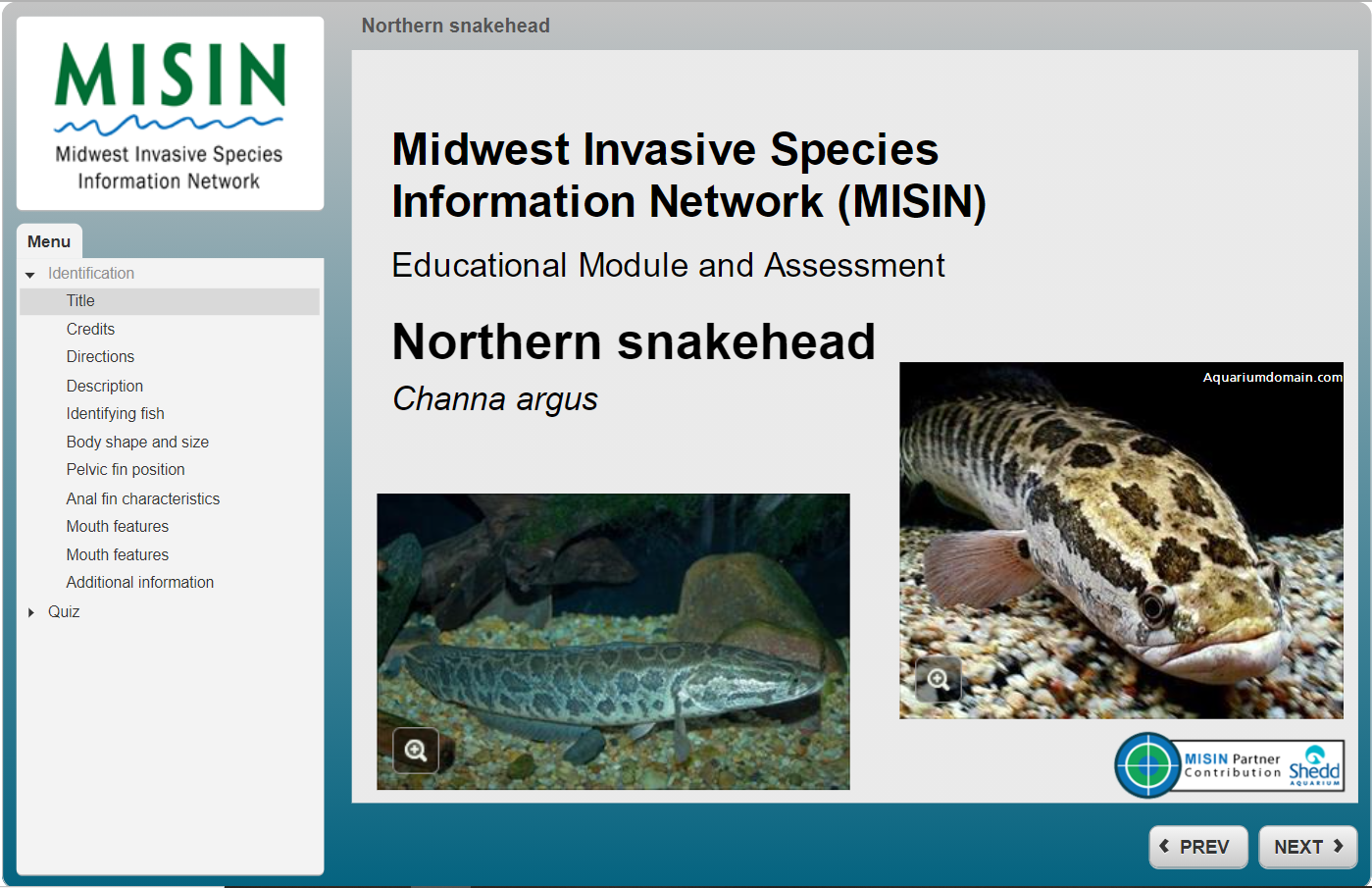
MISIN also has identification learning modules on many regulated invasive plants and animals. These learning modules take between 10 to 15 minutes to complete and include identifiable characteristics such as the size and shape of a plant or animal, notable physical features and its preferred habitat.
 Print
Print Email
Email