What do U.S. shoppers want from pork raised with precision livestock farming?
 Print
 Email
A national survey of 4,004 pork buyers shows that pig welfare matters about as much as price at the meat case.
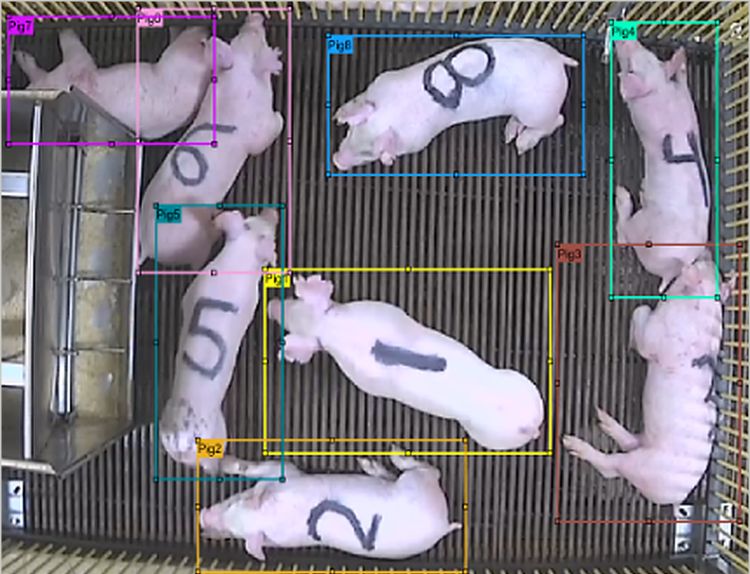
Large, modern farms help keep pork affordable and meet growing demand for animal protein. But many people now ask how well the animals on these farms are cared for. New tools may help farmers answer that question. These tools are part of precision livestock farming, or PLF.
PLF uses cameras, sensors and computer software to monitor each animal throughout the day. The system can spot a pig that is limping, not eating, or acting stressed. Then the farmer can step in early. PLF can help improve animal health and maybe welfare, but the tools cost money. Farmers may need higher prices to cover that cost. A key question is: “Will shoppers pay more for pork from farms that use PLF to care for their pigs?”
How we asked shoppers
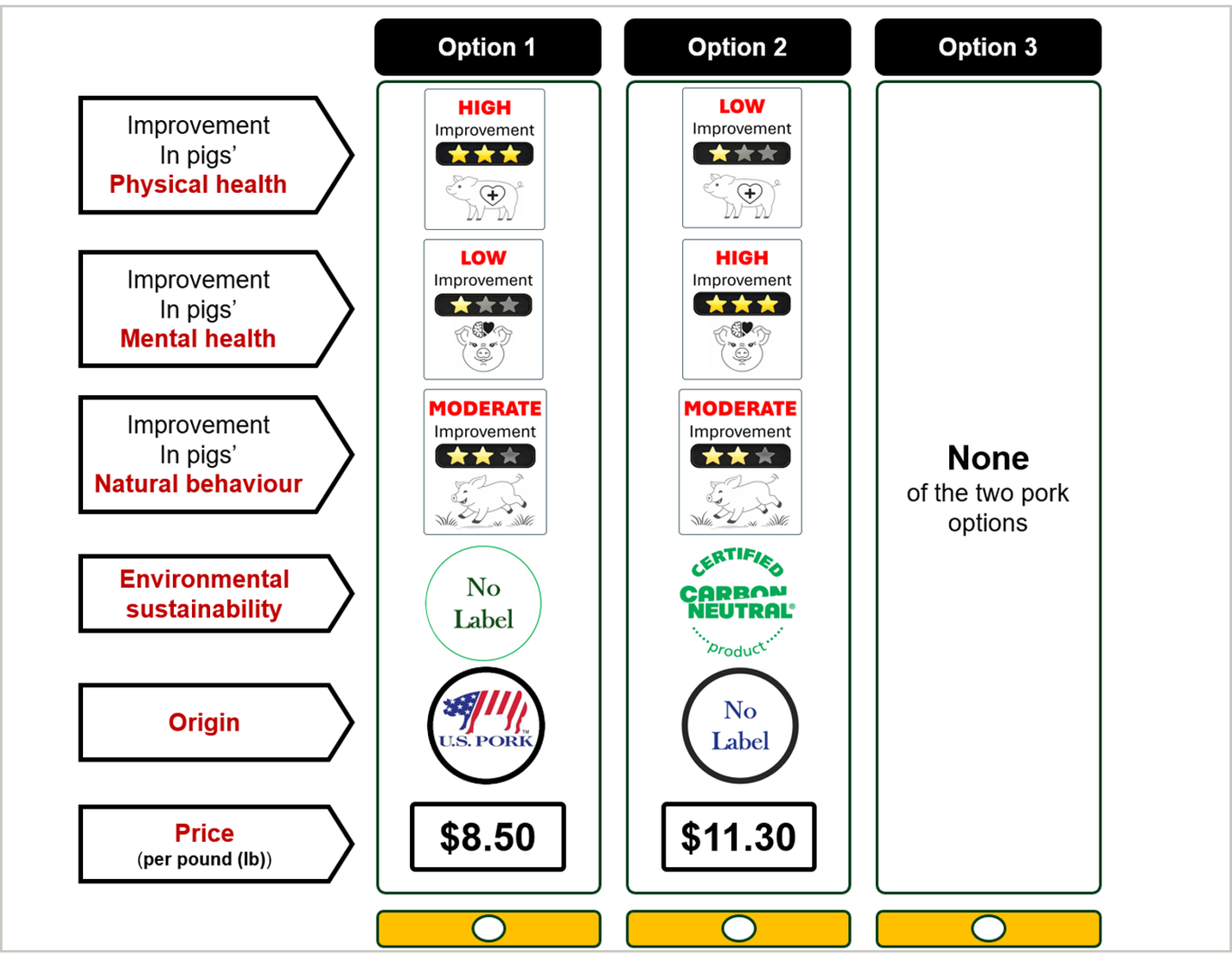
In 2026, we surveyed 4,004 adults across the U.S. who buy and eat pork. Each person looked at eight shopping choices. Each choice showed two packages of fresh pork loin and a buy neither option.
The packages differed in six ways:
- How much PLF improved the pigs' physical health (none, low, moderate or high)
- How much PLF improved the pigs' mental health, such as less fear and stress
- How much PLF improved the pigs' natural behavior, such as room to explore and play
- A carbon-neutral certification label
- A U.S. origin pork label
- Price per pound
By watching which packages people picked, we can tell what they value and how much extra they will pay for it.
Pig welfare matters about as much as price
Price was the single most important feature. It made up about 38% of what drove shopper choices. But when we add the three parts of pig welfare together, they also made up about 38% (Figure 1). In other words, shoppers gave pig welfare about the same weight as price. The U.S. origin pork label came next at 16%, followed by the carbon-neutral certification label at 7%.
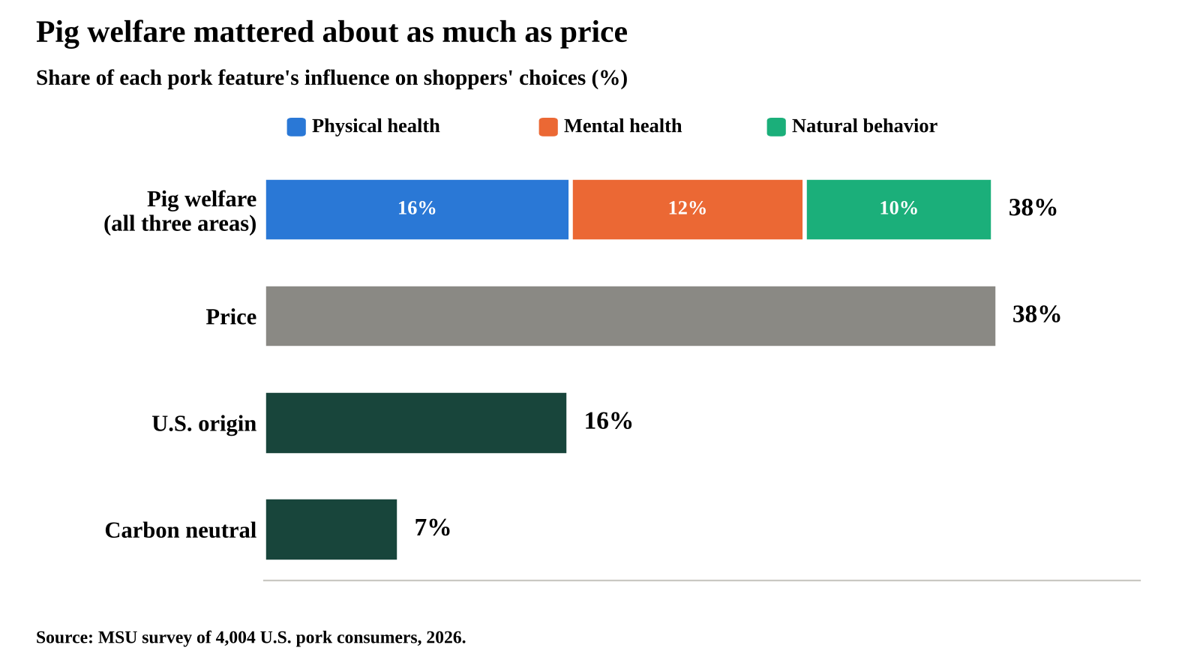
Within pig welfare, physical health mattered the most. It made up 42% of the welfare share. Mental health made up 32%, and natural behavior made up 26%. This tells us shoppers do not see animal welfare as one single thing. They care about all three parts, but not equally.
Many shoppers are open to paying more
We also asked people a direct question: would you pay a higher price for animal-friendly pork from farms that use PLF? About 31% said yes and 15% said no. More than half (54%) said maybe (Figure 2). Most people open to paying more chose a modest amount, such as up to 5% or 6% to 10% more.
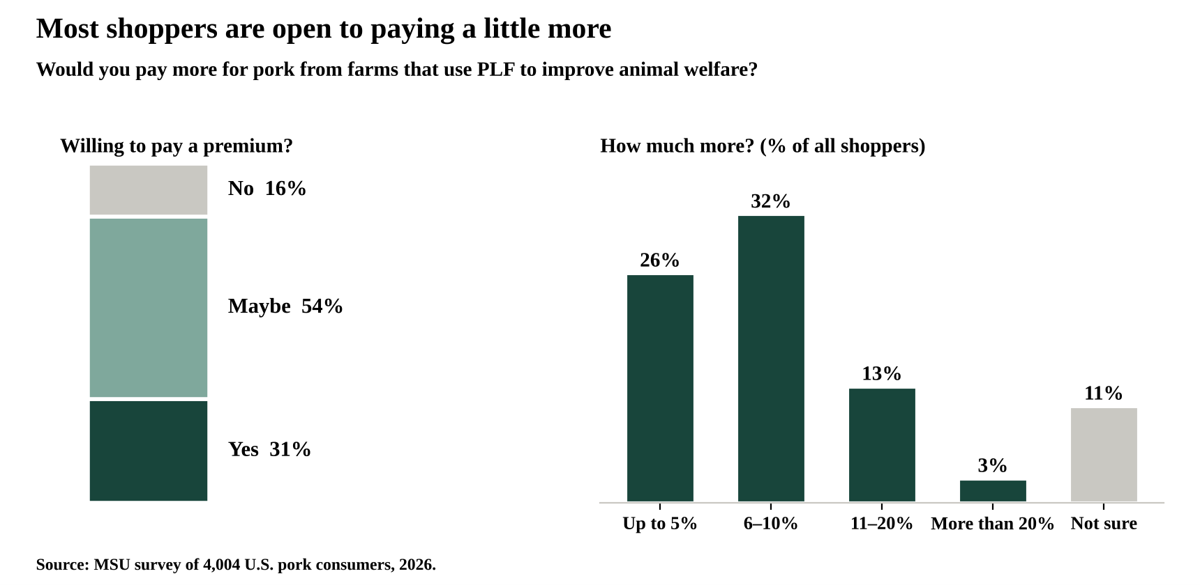
The large maybe group is worth noting. These shoppers have not made up their minds. Clear and honest information could help them decide.
Shoppers also have questions
PLF is still new to most people. Eight in 10 shoppers in our survey had never heard of it before. About 69% said shoppers should be told when PLF is used to produce their food. And 44% worried that PLF could lead to more industrial-style farming. These results show that people want to know what the technology does and why it matters for the pigs.
What this means for the pork industry
Our results point to three lessons:
- Welfare outcomes sell. Shoppers value real gains in pig health and well-being, not just a new gadget.
- Price still counts. Welfare claims must compete with price and with other labels, such as U.S. origin.
- Talk about results. Tell shoppers how PLF helps pigs stay healthy, calm and active.
U.S. pork shoppers care about how pigs are raised. In our study, they gave pig welfare about as much weight as price. PLF could help farmers improve and prove better care. To earn a fair return, the industry will need to show shoppers clear, honest results.
This work is supported by the Agriculture and Food Research Initiative [grant no. 2021 - 68014 - 34140] from the USDA National Institute of Food and Agriculture.