


What are those large webs in my trees?
 Print
Print Email
EmailFall webworm webbing brings more anxiety to you than harm to the plant.
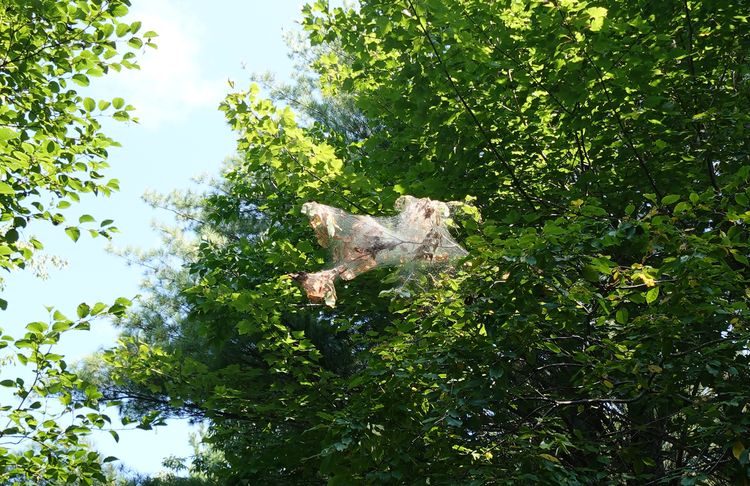
Fall webworm, Hyphantria cunea, is a moth that is better known for its caterpillar stage that creates large webbing at the ends of branches. Webs up to 2 to 3 feet in length can be seen at ends of branches from mid-summer and into fall. When active in the summer, they may contain a colony of hundreds of webworm caterpillars.
This native species feeds on at least 80 species of trees and shrubs, though most seen on walnut, birch, black cherry, elms and maples. Young larvae begin to feed in early July in southern Michigan, and at the start of August in northern Michigan. Protected within the webs, newly hatched caterpillars first feed on the upper surface of the leaves, and after several molts the larger caterpillars consume whole leaves.
Since the colony of caterpillars feed from mid to late summer, fall webworm causes less damage than insects that feed in the spring. By late summer, plants have had time for their leaves to produce energy reserves for the following season. Trimming out the web is an option but is often not feasible as it is high up in the canopy and cannot be reached.
Life cycle and control
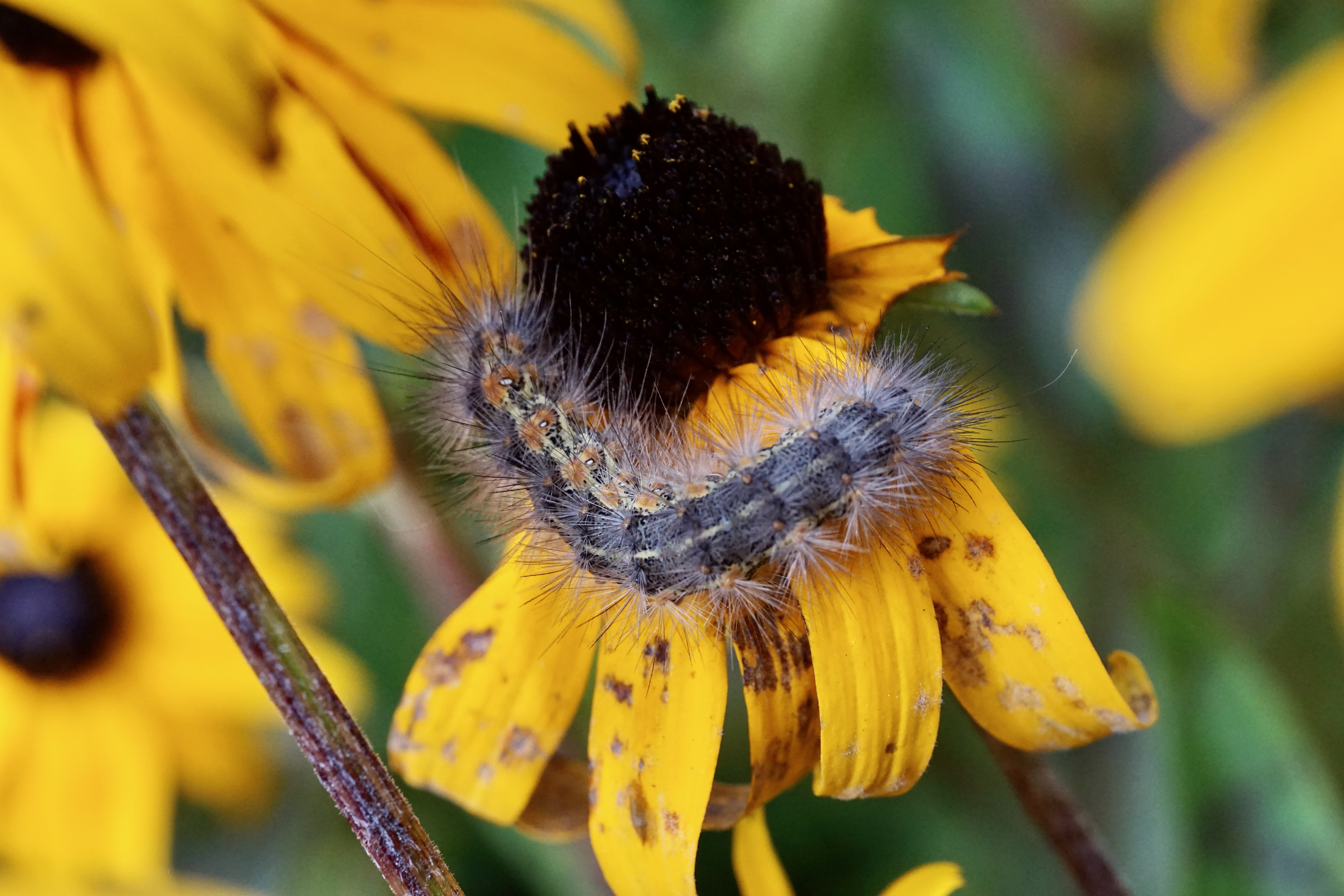
Fall webworm caterpillars feed on leaves for about six weeks. Once done feeding, the 1-inch-long caterpillars move from the webbing to bark crevices or down into the soil where they form a cocoon. Within this cocoon they survive winter to emerge as a moth the following spring.
Later in the season, most of the caterpillars have left the nest and a close inspection of branches within the webs reveals developing buds for next season. Webs will deteriorate over winter, and webworm caterpillars will not return to these webs next spring.
Never burn the webbed branch while it is in the tree. This extreme measure damages the plant more than the insect would. Trimmed out branches can be burned or buried. Feeding by the webworms strips leaves within the webs, but it will not kill the branch and next year’s buds are left untouched.
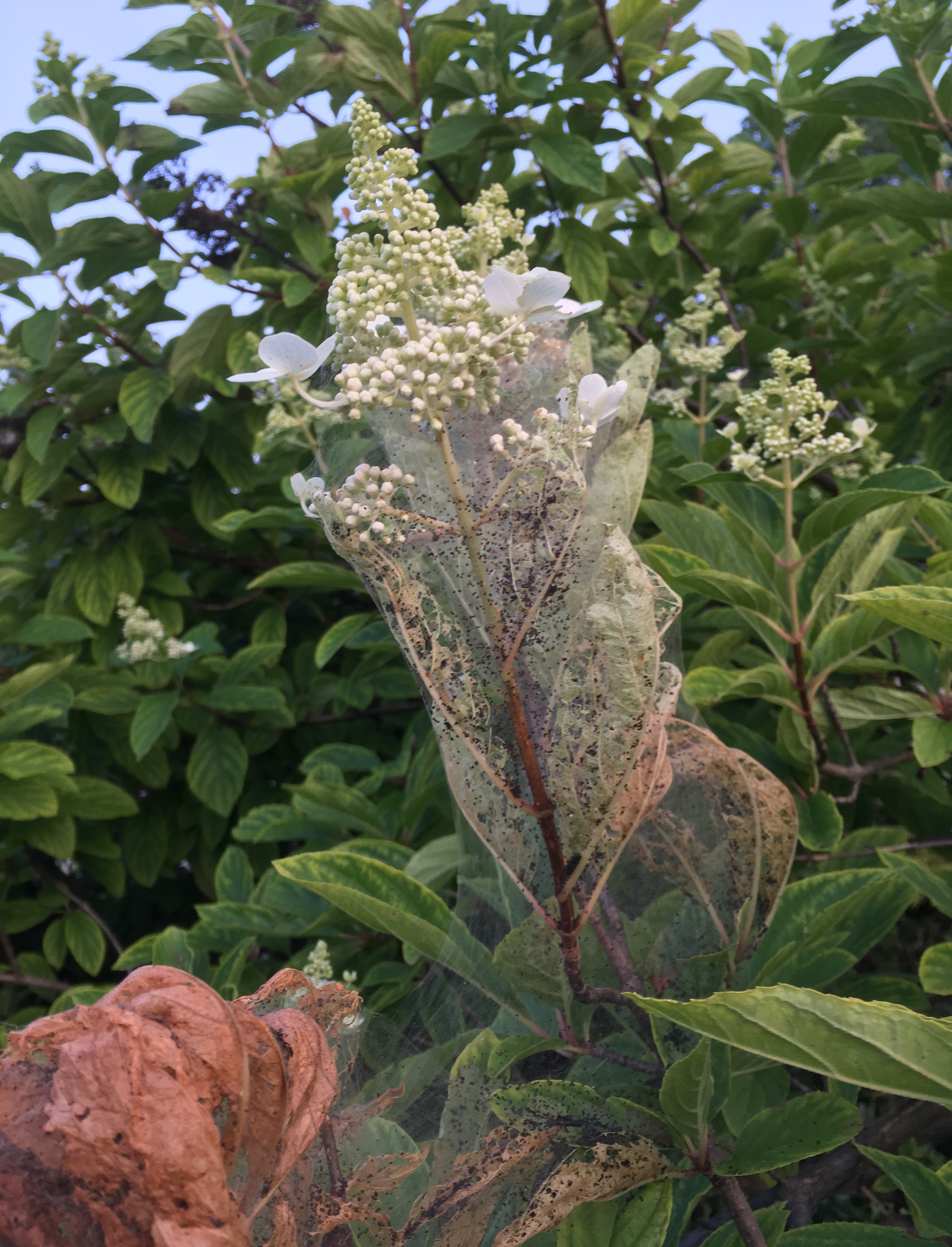
The webworm caterpillars will not return to the same web next year. However, if you leave them to complete their life cycle, they will spin cocoons on the bark or in nearby soil. In the next season, moths will emerge from these cocoons and could potentially lay eggs on the same tree or a nearby tree.
The good news is that for the most part, fall webworm webs are not a major stress on the tree, and nature has provided dozens of natural enemies to help keep them in check. Predatory insects, spiders, birds, rodents and others feed on all life stages of this pest, keeping their populations low in most years.
Control measures work best when the webs are small and the caterpillars are still young. The webbing makes it difficult for pesticide sprays to reach the caterpillars within the web, but pesticides are usually not needed. A garden hose set to a high pressure can tear into a nest and kill many of the young caterpillars.
By the time the caterpillars are more mature, most of the damage has already been done and simply pruning off the affected branch will improve the appearance of your tree or shrub.
