Tribal communities are using SARE grants to advance sustainable agriculture, food sovereignty and education
 Print
 Email
Apply by December 3 for Farmer Rancher, Youth Educator, Partnership and Research and Education grants.
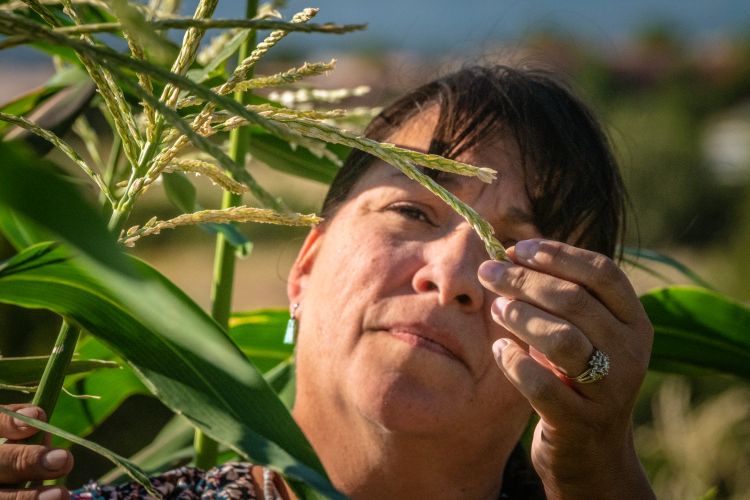
North Central Region Sustainable Agriculture Research and Education (NCR-SARE) grants have helped Tribal communities across Michigan and the North Central Region strengthen food sovereignty, preserve cultural knowledge, engage youth in agriculture and develop innovative educational programs. With four NCR-SARE grants and $5,000 Tribal SARE mini grants currently available, there are many ways SARE funding can support community-driven agricultural priorities on Tribal lands and for Tribal members.
NCR-SARE grant examples
These projects show how SARE funding can support a wide range of Tribal sustainable agriculture and food sovereignty activities, from curriculum development and youth education to traditional crop preservation, seed saving, food sovereignty initiatives and community food system development.
Eastern Upper Michigan Sustainable Agriculture Curriculum Initiative – This Research and Education grant supported Bay Mills Community College in developing an Anishinaabe science and food sovereignty curriculum, providing teacher professional development and creating hands-on agricultural and career exploration opportunities for Tribal youth. The project received $199,987 in 2019.
Evaluating the Effect of Two Pastured Poultry Rearing Systems on Pasture Health and Carcass Quality – This Farmer Rancher grant supported Mshkode LLC and Mshko’Ode Farm in comparing mobile-pen and day-range poultry systems based on soil and pasture health, poultry growth, carcass quality and profitability. The Michigan project received $8,993 in 2021.
Keeping Traditions Alive: Creating Food Security in Northwest Wisconsin's Tribal Communities – This Farmer Rancher grant supported collaboration among multiple Ojibwe communities to improve food security through demonstration gardens, traditional food production, educational workshops and regional food system development. The project received $21,551 in 2013.
Anishinaabe Traditional Food Restoration for Local and Market Consumption – This Farmer Rancher grant restored traditional Indigenous crops including heritage corn, beans, squash and potatoes while exploring local food sales, education and sustainable production practices. The project received $15,000 in 2016.
Indigenous Corn Restoration Project – This Research and Education grant worked to preserve Indigenous corn varieties through seed saving, farmer training, youth engagement and community partnerships. The project received $150,000 in 2008.
You can find other Tribal-led and Tribal-focused SARE projects by searching the SARE database, or read more information on the four NC-SARE grants that are due on Dec. 3, 2026.
Tribal SARE grant examples
Tribal SARE mini grants of $5,000 are available in Michigan and Wisconsin. These are less competitive than NCR-SARE grants and funding for multiple Tribes to each receive a grant for similar projects is an option. The following are currently funded projects.
The Nokomis Community Food Garden and Elder Food Box Program will bring together the Nokomis Cultural Heritage Center and Michigan State University partners to grow fresh produce for monthly food boxes serving 20 to 25 elders. The $5,000 project will also promote food sovereignty, Indigenous knowledge, sustainable gardening and intergenerational learning through garden activities, educational events and a replicable garden-planning workbook.
The Bay Mills Community College and the Michigan Inter-Tribal Land Grant Extension System Traditional Food Box Program contributes to the coordination of 200 boxes of fresh-grown produce, culturally relevant educational materials to distribute to four communities (Keweenaw Bay Ojibway Community College, Bay Mills Community College, Little Traverse Bay Bands of Odawa Indians, and Saginaw Chippewa Tribal College.) The goals of this effort are to strengthen tribal food sovereignty efforts, increase awareness, preparation and consumption of traditional Anishinaabek foods, support indigenous food producers and strengthen collaborative efforts specific to Tribal food sovereignty in Michigan.
The Ukwakhwa Inc. sought funding to expand their outdoor teaching and gathering space. This project will expand Ukwakhwa’s outdoor teaching space, creating a shaded and comfortable area for community learning. The expanded space will support classes and events focused on traditional Haudenosaunee food systems, including planting, harvesting, seed keeping, food preparation and storage, tool making, and crafting, while helping participants connect traditional knowledge with modern technologies and practices.
Interested in applying? We can help!
Michigan Tribal members, communities, Tribal colleges and educators may be eligible for several SARE funding opportunities, including Tribal SARE mini grants and NCR-SARE competitive grant programs.
Contact Emily Proctor, Tribal SARE coordinator, at proctor8@msu.edu or Katie Brandt, Tribal SARE support staff, at brandtk7@msu.edu if you have questions or would like to meet to plan a SARE project or review your proposal.