Practical solutions take center stage at the 2026 Michigan Greenhouse Growers Expo
 Print
 Email
Explore fresh perspectives on production and business management.
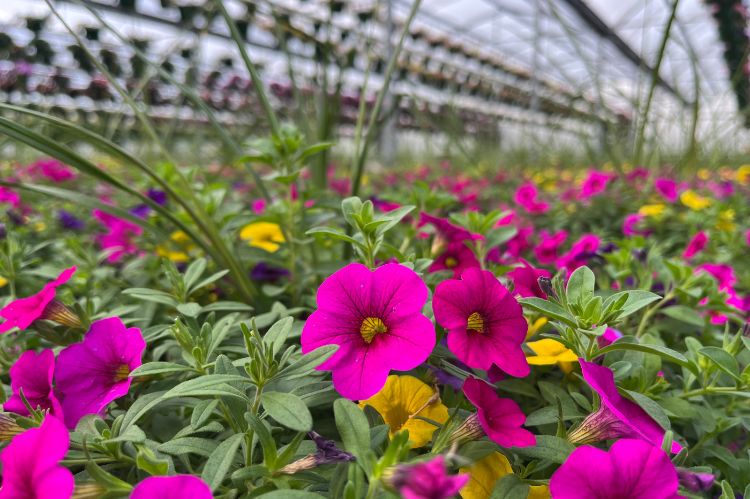
The 2026 Michigan Greenhouse Growers Expo returns Dec. 8–10 to DeVos Place in Grand Rapids, Michigan, with two days of educational programming for floriculture producers and other green industry professionals. Presented in association with the Great Lakes Fruit, Vegetable, and Farm Market Expo, this year's program brings together university researchers, Michigan State University Extension specialists and industry professionals to share practical strategies for improving plant quality, managing pests, and strengthening farm businesses.
With guidance from the Western Michigan Greenhouse Association and Metro Detroit Flower Growers Association, this year's educational program was developed by the Michigan State University Extension floriculture team and covers a broad range of topics, from growing media and crop nutrition to integrated pest management, retail merchandising and specialty cut flower production.
Whether you're looking for solutions to familiar production challenges or exploring new opportunities for your operation, the Expo offers a chance to learn from experienced professionals and connect with others in the industry.
Plant production: Research, practical solutions and new approaches
Growers looking to refine their production practices will find plenty of useful information in this year's program. Brian Jackson from North Carolina State University will discuss emerging developments in growing media and the challenges associated with transitioning to peat-reduced substrates. His two presentations “What's New and Next in Growing Media for Greenhouse Production?” and “Crop Management in Peat-Reduced Substrates” will explore new substrate options and the adjustments to irrigation and nutrient management that may be needed to maintain crop quality.
Patrick Veazie from Sun Gro Horticulture will take a closer look at diagnosing nutrient disorders, including how to distinguish deficiencies from other problems that produce similar symptoms.
The program also features several presentations on improving crop performance and addressing common production challenges. Royal Heins of HRT Services will discuss the potential benefits of silicon for improving plant stress tolerance and disease resistance, along with practical methods for applying it to floriculture crops.
George Grant from Griffin Greenhouse Supplies will draw on real-world examples from the 2026 growing season to examine production problems, their underlying causes and lessons growers can apply in 2027.
Together, these sessions offer opportunities to evaluate current practices, learn from recent experiences, and consider new approaches for the upcoming season.
Integrated pest management (IPM): Making the most of your crop protection tools
Successful greenhouse pest management depends on understanding the tools available and knowing when and how to use them. This year's program features several presentations that explore the practical considerations behind biological and conventional crop protection strategies.
Carlos Bográn will take a closer look at the science behind biological pesticides in two sessions, “The Biology Behind Bioinsecticides: Understanding How and Why They Work” and “Making Biofungicides Work: Biology, Timing and Compatibility.” Together, these presentations will help growers better understand how biological products function, what influences their performance, and how to incorporate them into existing pest management programs.
Building on those concepts, Grant will discuss how conventional pesticides, biopesticides and biological control agents can work together in “Where Two Rivers Meet: Integrating Biopesticides and BCAs with Conventional Crop Protection.” His presentation will explore practical considerations such as application timing, product compatibility and developing a coordinated pest management strategy.
Mary Hausbeck from Michigan State University will also return with her annual greenhouse disease management update, “Don't Let Those Pesky Pathogens Get the Best of You,” featuring results from MSU trials evaluating new fungicides and biological products against important greenhouse diseases.
Prevention is another important part of an effective IPM program, particularly during propagation. Royal Heins of HRT Services and Jeremy Jubenville from MSU Extension will present “Clean and Rooted: Pre-Plant Submersion Strategies for Pest Prevention and Propagation Success.” Their session will examine how pre-plant cutting treatments can help reduce insect and mite pressure while addressing cutting hydration and establishment. By connecting pest prevention with propagation practices, the presentation offers another approach for improving young plant quality before production problems develop.
Retail and customer engagement: Creating better shopping experiences
For garden center retailers, creating a positive customer experience involves more than offering a good selection of plants. Store layout, knowledgeable employees, and effective communication all influence how customers shop and whether they return. Jessica DeGraaf from Proven Winners will explore these connections in “Crafting a Merchandising Plan in 7 Steps,” sharing a practical framework for organizing retail spaces, highlighting products, and helping customers navigate the garden center.
DeGraaf will also moderate “It's All About the Experience: Garden Center Success Stories,” an interactive discussion featuring Matt Abele of Abele Greenhouses, Craig Koetsier of Koetsier's Greenhouses, and Heidi Grasman of Garden Crossings. Together, they'll share how their businesses approach customer service and create shopping experiences that encourage repeat visits.
Technology also plays an important role in managing retail operations. In “Hot or Not? Point of Sale System Panel,” representatives from Garden Crossings, Wedel's Garden Center, Riverstreet Flowerland, and Ruhlig Farms and Gardens will compare their experiences with different point-of-sale systems and discuss how these tools support daily business operations.
Rounding out the retail education, representatives from several Michigan Garden Plant Tour sites will share highlights from their 2026 trials in “Stand-Out Cultivars from the 2026 Michigan Garden Plant Tour.” The session will introduce promising annuals and perennials that retailers may want to consider for future seasons.
Specialty cut flowers: New crops, production techniques and business opportunities
Specialty cut flower growers can look forward to a full day of educational programming on Wednesday, Dec. 9. This year's sessions explore new production techniques, opportunities to diversify crop offerings and strategies for making the most of available growing space.
Roberto Lopez from Michigan State University will open the program with “Using Off-the-Shelf LEDs for Cut Flower Plug Production,” covering seed handling, storage and germination under low-cost LED lighting. He'll also discuss how day length influences flowering, helping growers make more informed decisions during propagation.
Makenzie Lee from the University of Delaware will follow with “Blooming Knowledge: Growing and Selling Edible Flowers.” Her presentation will explore the edible flower market and production methods ranging from outdoor growing to greenhouse and hydroponic systems.
The afternoon sessions shift toward expanding product offerings and managing a flower business. Natalie Carmolli from Proven Winners ColorChoice Shrubs will discuss how flowering shrubs can add seasonal interest, texture and variety to floral arrangements in “Beyond the Border: Shrubs as Cut Flowers.” Growers will learn about promising varieties, harvesting and conditioning woody stems, and preparing plants for future production.
Rounding out the day, Janie Case Beuthin of Twig End Farm in Flint, Michigan, will share her experiences growing and marketing flowers on less than one-eighth of an acre. Her presentation “Flowers in the City: Growing and Running an Urban Flower Farm” will explore the opportunities and challenges of operating a productive flower business in an urban setting.
Growers interested in small-scale and urban agriculture may also want to explore the Great Lakes Expo's new Small Scale and Urban Farms track. Both edible flower production and urban flower farming complement this programming, particularly for growers interested in serving specialty markets near population centers. Together, these sessions offer perspectives on how smaller operations can make effective use of limited space and develop products suited to their local markets.
Research updates and pesticide applicator education
The Expo also provides opportunities for growers to learn about ongoing research and maintain their pesticide applicator credentials. During the MSU Floriculture Research Update, Michigan State University researchers will share findings from recent projects and discuss their implications for greenhouse production. The session offers growers an opportunity to learn about current research priorities and developments that may influence future production practices.
Restricted use pesticide (RUP) applicator core review and MDARD testing will be offered in English and Spanish. Review sessions will take place in the morning on Dec. 10 followed by the RUP applicator exam in the afternoon. These offerings help ensure safety training reaches the employees who put it into practice every day. Note that this pesticide safety training opportunity requires a separate registration.
Registration is open for the 2026 Michigan Greenhouse Growers Expo
Registration is now open. Attendees who register by Nov. 15 can save $20 with early-bird pricing.
Whether you're interested in improving crop production, exploring new pest management strategies, strengthening your retail business or expanding your specialty cut flower operation, this year's program offers opportunities to learn from researchers, industry professionals and fellow growers.
Registration, lodging and trade show information can be found at the Great Lakes Expo website.