Collaboration and Partnerships: A Q&A with Intertribal Agriculture Council and Great Lakes Intertribal Food Coalition
 Print
 Email
Learn more about the collaborative impact of the Intertribal Agriculture Council and the Great Lakes Intertribal Food Coalition through this Q&A!
As we celebrate Native American Heritage Month this November, we wanted to highlight our partner organizations and programs that are dedicated to helping to uplift and support our Tribal Nations.
In November 2026, Jazmin Bolan-Williamson, Food and Farm Business Coordinator of MSU Center for Regional Food Systems (CRFS) had a conversation with Abby Buraglio and Joey Tallier of the Intertribal Agriculture Council (IAC) and Marcus Grignon of the Menominee Indian Tribe of Wisconsin to talk about the amazing work that both the IAC and the Great Lakes Intertribal Food Coalition (GlIFC) are doing to help support Indigenous farmers and tribal members access healthy and nutritious food. CRFS has previously partnered with the Intertribal Agriculture Council and GLIFC on projects, such as the Tribal Food Producer Information Sessions, a series of webinar learning opportunities for tribal food producers across the Great Lakes Midwest Region. It was during these sessions that we first learned about the Tribal Elder Food Boxes and the impact it had on the Tribal communities.
Tell us more about you and how you landed in this role working for the Intertribal Agriculture Council?

Abby Buraglio: My family comes from the White Earth Reservation, where they spent their childhoods relying on commodity foods and with limited access to traditional foodways, leading to a prevalence of diet-related illnesses today.
After graduating from the University of Minnesota-Twin Cities with a degree in Food Systems, I spent some time working on miscellaneous projects in communities across northeastern Minnesota to focus on strengthening processing infrastructure and distribution across rural food systems.
I joined the Intertribal Agriculture Council (IAC) in March 2022 as a member of the Policy Team, working to enhance Native priorities for the 2023 Farm Bill and other federal pieces of legislation affecting Indian Country. Working at a national scale introduced me to the diversity of Tribal food systems and deepened my appreciation for the incredible traditional foods in our Great Lakes Region! When the opportunity arose for me to join our Technical Assistance Network, I jumped at the chance to bring these experiences back to my home region.

Joey Tallier: In high school, I was selected to participate in the Hutton Junior Fisheries Biology Internship, where I gained hands-on experience working at my Tribe’s (Sokaogon Chippewa Community) fish hatchery. After completing the internship, I continued working at the hatchery for five more years, further developing my knowledge and experience in Tribal fisheries management and conservation. The hatchery raises and stocks approximately 75,000 walleye annually and supports fisheries management efforts through fish population surveys, habitat restoration projects, and invasive species removal. This experience gave me valuable firsthand knowledge of Tribal fisheries management, the importance of conservation, and the responsibility of protecting and sustaining our natural resources for future generations.
Following my time at the hatchery, I explored other career paths, including real estate and IT programming. However, my passion for conservation, working with Tribal communities, and supporting traditional foods never faded. I knew I ultimately wanted to return to this work and contribute to efforts that strengthen Tribal food systems and support food sovereignty.
In March 2023, I was excited to begin that next chapter of my career when I joined the Intertribal Agriculture Council as a Great Lakes Technical Assistance Specialist. This opportunity allowed me to reconnect with the work I am passionate about while supporting Tribal communities, producers, and traditional food systems.
What is the history behind the Intertribal Agriculture Council? What were the goals of why it was formed, and are they still the same goals?
 Joey Tallier: In 1987, IAC was formed by a coalition of federally recognized Tribes to assess agricultural needs in Indian Country. IAC was created to fulfill a recommendation in a Congressionally directed report in response to the 1980s Farm Financial Crisis, where Tribes and individual Tribal producers were categorically excluded from federal emergency aid and most USDA commodity and conservation programs.
Since its founding, IAC continues to elevate Indian Country’s agricultural priorities among policymakers. IAC also provides on-the-ground technical assistance, domestic and international marketing support, natural resource management, small agribusiness development, and more to Tribes and Tribal producers across the United States.
Why is the work that the Intertribal Agriculture Council does so important to Michigan and surrounding states?
Abby Buraglio: One of the many things that makes Michigan and the Great Lakes Region’s Tribal food systems so great is the collaborations, both intertribal and with non-tribal partners, that prop up food production and sovereignty all the way to the last food mile. By providing technical assistance, IAC is uniquely positioned to bolster collaboration and make new connections through boots-on-the-ground reach.
Michigan is home to 12 federally recognized Tribes, 1 state recognized Tribe, and many producers both on and off Tribal land feeding their families and communities. With such a variety of food systems here, IAC ensures access to a national network of resources. By building awareness of regional priorities and highlighting individuals’ stories, IAC showcases how important culturally relevant, local foods are for community wellness and resilience.
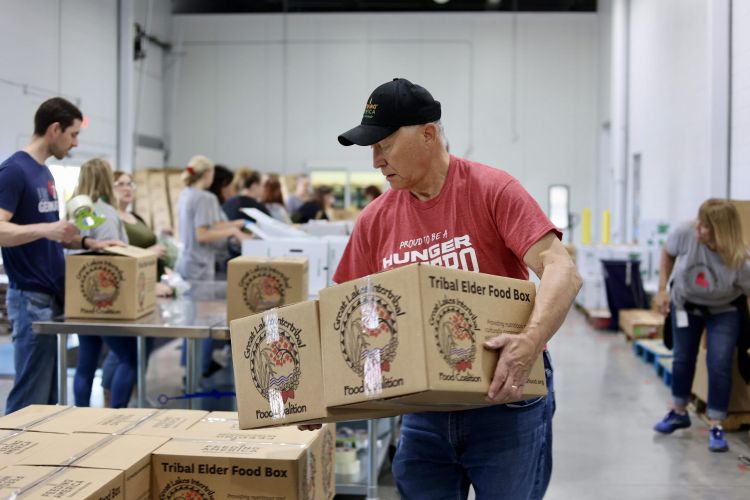
 IAC continues to work alongside and support the Great Lakes Intertribal Food Coalition’s (GLIFC) Tribal Elder Food Box Program. Myself and Joey Tallier are the IAC Technical Assistance Specialists for the Great Lakes Region, have provided support on multiple projects to strengthen the program and assist participating Tribal producers.
Through in-person and virtual sessions, IAC staff partnered with GLIFC to provide group business planning for Tribal producers selling products to the Tribal Elder Food Box program. In-person meetings were held in conjunction with the 2026 Marbleseed Organic Farming Conference and the 2026 Great Lakes Intertribal Harvest Gathering, hosted by the Ho-Chunk Nation.
Weekly, IAC staff participate in GLIFC’s Tribal Elder Food Box standing meetings. During these meetings, IAC staff share updates on IAC resources and programs, USDA program developments, and other opportunities that benefit Tribal producers participating in the program, as well as food box coordinators and distributors at each distribution site.
GLIFC’s Tribal Elder Food Box Program has also been featured in sessions at IAC’s annual conference and regional summits. These events give leaders of the Tribal Elder Food Box program a chance to share the program's history and development, highlight its successes, and discuss how other states and Tribal communities can establish similar initiatives to strengthen local food systems and support Tribal producers.
Thank you for sharing the history of the Intertribal Ag. Council and introducing the amazing Tribal Elder Food Box. Now speaking with Marcus Grignon, who works as the Intertribal Food Business Coordinator with Menominee Indian Tribe of Wisconsin and supports Tribal producer technical assistance projects with the Great Lakes Intertribal Food Coalition, as Abby mentioned one of your incredible programs is called the Tribal Elder Food Box program, can you share more about how it works and how it was developed?
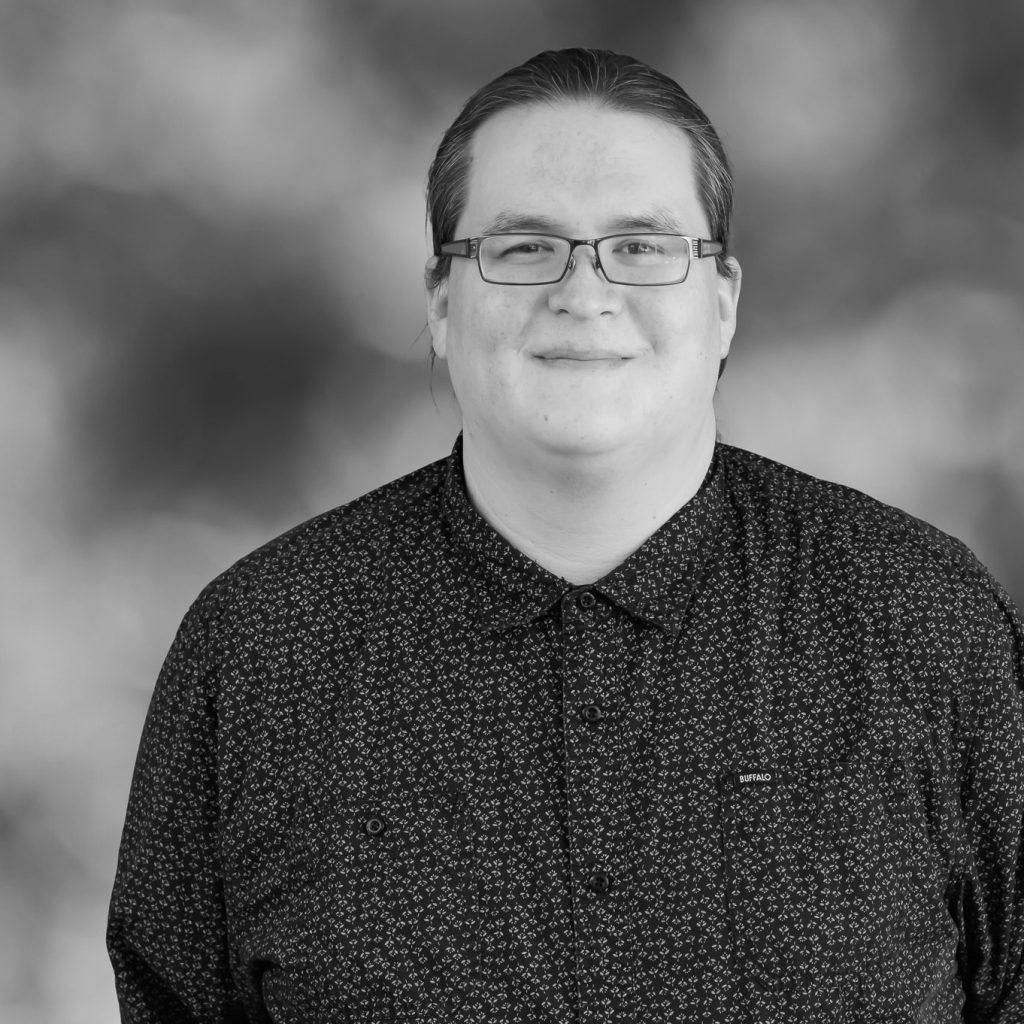
Marcus Grignon: The Tribal Elder Food Box Program created in 2021 as a response to the COVID pandemic is the foundation of The Great Lakes Intertribal Food Coalition (GLIFC) formed in 2022 to lead the program. The goals of GLIFC is to provide healthy, culturally appropriate food from tribal and local food producers to elders in tribal communities and create a market for agriculture and food producers to build a regional food system. We contract with tribal and local food producers to purchase their products. Once we receive the products, we divide them up into individual boxes and distribute these boxes twice a month at no cost to tribal elders.
Currently, how many tribe members have access to the box and what are the different tribes that are served? Can you share a story about the impact of the box program?
Marcus Grignon: Currently, we serve 10,623 (18% of WI Tribal population) tribal elders with 34,625 food boxes each year. The impact of the Tribal Elder Food Box Program creates generational change. What we mean by generational change is tribal communities love to share — our elders when they receive their food box share the products through making meals to feed their children and grandchildren. Not only are our elders getting healthy and culturally appropriate food, but also the future generations of tribal nations. We are changing the health disparities of tribal communities one tribal elder food box at a time.
And finally how can farmers outside of the tribe sell into the Elder Food Box? And what kinds of products are the members looking to get?
Marcus Grignon: Collaboration and partnerships are key to the longevity of GLIFC. GLIFC is a vehicle for a native/non-native alliance that is critical in agriculture communities. When we started the Tribal Elder Food Box Program, we only had 7 tribal producers. Today, we have 39 tribal food producers. Producers outside of the tribe have been a lifeblood for the Tribal Elder Food Box Program and helped us build where we are today. The products in the food boxes change every season, but our elders enjoy protein, honey, maple syrup, potatoes, carrots, green beans, berries, traditional teas, wild rice, and squash.
Is there any additional information you would like to share with our audience?
Marcus Grignon: Yes! The Great Lakes Intertribal Food Coalition, which has recently received its own 501c3 nonprofit designation. We will be starting a capital campaign to raise money for FY27 food purchasing for the Tribal Elder Food Box Program (TEFBP) in the coming months. All information about GLIFC, the TEFBP (including previous annual reports), and the giving campaign launching soon can be found at the website: greatlakesintertribalfood.org
About Michigan Farm to Institution Network
The Michigan Farm to Institution Network (MFIN) helps people across the farm to institution supply chain learn, connect, and collaborate. Since 2014, we have provided a space for learning, sharing, and working together to help farm to institution programs grow in Michigan. Learn more: mifarmtoinstitution.org
About Michigan State University Center for Regional Food Systems
The Michigan State University Center for Regional Food Systems advances regionally-rooted food systems through applied research, education, and outreach. We do this by uniting the knowledge and experience of diverse stakeholders with that of MSU faculty and staff. Our work fosters a thriving economy, equity, and sustainability for Michigan, the nation, and the planet by advancing systems that produce food that is healthy, green, fair, and affordable. Learn more: foodsystems.msu.edu