Navigating the trail: Understanding trail markers
 Print
 Email
Different trail systems use different types of markings to indicate the direction of the path. When hiking, it’s important to know what to look for and how to read common types of trail markers.
Have you ever been hiking and gotten to an area where the trail was suddenly more difficult to recognize? Or perhaps you came across intersecting trails and did not know which way to turn? If so, you likely now know the importance of trail markers.
Trail markers provide hikers with a reference point other than the beaten path to help them stay headed in the right direction. They come in many different shapes, sizes and materials. Understanding common markings and researching specific trail systems ahead of time can help hikers navigate their way and avoid getting lost.
Signs and posts
Some established trail systems have their own manufactured signs installed along the route. Often, these signs include numbered posts and a corresponding map which shows the distance between posts. These types of trail markings are among the easiest to read and are most common on shorter trails. Depending on the length of the trail and distance between posts, they may be combined with other trail markings such as blazes.
Blazes
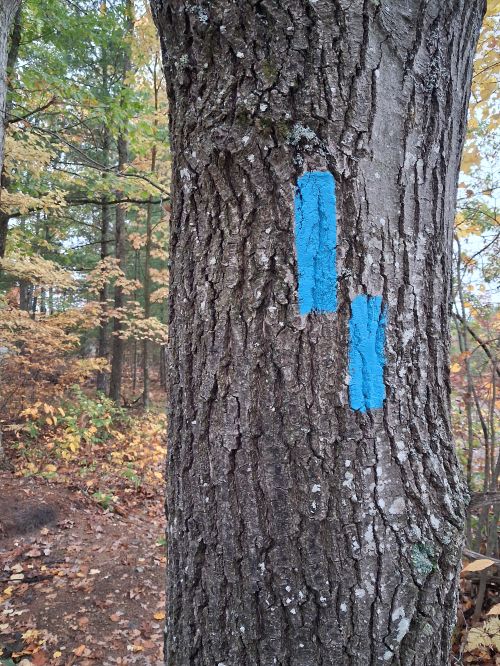
Blazes are typically two-inch by six-inch solid color rectangles painted on trees along a trail. They are common on long-distance trails such as the North Country Trail, which spans from North Dakota to Vermont. Individual trails maintain the same color blaze for their full distance, making it simple to stay on the correct trail when others overlap or intersect. A single rectangle indicates that you are following the trail, while multiple rectangles in different configurations have other meanings. For example, two rectangles side-by-side with the left rectangle higher than the right indicates a left turn ahead.
Cairns
In areas with few trees and hard, rocky ground not suitable for posts, cairns are sometimes used to indicate a trail. Cairns consist of a pile of rocks stacked high enough to stand out from the surrounding landscape. Some areas on Michigan’s Isle Royale rely heavily on cairns as trails travel through large sections of exposed rock outcrop. These trails require good hiker etiquette, as it can become very confusing if people disassemble cairns or build new ones.
Other tips for reading trail markers
Manufactured signs, blazes and cairns are some of the most common trail markings. However, even with these markings, hikers can find themselves in areas where the trail is difficult to distinguish. Michigan State University Extension recommends keeping these other tips in mind:
- Plan ahead. Know what markings are used on the trail you plan to hike before you head out and, if possible, locate and bring a map with you.
- Pause when you are unsure. If you’re hiking along and realize you no longer see a trail marker, turn around and look for one going in the other direction. Go back to the last marker you saw and look again before you continue.
- Pay attention to changes. If you’re hiking along and realize the type or color of trail marker has changed unexpectedly, it’s important to find out why. Generally, trails maintain the same marking type and color, and this may indicate that you’ve wandered on to an intersecting or spur trail.
- Be alert on overlapping trails. Some trails share routes with others, including other hiking trails or motorized paths. If there are two types of markers on a trail, you are likely on a shared trail. The Michigan Department of Natural Resources provides information on signs that indicate trails are part of a motorized path. When on a shared path with recreational vehicles, stay alert and to the right of the trail.
Following these tips and understanding trail markings can help ensure you don’t wander or get lost on your next hike!