


Mycotoxins in feed Part 3: Mitigation from field to feeder
 Print
Print Email
EmailInspired by a very wet Michigan spring, this series provides a refresher on mycotoxins, their effects and mitigation in pig production.
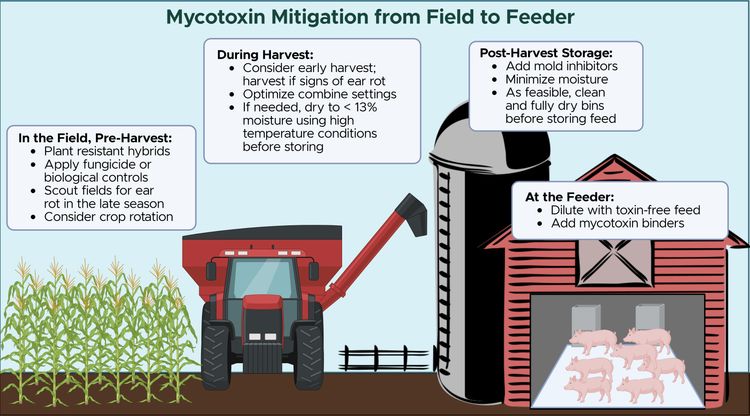
Now that you’re familiar with mycotoxins from Part 1 and Part 2 of our series, let’s talk about how to reduce your risk. Effective mycotoxin mitigation begins with understanding their fungal sources. Fusarium is the group of fungi responsible for producing the mycotoxins critical to pig production (fumonisin, vomitoxin and zearalenone).
- Fumonisin: Fusarium verticillioides (Rosa Junior et al., 2019)
- Vomitoxin and zearalenone: Fusarium graminearum (Wang et al., 2019)
These fungi live in fields, take advantage of insect-damaged plants and thrive in wet conditions. They can overwinter, thus infecting the next cycle of crops and contaminate animal feed with mycotoxins before or after harvest. Mitigation strategies occur at four levels:
- in the field pre-harvest
- during harvest
- post-harvest processing and storage
- at the feeder
Before the barn
The most effective mitigation strategies occur in the field and at harvest. If you are involved in the growing process, you can use resistant hybrids, such as Bt corn, and fungicides or biological controls to minimize the growth of the fungal species responsible for mycotoxins. You should monitor your fields for signs of ear rot and, if spotted, consider harvesting early to prevent further spread. During harvest, there are several recommendations for combine settings to minimize the amount of damaged, infected corn that is harvested and can contaminate feed.
During storage
For operations large enough to use feed bins, several steps can help reduce contamination risk. If the production system allows, run the bins empty before adding more feed. Bins should be cleaned with a pressure washer twice per year, with special attention given to the boot where the auger sits at the base of the bin. After cleaning, bins should be allowed to fully dry before adding the next batch of feed. The feed itself can be treated with mold inhibitors to prevent further growth and accumulation of fungus, but this does not address mycotoxins already present in the feed. Regardless of operation size, pest management is another important step in preventing feed contamination.
At the feeder
What if after all that, feed tests positive? In most cases, dilution is the solution. Feed processors can mix feed with a known mycotoxin concentration with toxin-free or less contaminated feed to achieve a lower total concentration that falls within safe thresholds.
Additionally, mycotoxin binders can be added directly to the feed to reduce negative impact on animals consuming the feed. Mycotoxin binders bind to the mycotoxin, preventing it from being absorbed by the animals’ gut and entering circulation. These are already routinely added to most livestock feeds.
However, not all mycotoxin binders are built equally. The most commonly used are aluminosilicate binders, which are natural, inorganic substances including clays and bentonites. These binders are highly effective against aflatoxin but are not effective against vomitoxin (deoxynivalenol, DON), fumonisin or zearalenone; this is why these three mycotoxins present a major concern for pig health. Aluminosilicate binders also bind to more than just mycotoxins, which can reduce utilization of trace minerals and vitamins from the diet. Given that binder effectiveness depends on the specific mycotoxin, selecting a mitigation product is best done in consultation with a feed supplier or nutritionist.
There is no single solution for preventing or managing mycotoxins in pig feed. Instead, reducing risk takes multiple management strategies starting in the field and ending at the feeder. Preventing fungal growth and contamination whenever possible, properly managing harvested feed, and knowing options are available to employ when contaminated feed is identified can help limit the impact of mycotoxins. The earlier problems are identified and addressed, the more options producers have to protect pig health and performance.
Articles in this series
Mycotoxins in feed Part 1: A quick guide for pig producers
Mycotoxins in feed Part 2: Key mycotoxins that matter in swine