MSU, Michigan DNR partnership reshaping management of northern hardwood forests
 Print
 Email
A decade of research is revealing why northern hardwood forests are struggling to regenerate and what can be done to help them recover.
*This story is part of a series highlighting the impact of MSU AgBioResearch’s work with Michigan agriculture and natural resources that includes our stakeholders' perspectives. Through partnerships with the State of Michigan and industries, MSU AgBioResearch is finding solutions to some of the timeliest problems facing our state. To view the entire series, visit agbioresearch.msu.edu.
EAST LANSING, Mich. — For forests to be appropriately managed, proper regeneration and recruitment of diverse saplings into mature trees is essential.
Regeneration refers to the birth and establishment of individual trees, and recruitment refers to their survival and growth into forest understories.
Foresters and landowners have long trusted that their harvesting practices would successfully promote forest regeneration and recruitment, but over time, practitioners and researchers began noticing that the expected results weren’t being achieved.
Research done by Michigan State University (MSU) scientists over the last 10 years has corroborated this observation, showing that long-practiced harvesting techniques have largely been unsuccessful at regenerating and recruiting Michigan’s northern hardwood forests.

Through this same research, MSU scientists have also shown and continue to study how different management strategies can resolve the ways in which regeneration has become stagnant and recruitment has become bottlenecked.
Northern hardwood forests cover more than 5 million acres in Michigan, including roughly 460,000 acres managed by the Michigan Department of Natural Resources (DNR), and play a central role in the state's economy, ecology and recreation.
Given the vast extent of northern hardwood forests in Michigan and the many benefits they provide, foresters and landowners must move beyond traditional management approaches and adopt practices that successfully promote regeneration and recruitment, said Eric Stier, managing director of American Forest Management Inc.'s Northern U.S. and Central American Operations.
.jpg?language_id=1)
“In many ways, we need to hit the reset button on how we manage these forests, and MSU is helping us identify strategies for how to do that,” Stier said.
In 2016, MSU AgBioResearch scientists Mike Walters and Gary Roloff, in collaboration with the Michigan DNR and forest industry partners, designed one of the largest forest research projects ever to be done in the U.S.
The purpose of this joint and continuous effort among MSU, the Michigan DNR and Michigan’s forest sector is to regenerate and recruit desirable tree species that would create a more diverse and rich landscape of trees.
Desirable species for this study are those that have brought timber and wildlife value to the forests, some of which are now underrepresented. These include basswood, black cherry, hemlock, northern red oak, sugar maple, white pine and yellow birch.
Traditionally, foresters have prescribed partial harvesting methods such as selection harvests to manage northern hardwoods. Through this action, individual or small groups of trees are marked for harvests every 15-20 years based on a stand’s condition to create space in the canopy, with a goal of letting younger trees grow and fill that space.
For this ongoing study, Walters, an associate professor emeritus in MSU’s Department of Forestry, and Roloff, a professor emeritus in MSU’s Department of Fisheries and Wildlife, equally divided 141 30-acre stands across northern Michigan into different harvest groups. These stands have been historically managed using selection harvests, but for this study, the researchers compared selection harvests to:
- Gap-based harvests: Multiple entire patches of trees from 0.3-1.0 acre in size are removed within stands.
- Shelterwood harvests: Trees are removed to leave about 50% canopy cover.
- Seed-tree harvests: Only about six to eight trees per acre remain after a stand is harvested.
Likewise, two understory treatments have been simultaneously studied to understand which practices, in combination with the above overstory treatments, are most effective in encouraging desirable seedling establishment, growth and recruitment into forest understories as saplings. Those treatments have included:
- Leave-tops treatments: Low-value parts of treetops are left on the ground after harvesting, creating a complex underbrush intended to diminish the movement of deer and their browsing of tree saplings.
- Herbicide and scarification treatments: Competing vegetation, including shrubs and undesirable tree regeneration, is sprayed with herbicides, while the soil is loosened and exposed to encourage the germination and growth of desirable tree species.
These experimental stands were harvested in 2017, and their growth has been monitored now for nearly a decade.
In their 2025 dissertations, Evan Farinosi and Melissa Starking, former doctoral students of Walters and Roloff, described key findings they said would aid in future forest regeneration and recruitment.
Farinosi, now a reforestation specialist with the Michigan DNR, said that harvests conducted at higher intensities than traditional selection harvests are critical for successful forest regeneration and recruitment. However, he emphasized that regeneration and recruitment outcomes depend on more than harvest intensity alone. The abundance and composition of young trees already present before harvesting can strongly influence a forest’s ability to regenerate, recruit and maintain species diversity.
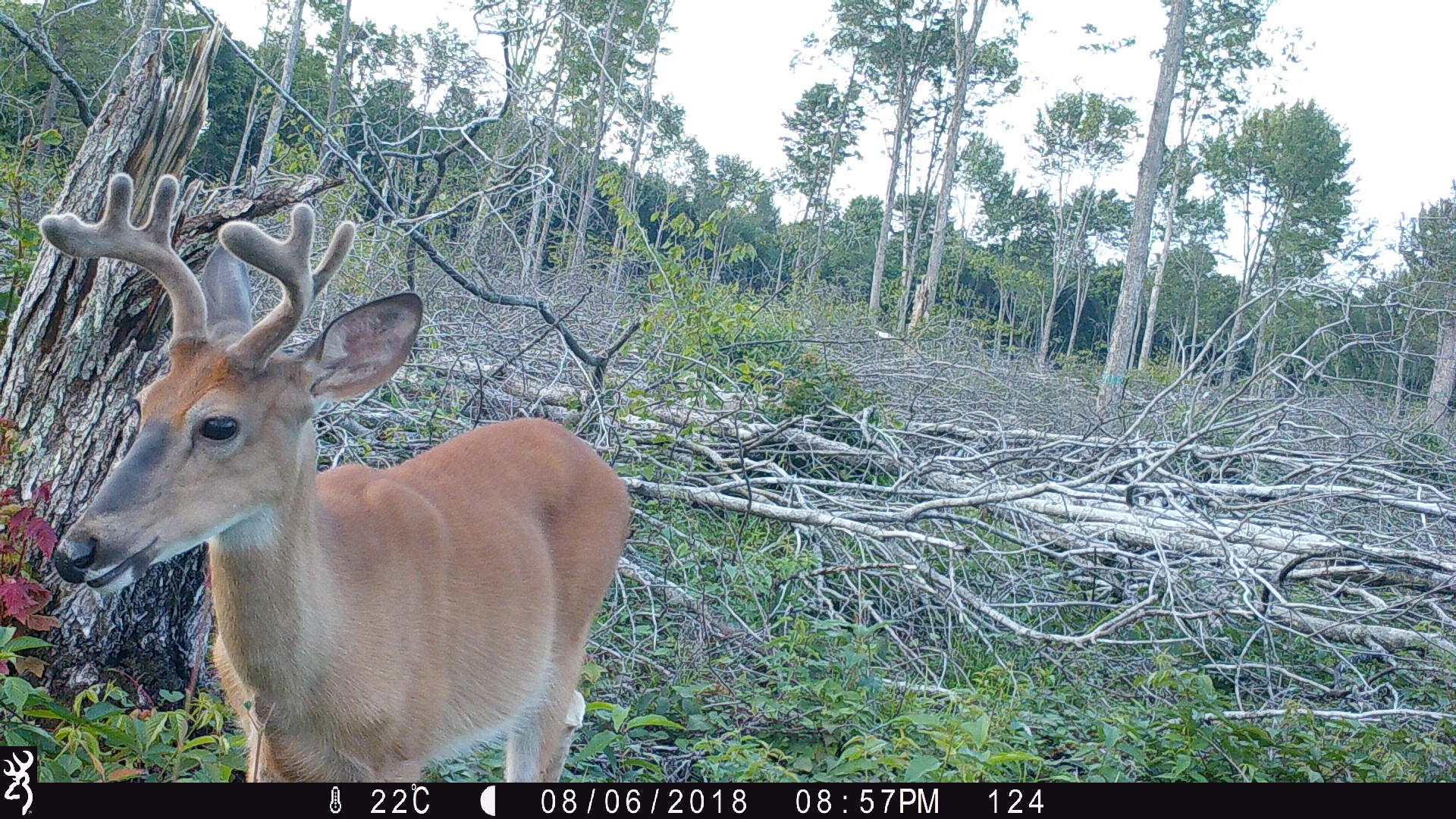
Starking, now an assistant professor in biology at the University of Michigan-Flint, said her research showed that leave-tops treatments effectively reduce wildlife disturbance, particularly from deer, helping promote regeneration and recruitment in stands.
“The work led by our teams, including Dr. Farinosi and Dr. Starking, is expanding our understanding of how to manage forests to support diverse regeneration and recruitment of northern hardwoods,” Walters and Roloff said. “Forests provide vital economic, ecological and recreational benefits for people, wildlife and the environment, making their long-term stewardship critically important. The findings from this project can help position Michigan as a model for sustainable forest management across the U.S. and Canada.”
What’s at stake for northern hardwoods and what’s being done
Dan Heckman, a forest planning and modeling specialist with the Michigan DNR, has a clear message for why this work matters.
“You can only thin a stand so many times without successfully regenerating and recruiting it before you either run out of trees or you change its forest condition to the point where you’re no longer talking about a northern hardwood stand,” Heckman said.
Maintaining healthy northern hardwood forests matters for more than just sustaining the trees themselves. These forests support a wide range of ecological and economic benefits that extend far beyond the woods.
One of their signature forest products is seen on TV every year during March Madness, but Heckman said that pales in comparison to some of the life-sustaining services they provide, including habitats for migrating birds, carbon sequestration for the planet and clean drinking water for people.
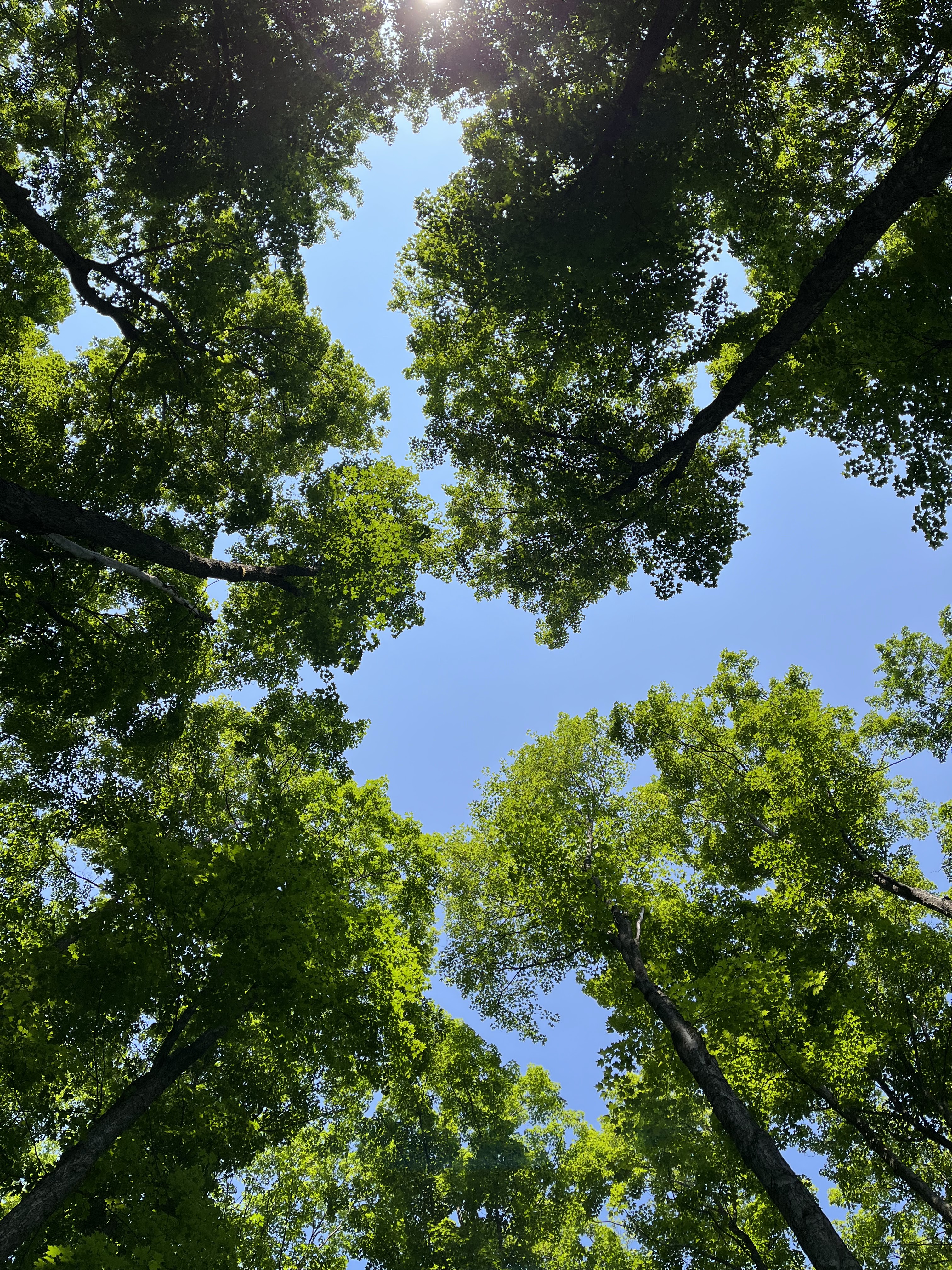
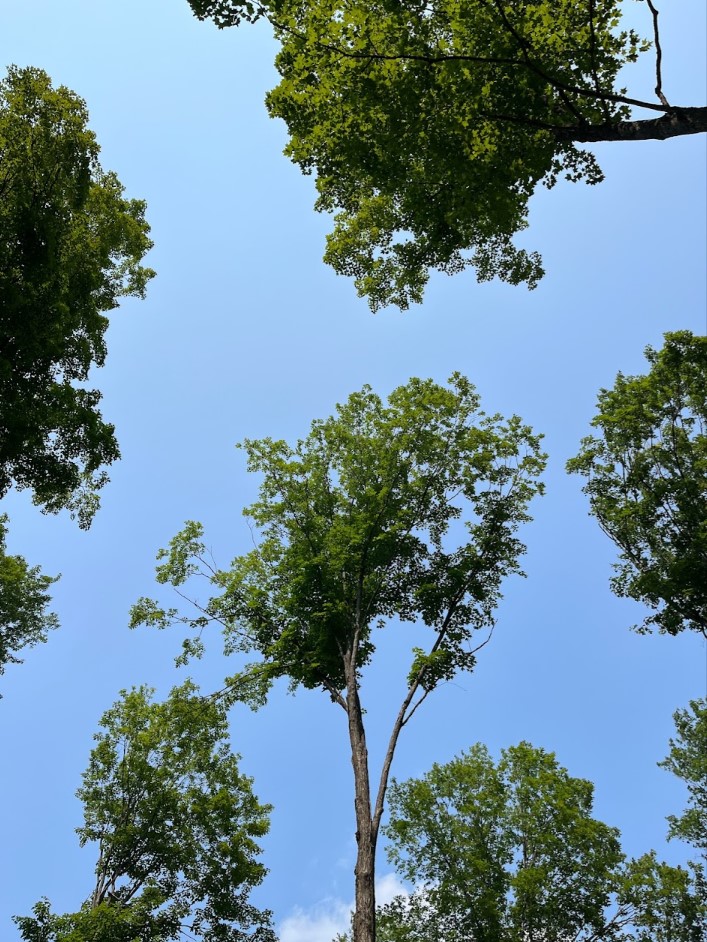
“Even for those that don’t step into a northern hardwood forest ever in their life or maybe don’t even know what that is, the ecosystem services provided by those 460,000 acres of state land, as well as all of Michigan’s northern hardwood forests and those in the Northeast and Canada, are a big deal. I would argue protecting them is the most important thing we can do.
“We could all live without a wood basketball court at the NCAA finals — we don’t want to, but we could live without that. We couldn’t live without the services provided by northern hardwood forests, so it’s critically important they’re sustainably managed.”
Heckman said the research shows there is no one-size-fits-all approach to managing northern hardwood forests. That is especially true when considering how wildlife and other parts of the ecosystem interact with forests, said Bill Scullon, a U.P.-based field operations manager with the Michigan DNR's Wildlife Division.
“It’s certainly true deer affect regeneration and recruitment to some extent, but are they the sole limiting factor? This research is indicating that’s not necessarily the case,” Scullon said. “We’re starting to learn that some of our silvicultural practices — what we’ve done historically or are still doing — are not the best practices.”
This study has provided gainful insights on how deer, snowshoe hare and other wildlife navigate forest landscapes, according to Scullon. He said it’s important to preserve forests as habitat for deer and other wildlife, noting people enter forests for many reasons, including hunting and connecting with nature. At the same time, he said the research shows that leave-tops treatments can reduce deer disturbance of seedling and sapling growth while increasing biodiversity.
Understory treatments like this, in combination with higher intensity harvests and the consideration of other factors occurring within a stand, are showing that they can regenerate and recruit northern hardwood forests, Scullon said. The key will be getting buy-in from landowners and forest managers alike.
Stier, who works with and represents clients from small landowners to large management organizations, said maintaining and furthering collaboration among private industries, public agencies and academic institutions is crucial for putting these ideas into practice.
“We all have to work together, and part of that is for a credibility sense,” Stier said. “If all these techniques are done only on state land, people can use the argument, ‘Well, I don’t manage that way,’ or vice versa. Having different landowner types involved has been very important. Collaboration with landowners and researchers is almost a requirement for a study like this. Otherwise, people will add an asterisk that says, ‘This was a skewed study.’”
Building on a decade of forest regeneration and recruitment research
Trees take generations to grow. For this project, which started 10 years ago, a new class of researchers will look to carry on the work started by Walters and Roloff. Starking, who earned her doctorate degree from MSU in 2025, is one of those researchers.

“Forests and their timescale and our timescale are so completely different,” Starking said. “Some of us won’t be around to see the end results when we’re thinking about some of the seedlings that are just now taking hold. The big lesson is to not give up on the project and to keep going because we’re going to learn things, and the study design is set up so that we can continue asking questions and finding out additional insights that we’d never be able to find if we weren’t monitoring these changes over space and time.”
From a wildlife perspective, Starking said continued funding will provide a deeper understanding of how animals such as deer, hares, birds, bats and other species interact with and use the canopies and floors of northern hardwood forests.
David Carter, an associate professor in MSU’s Department of Forestry with research interests in applied forest ecology and silviculture, has also joined the project.

He said the future of northern hardwood forests is reliant on continued funding for this work to be done. According to MSU Extension, sugar maple, red maple, red pine, northern white-cedar, northern red oak, quaking aspen, bigtooth aspen, black cherry and hemlock make up 70% of total timber volume in Michigan, and Michigan forests add approximately $20 billion to the state’s economy.
If this work weren’t happening, the next generation of key northern hardwood species such as sugar maple would be severely threatened, according to Carter.
“Sugar maple, among others, is the species that has long been supporting the timber industry in Michigan, and we’re noticing a bottleneck in it perpetuating itself,” Carter said. “We don’t see as many seedlings. We don’t see as many saplings out there as we once did. And despite the fact a system was developed that was thought to support sugar maple in the long term, it doesn’t seem to be working. About 80 years later, we’re only now realizing that what we’ve been doing all this time isn’t consistently getting sugar maple and other northern hardwood species to come back.
“What that means is that in the not-too-distant future, if we don’t do something dramatic now, we might be facing a severe shortage in an economic cornerstone of the state.”
Michigan State University AgBioResearch scientists discover dynamic solutions for food systems and the environment. More than 300 MSU faculty conduct leading-edge research on a variety of topics, from health and agriculture to natural resources. Originally formed in 1888 as the Michigan Agricultural Experiment Station, MSU AgBioResearch oversees numerous on-campus research facilities, as well as 15 outlying centers throughout Michigan. To learn more, visit agbioresearch.msu.edu.