Michigan vegetable crop report – July 8, 2026
 Print
Print Email
EmailWild swings in weather across the region have growers facing a diversity of adversity.
Weather
The past week saw temperatures 8-10 degrees above-normal, with heavier precipitation to the south declining to the north. The currently flat Jetstream is expected to get more wavy by next week. This can create more extremes and swings.
- Showers and thundershowers likely northwest Wednesday, July 8, slowly spreading to the southeast into the northern Lower Peninsula overnight, and into the southern Lower Peninsula on Thursday. Scattered showers possible in the southern Lower Peninsula Friday morning, otherwise fair and warm elsewhere. Fair, dry and warm statewide this weekend through early next week.
- High temperatures generally from the 70s north to near 90 south Wednesday and Thursday, then 80s this weekend warming to the upper 80s to low 90s early next week. Low temperatures in the 50s north to mid-60s south Thursday and Friday and the upper 50s to low 60s this weekend.
- Potential evapotranspiration rates during the upcoming week will be significantly higher than normal.
- Medium range outlooks call for warmer and drier than normal weather for the middle of July.
PFAS resources
Michigan State University Extension has a collection of resources related to PFAS contamination in agriculture. Find more information about this on the dedicated MSU Extension website, PFAS Contamination in Agriculture.
Cyclosporiasis update
Cyclosporiasis is an illness caused by the parasite Cyclospora cayatenensis. People become infected by consuming food or water contaminated with feces containing the parasite. Fresh produce is a common source of infection because it is often eaten raw. Cyclospora is not known to spread from person to person.
To help reduce the risk of contamination this growing season, consider the following practices.
Wash your hands before you touch the produce. Whether you pick, grade or just smooth the apple boxes in a field, the last thing you should touch before produce is a single-use paper towel to dry your hands from washing.
Clean all food contact surfaces. Follow the flow of food from the time it’s picked. Think pick bags, harvest aids, buckets, mechanical harvesters, clippers, etc. If you wouldn’t lick it, keep cleaning.
Sanitize when necessary. If you know there was poop on a surface, if you THINK there was poop on a surface, if you think there was poop in water on a surface, sanitize it after you clean it and before you use it again.
Sweat the cleaning details. If you can, use warm water and a little bit of food-safe soap when cleaning. Wash from top to bottom. Use clean water (no detectable generic E. coli) and/or treat it with some residual free sanitizer left. Aim for visibly free of filth.
If you have any questions about Cyclospora or other food safety topics, contact an MSU Extension food safety educator. You can also visit the MSU Extension Food Safety website for additional food safety resources.
Crop updates
Asparagus
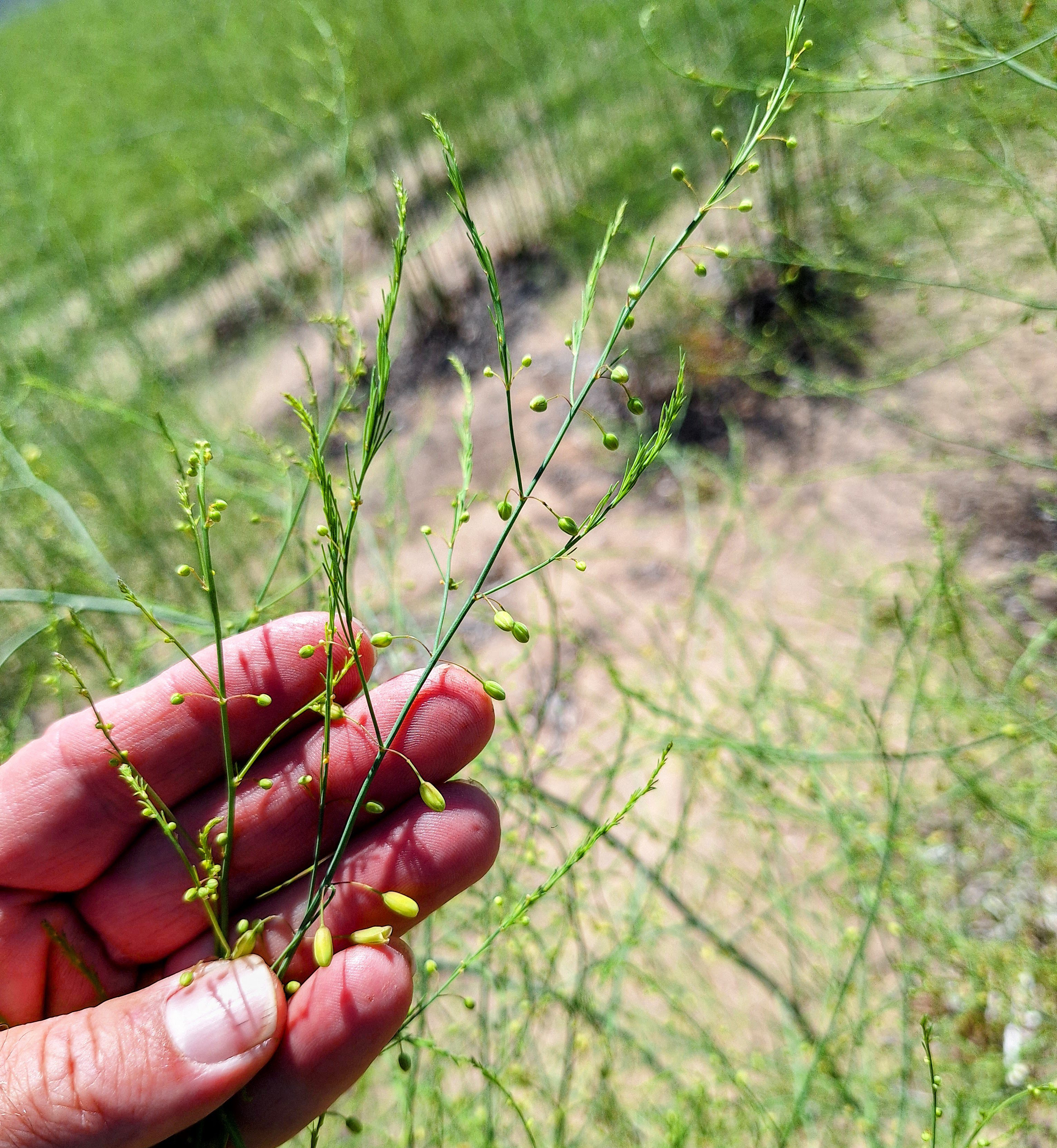
Asparagus is ferning out in west central Michigan. Growers are applying fungicides to mature fields.
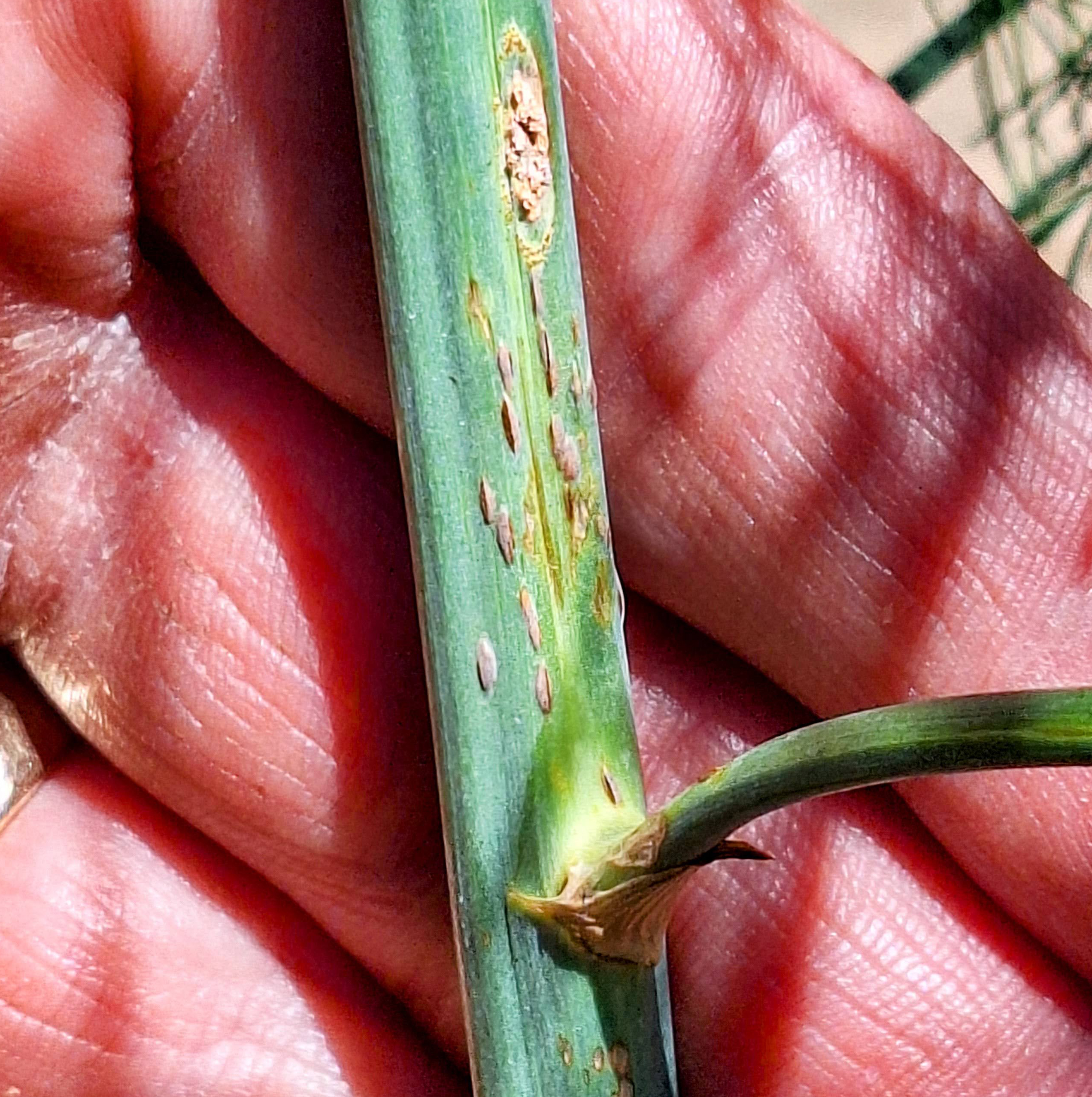
Asparagus rust had developed in some fields that were shut down earlier and are already in fern. Scout the main stem and side branches for uredospore lesions, the orange blisters that are the summer repeating stage of this pathogen. Fields that had an epidemic last year or are near to ones that did are at highest risk.
Begin fungicide applications before an epidemic develops. Tebuconazole is the main rust specific fungicide we have available. Past trials showed that azoxystorbin, chlorothalonil and mancozeb can help reduce rust when part of a weekly spray program, but on their own were less or not effective when sprayed at longer intervals.
Purple spot, or Stemphylium, is a main focus of fern season fungicides. The main available products include chlorothalonil, mancozeb and azoxystrobin, which was highly effective in the most recent MSU trial. Single-site fungicides like azoxystrobin that attack the pathogen at one weak point are at special risk for resistance. Tank-mixing azoxystrobin with a protectant like chlorothalonil or mancozeb and alternating it with protectants can help reduce this risk.
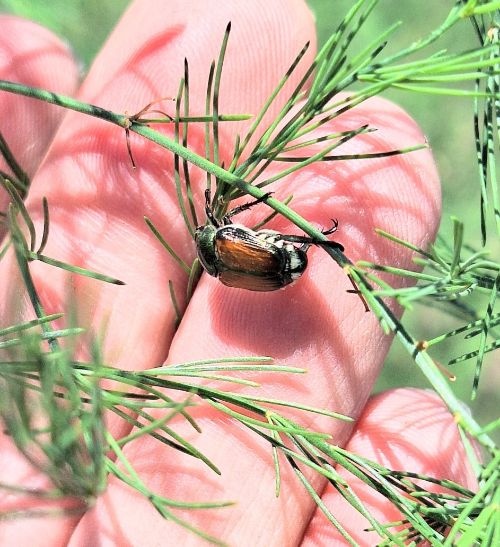
Japanese beetle was present at low numbers in a few locations MSU Extension visited. Acetamiprid, carbaryl and permethrin are all effective.
Carrots and celery
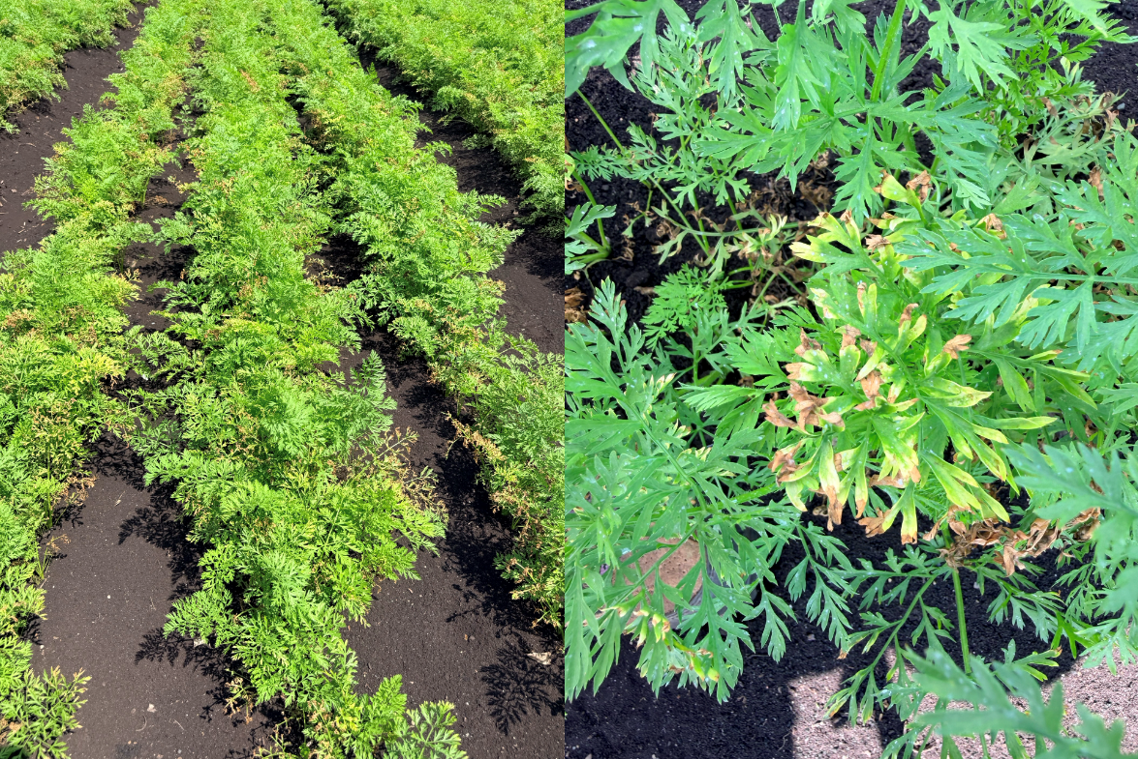
For celery, scouts report that celery leaftier moths continue to be present, as do aphid colonies at the site where they were initially detected.
Aster leafhopper populations have been low recently in the eastern part of the state.
For carrots and celery, leafhopper samples continue to be collected by MSU Extension and scouts and tested by MSU Plant and Pest Diagnostics. Results from the western counties continue to find infectivity between 4% and 7%. To receive this information as soon as it is available, sign up for aster leafhopper text alerts.
Phytoplasma infectivity of aster leafhoppers:
|
County |
Collection Date |
Infectivity (%) |
|---|---|---|
|
Oceana |
July 6 |
5.9 |
|
Lapeer |
July 1 |
0 |
|
Oceana |
June 30 |
4.2 |
|
Muskegon |
June 25 |
6.5 |
|
Newaygo |
June 25 |
4.3 |
|
Lapeer |
June 23 |
0 |
|
Ottawa |
June 22 |
2.1 |
|
Ottawa |
June 22 |
6.5 |
Root crops
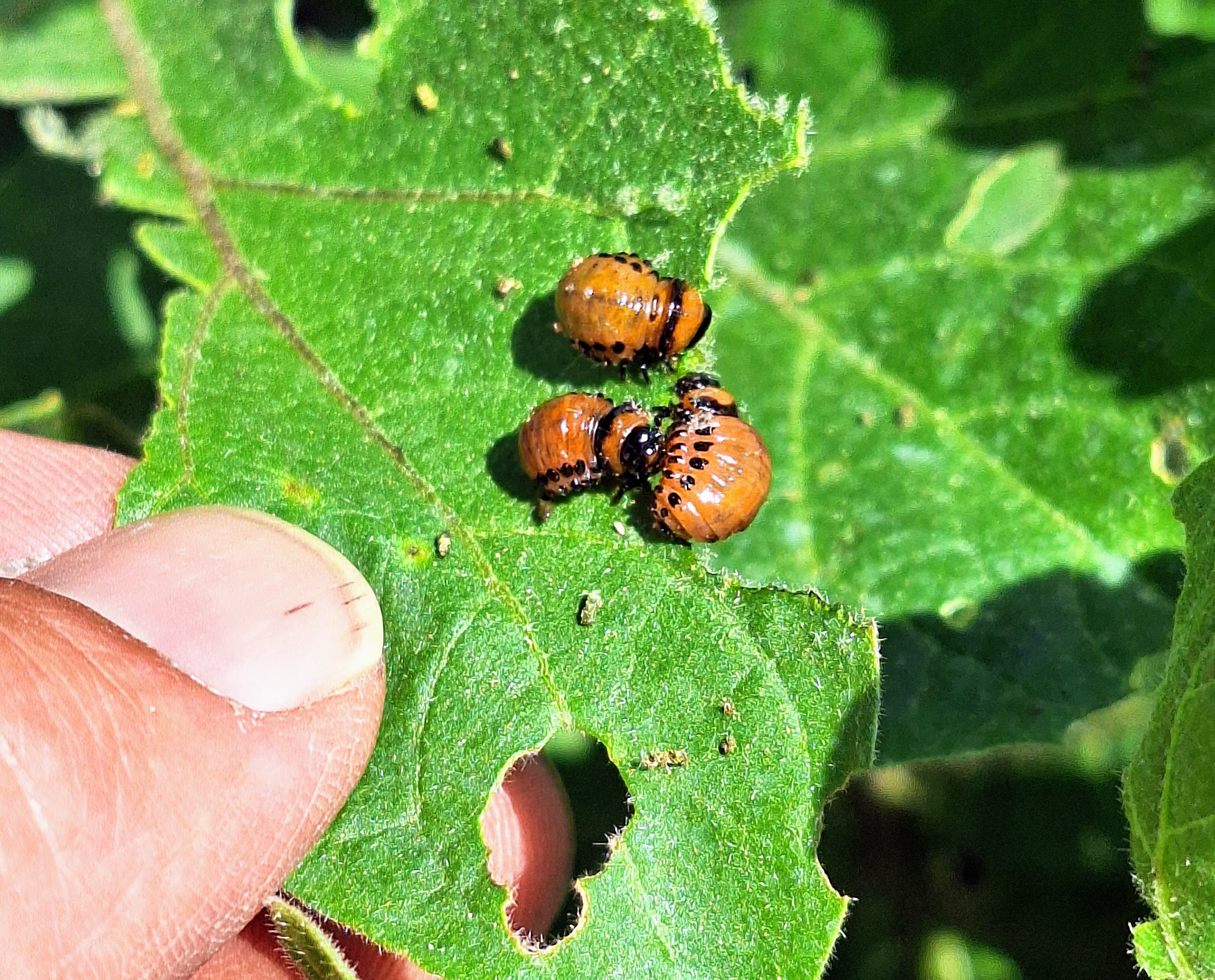
For potatoes, the neonicotinoid Imidacloprid has been a go-to insecticide for Colorado potato beetle, but other modes of action are available if resistance management is a goal. This recent MSU Extension article has a nice table of insecticides that are available. Neonicotinoids, the class that includes things like Admire, Wrangler and Platinum, is group 4A. Things with other numbers are in other groups. For organic growers, pesticides containing the active ingredient spinosad can be helpful, but are most effective at killing larvae when they are small.
Imidacloprid is often used to treat potatoes at planting and provide systemic control. However, it only lasts in the plant for 50–60 days. So, seeing additional eggs and larvae later in the season does not necessarily mean it was not helpful, and applying a foliar spray at this point is expected.
Cucurbits
Pumpkins benefitted from last week’s heat and are growing well. Flower sex ratio is an important determining factor for yield. With inconsistent temperatures the ratio of male to female flowers can change in a way that suppresses yield, and there can be differing responses by variety. For example, one variety of yellow squash in the Southwest Michigan Research and Extension Center variety trial has almost no female flowers on it, while another yellow squash and all the green zucchini appear normal.
In addition to the plant response to heat, honey bees can divert their energy to seeking water and cooling their hive instead of foraging. Multi-pick cucumbers, zucchini and summer squash can see a delayed yield dip about a week later from this lack of foraging where female flowers make misshapen or aborted fruit.
Cucurbit downy mildew spores continue to be captured across the Michigan State University’s trap network. To date, all spores are clade 2, which affects cucumbers and melons. Clade 1, which affects squash, has not been detected (and only occurs some years in Michigan). Read this article for more information and a list of effective fungicides. As always, you can track the spread of downy mildew with the Cucurbit Downy Mildew forecasting website.
Bacterial leaf spot symptoms have been observed on cucurbit leaves. Disease can include leaf spots on foliage, vines and fruit, but this may depend on the specific crop/cultivar infected and the specific bacterial pathogen involved. Bacterial pathogens can be challenging to manage in the field.
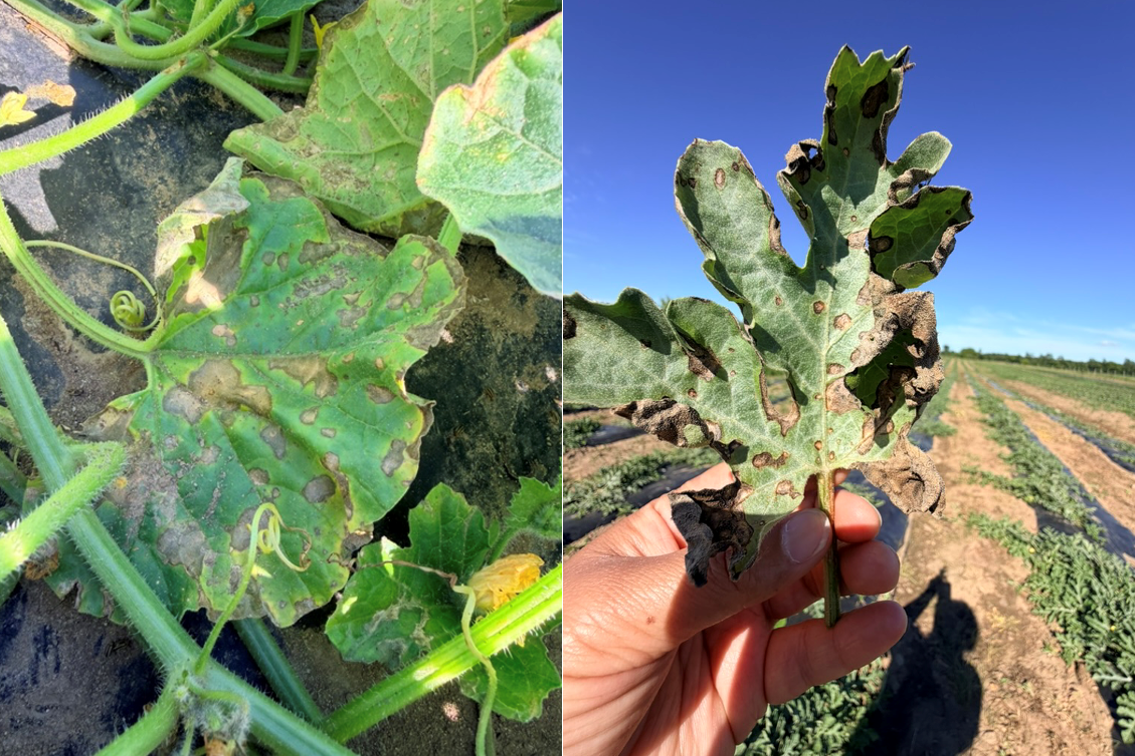
Phytophthora can be found in many places, especially in areas with a history of the pathogen and in low spots where the recent rains have gathered into pools.
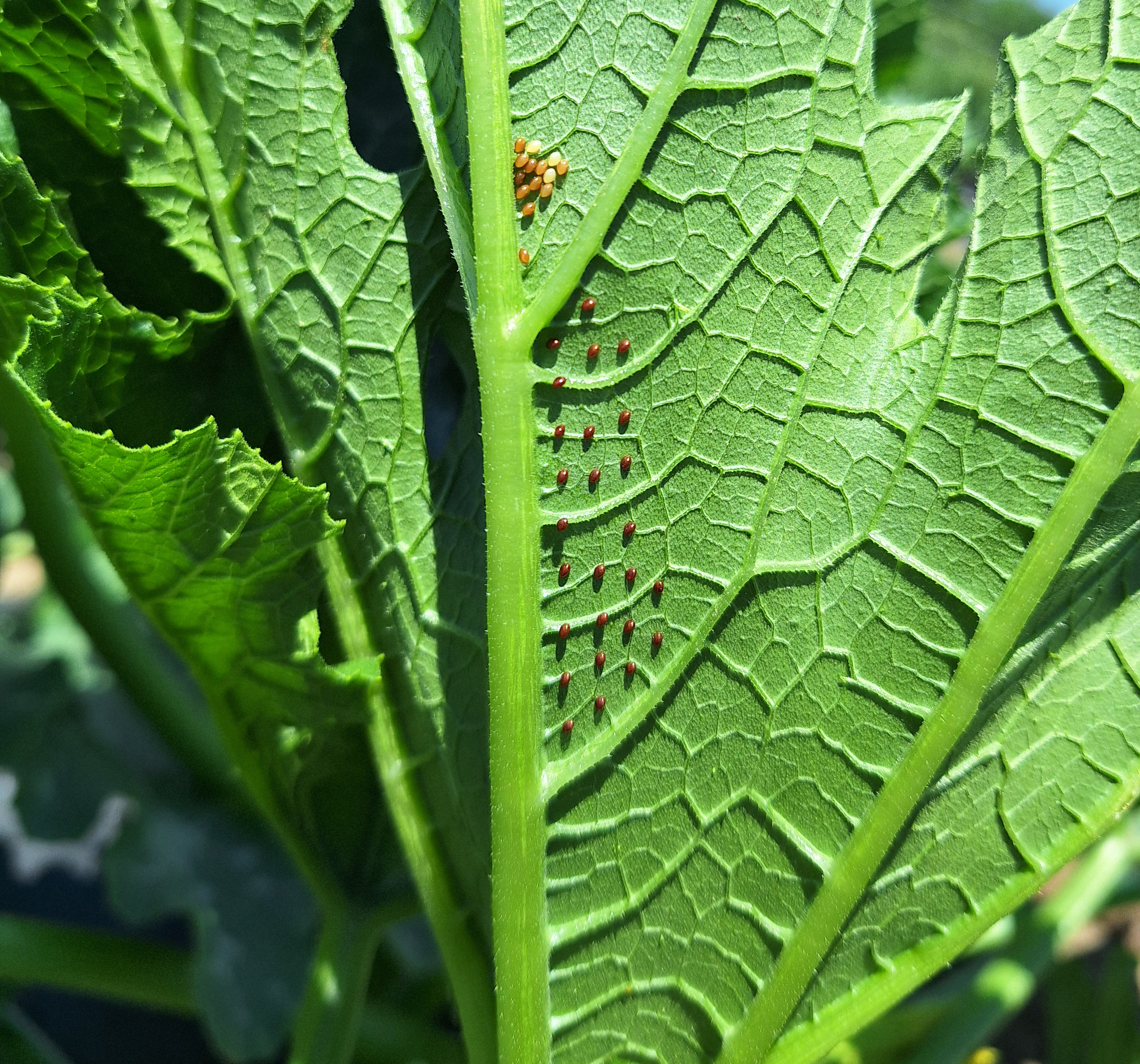
Squash bug eggs and adults are present in some locations. Insecticides can target newly hatched nymphs, or baby squash bugs, as they become difficult to kill when they are older. Scouting can be helpful as the time to egg hatch varies with temperature. Read more about managing squash bugs and cucumber beetles.
Brassicas and greens
Managing onion thrips in cabbage requires a combination of cultural practices with timely insecticide applications. Planting thrips-tolerant varieties can help reduce damage while selecting rye instead of wheat as a winter cover crop and avoiding cabbage/cole crop production adjacent to wheat fields can help minimize thrips pressure. Feeding injury is often concentrated in the outer wrapper leaves, so trimming away damaged tissue at harvest can improve marketability.
When insecticide applications are needed, rotating products with different modes of action is important for effective control and resistance management. A recommended program is to apply each insecticide twice in succession at 10-day intervals. The following sequence of insecticides provided the best control in field trials: Radiant, Exirel, Assail and Lannate. Always follow current label directions and observe all preharvest intervals and other application restrictions. For more information about thrips control in cabbage, read “Managing Thrips & Other Pests on Cabbage” from Ohio State University.
Fruiting vegetables
Field harvest of peppers and tomatoes is quickly approaching. Strong winds like the ones that swept through last week have been known to knock flowers off of pepper plants and delay fruiting. Mancozeb (Manzate) is a helpful preventive fungicide early in the season with a five-day preharvest interval (PHI). It works similar to chlorothalonil (Bravo), which has a shorter PHI of three days that can be easier to slot in around harvests.
Pseudomonas has been confirmed on some pepper samples sent to MSU Plant and Pest Diagnostics. This pathogen can grow on peppers that are resistant to Xanthomonas and less tolerant of heat.
Garlic and onions
Garlic is being harvested across the region. Some growers have reported plants showing no signs of drying down. The best course of action is to allow them to bring that leaf energy down into the bulb at their own pace, even if others are harvesting.
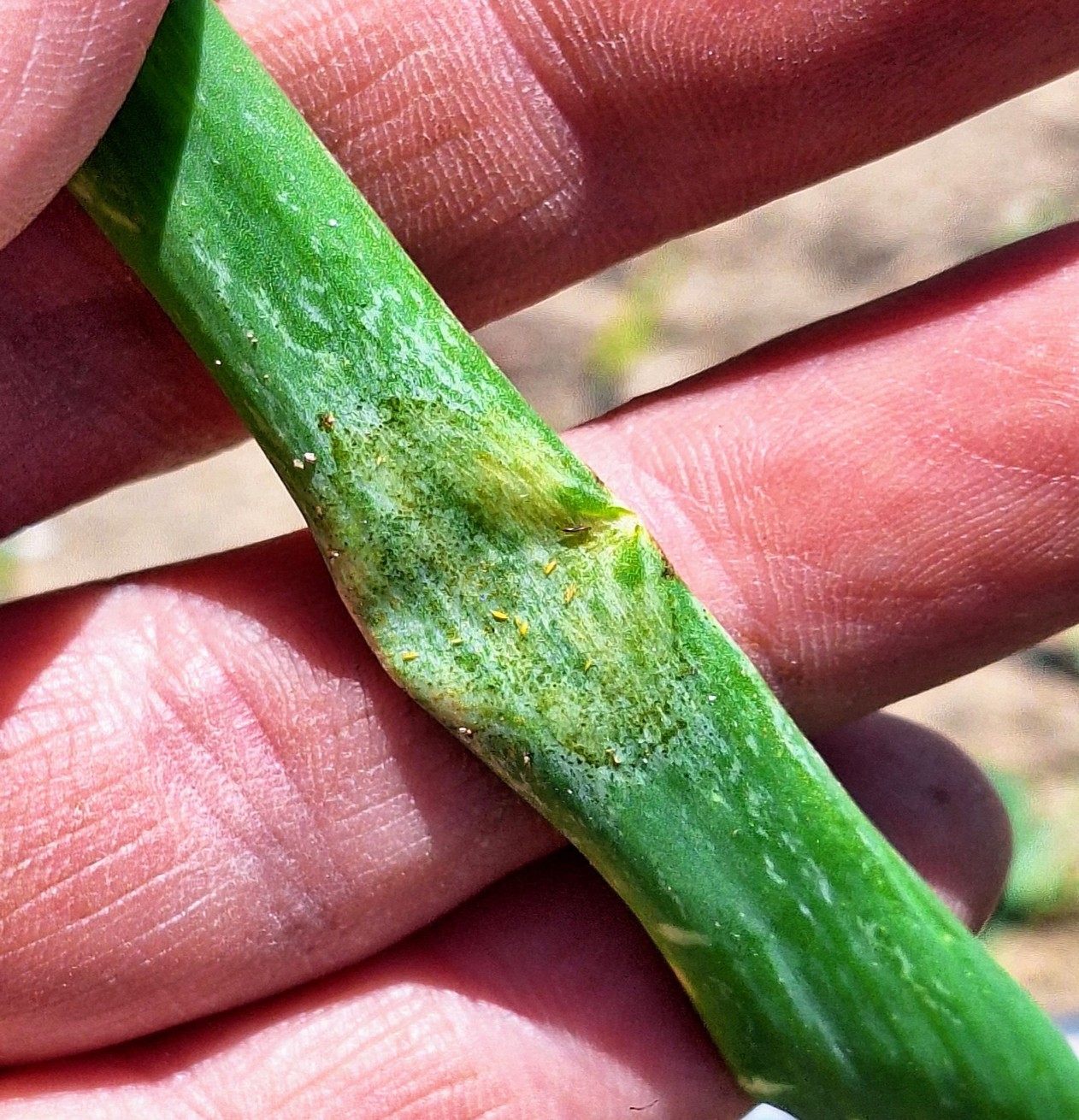
There are a variety of options for post-Movento onion thrips control. You can choose products for the next spray slot based on thrips density. When numbers are between 0.6 and one per leaf, consider Agri-Mek, Lannate plus Warrior, or Radiant. When numbers are between 1.1 and two per leaf, consider Minecto Pro, Exirel or Vertento. When numbers are over 2.1 per leaf, consider a three-way mix of Lannate plus Warrior plus Agri-mek, Exirel alone or Vertento alone. In locations where Radiant is still effective, it may provide help under higher pressure.
For resistance management, it is helpful to only apply a mode of action in a maximum of two back-to-back applications to only select one thrips generation for resistance. Be aware that abamectin products such as Minecto Pro and Agri-Mek have a longer PHI of 30 days.
Sweet corn
Sweet corn is being harvested. There is an uptick in western bean cutworm populations. Western bean cutworm larvae can be distinguished from corn earworm, the more common caterpillar pest of sweet corn, by distinct bodily markings. Western bean cutworm has two solid black markings behind the head and a torso with no notable markings. Corn earworm lacks the double marks, but has various stripes running up and down the length of its body. Read more in this article “Know Your Worms in the Ear” from Purdue Extension.
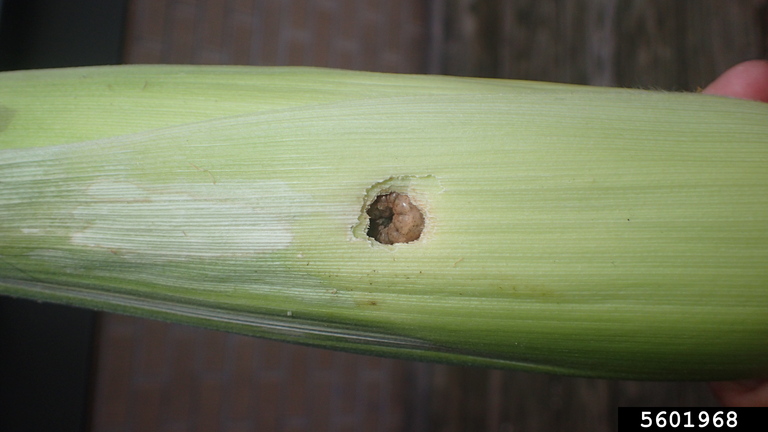
Also, the name western bean cutworm is sort of a misnomer. It does not clip plants at the soil level like black cutworm but instead feeds on the tip of sweet corn ears. It has also been known to bore into the sides of ears to feed, as noted in this MSU Extension article “Scout sweet corn for western bean cutworms.. See this Ohio State University article as well for more information.
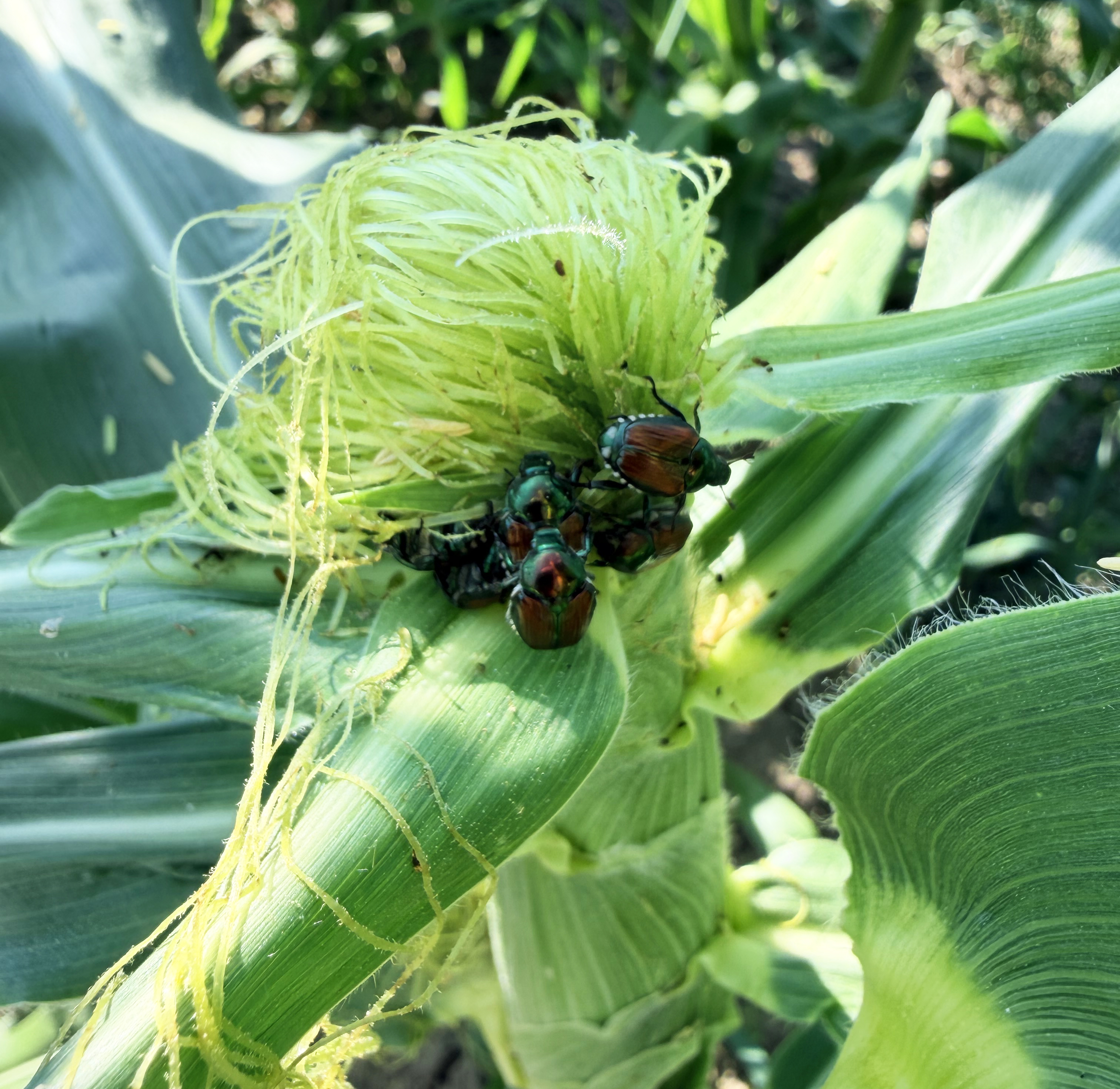
Japanese beetles have been observed on sweet corn silks. They are typically not considered a major problem. Borders with preferred crops are typically more infested. Raspberries and grapes are favorites for Japanese beetles, but they also feed on asparagus, leafy greens and beans. Managing larvae in larger turf areas can help, but Japanese beetles fly in from other areas.
Tar spot was detected on field corn in Ohio and has been detected in several Indiana counties over the past few weeks. Tar spot has been known to infect sweet corn as well. You can track the detection of this disease across the U.S. with the Corn ipmPIPE website.
Cooperating scouts captured corn earworm early this week at two west central Michigan locations. They have also been finding western bean cutworm in traps. As of Tuesday, July 7, corn earworm was present at modest levels in these traps. Dead European corn borers were also found in tassels following insecticide application. A single pyrethroid application at row tassel can manage this pest and also kill western bean cutworm that are present before silking. After silking, corn earworm sprays take over and clean both up.
Table 1. Corn earworm captures. Total in trap for week1 (avg # per night2).
|
Week |
Ottawa Co.4 |
Oceana Co.4 |
|---|---|---|
|
June 28 |
15 (1.5) |
- |
|
July 5 |
- |
0 |
1Total number collected since last trap check; 2The total number divided by the number of nights since the last trap check; 3Cloth Heliothis traps track trends but catch less moths overall; 4Wire Harstack traps capture more moths.
Table 2. Western bean cutworm captures. Total in trap for week1 (avg # per night2).
|
Week |
Ottawa Co. |
Oceana Co. |
|---|---|---|
|
June 28 |
2 (0.2) |
- |
|
July 5 |
- |
3 (0.01) |
1Total number collected since last trap check; 2The total number divided by the number of nights since the last trap check.
Insect Forecast predicts little to no risk for additional corn earworm migration through this weekend.
To our south, corn earworm was present but at low numbers in Ohio State University’s trapping network as of July 5. Western bean cutworm numbers were increasing. Unlike corn earworm, this pest overwinters in the Midwest, so it emerges and peaks and then declines.
How often should you check corn earworm traps? Since this pest is migratory, numbers can change rapidly when conditions favor south to north air movement. One strategy is to check on whatever schedule works for you and then watch the Insect Forecast website. It uses weather conditions to predict when conditions are ripe for more moths. If it is predicting a flight risk after you check your trap, recheck it after to see if things changed.
Produce Food Safety On-Farm Readiness Reviews
Schedule an On-Farm Readiness Review (OFRR) today for a 2-hour educational visit that takes place during the harvest season and is meant to be casual and low stress! Everything discussed during an OFRR is confidential, and focused on ways a grower can reduce their own risks in relation to produce safety. There is no pressure to take our advice either, we are just here to support you in your produce safety efforts!
Events
- July 21, 2026: Washtenaw TOPP Farm Tours – Whitmore Lake/Dexter/Willis, MI
- July 23, 2026: Beekeeping Workshop – Novi, MI
- July 25, 2026: Beekeeping Workshop - Lansing, MI
- July 30, 2026: Summer Irrigation Workshop - Hickory Corners, MI
- July 31, 2026: Berrien County Organic Agriculture: Tour 3 Value-Added & Agritourism Farms – Sodus/Buchanan/Three Oaks, MI
- August 6, 2026: 2026 Potato Field Day – Lakeview, MI
- August 11, 2026: West Michigan Organic Farm Tour: Explore Farm to Institution Markets from schools to hospitals – Muskegon/Whitehall, MI
- August 11, 2026: Michigan Agricultural Irrigation Water Use Efficiency Program - Lansing, MI
- August 11-12, 2026: Michigan AgroExpo – St. Johns, MI
- August 18, 2026: Northwest Michigan TOPP Field Day: Farming for People, Purpose, and Profit – Petoskey, MI
- August 20, 2026: Hillsdale Nutrient Management Field Day – Waldron, MI
- August 28, 2026: Washtenaw Conservation District Field Day – Ann Arbor, MI
- September 3, 2026: Cover Crop Workshop at SVREC- Frankenmuth, MI
- September 3, 2026: Fourth Annual KBS LTAR Field Day - Hickory Corners, MI
- September 9, 2026: Tillage & Soil Health Field Day – Monroe, MI
- September 10-11, 2026: Great Lakes Tek Flex – Benton Harbor, MI
- September 16, 2026: 2026 Midwest Mechanical Weed Control Weed Day – Benton Harbor, MI
- September 22-24, 2026: Farm Science Review 2026 – London, OH
- October 4-6, 2026: Northern Michigan Small Farm Conference – Bellaire, MI
- November 4-6, 2026: Michigan Agritourism 20th Anniversary Convention – Frankenmuth, MI
- December 8-10, 2026: Great Lakes Fruit, Vegetable, & Farm Market Expo – Grand Rapids, MI
This work is supported by the Crop Protection and Pest Management Program (grant no 2024-70006-43569) from the USDA National Institute of Food and Agriculture. Any opinions, findings, conclusions, or recommendations expressed in this publication are those of the author(s) and do not necessarily reflect the view of the U.S. Department of Agriculture.