Mi Fresh Fish celebrates local fish in Houghton and Escanaba
 Print
 Email
In summer 2026, the third annual Mi Fresh Fish Fest returned to Houghton while the inaugural Mi Fresh Fish event kicked off in Escanaba.
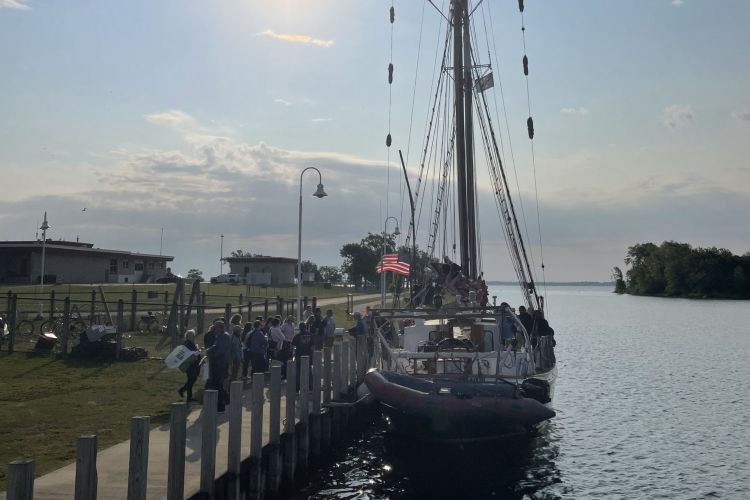
On July 10 and July 24, 2026, Upper Peninsula residents and visitors celebrated Michigan’s fisheries at the third annual Houghton Mi Fresh Fish Fry and Sail and the first Escanaba Mi Fresh Fish Fry and Sail, respectively.
Mi Fresh Fish is an educational brand celebrating all fish produced in Michigan, including from farmed or wild harvests, as well as those destined for food, bait, stocking, fee‑fishing or ornamental markets. The goal is to educate Michiganders and bring awareness to the many values of our local fisheries: food, fun, finance, function, and fellowship.
Michigan State University Extension and Michigan Sea Grant facilitate Mi Fresh Fish events such as dockside fish fries and educational sailing excursions to celebrate and showcase local fisheries through fishing heritage, supporting local fish producers, and engaging in community stewardship.
At each Mi Fresh Fish Fry and Sail event, 400 participants enjoyed seafood samples and dishes. Many engaged with vendors showcasing the cultural, ecological, and economic importance of fish. Together, both Mi Fresh Fish events generated a total economic contribution of $8,537 for Michigan’s western Upper Peninsula, demonstrating a modest but measurable local return from event-related spending.
Mi Fresh Fish on the water
In each location, fish fry festivities were preceded by morning sailing trips with Inland Seas, a vessel-based educational group from Suttons Bay. Mi Fresh Fish Sail participants boarded the Inland Seas’ tall ship schooner to learn about the local watershed, fish identification, using a trawl to catch fish, collecting and identifying phytoplankton, seamanship skills, and the benefits of seafood. Most of the participants (66-75%) said that they intend to eat more local fish after the event.
Mi Fresh Fish at the dock
In the afternoon, locals and visitors flocked to the waterfront to continue celebrating Mi Fresh Fish with a fish fry. Participants visited educational tables to learn about fish identification, fish preservation, Great Lakes fisheries heritage, and aquaculture.
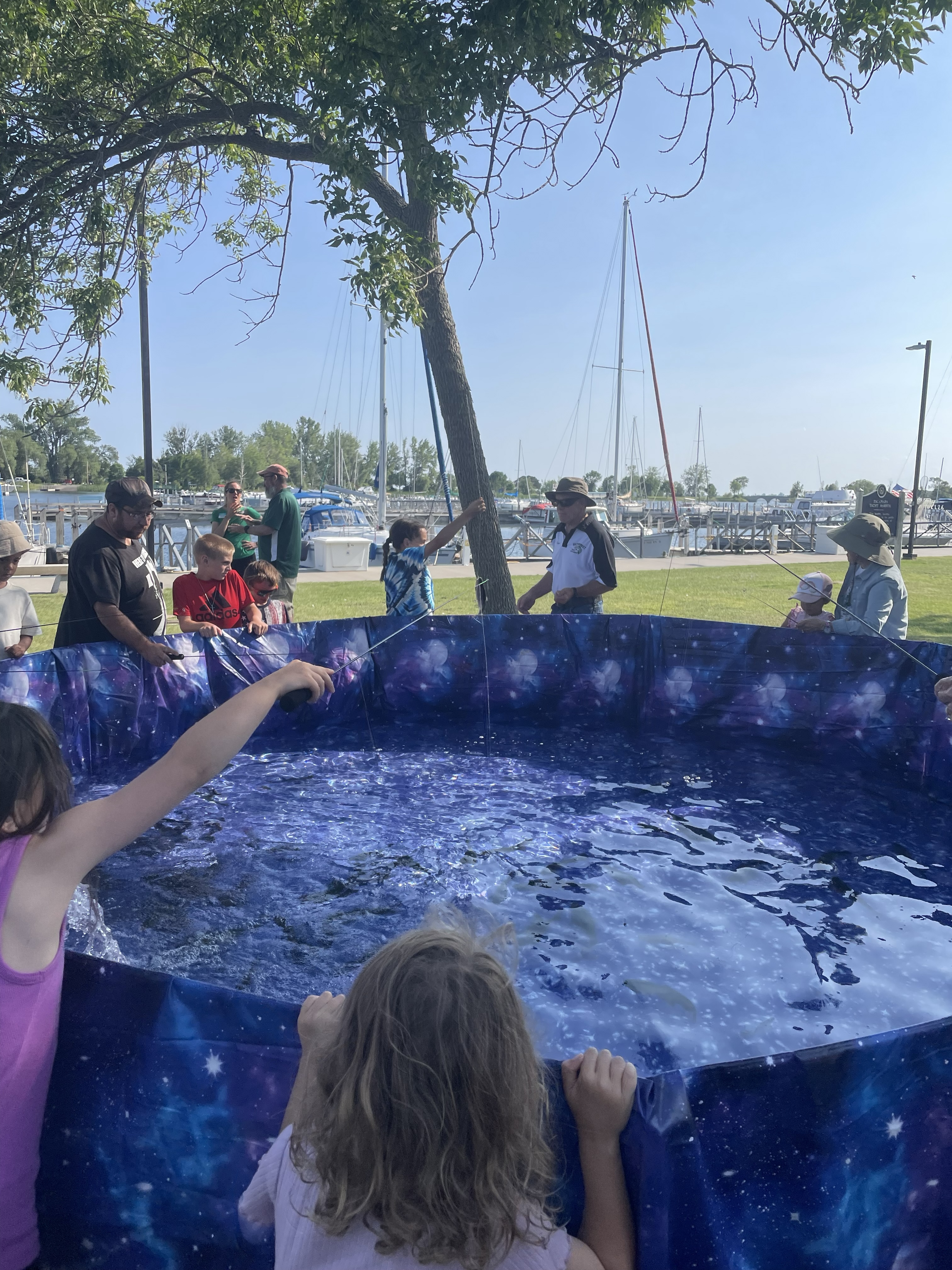
The 2026 Houghton event grew to include 19 community vendors, while Escanaba showcased 12 community vendors. The Mi Fresh Fish Aquaculture Demonstration Tank hosted live rainbow trout from the Watersmeet Trout Hatchery and Fish Farm in a simplified aquaculture system display. Other activities included a selfie station with a commercial fishing trap net boat and fish costumes, as well as live music.
The most popular site at each event, however, was the cooking tent. Chefs at the Houghton event served up recipes like First Catch Fish Fry and Superior Sushi Rolls, while Escanaba participants got to taste Michigan’s Dunk’N’Fry Whitefish and Pan-fried Tavern Yellow Perch.
Cooking together
Mi Fresh Fish events gather many groups under one roof, united by a shared love of fish. This was especially true under the cooking tent at the Escanaba Fish Fry, where Zach King and Bill Herbst worked together to prepare and serve fried fish.
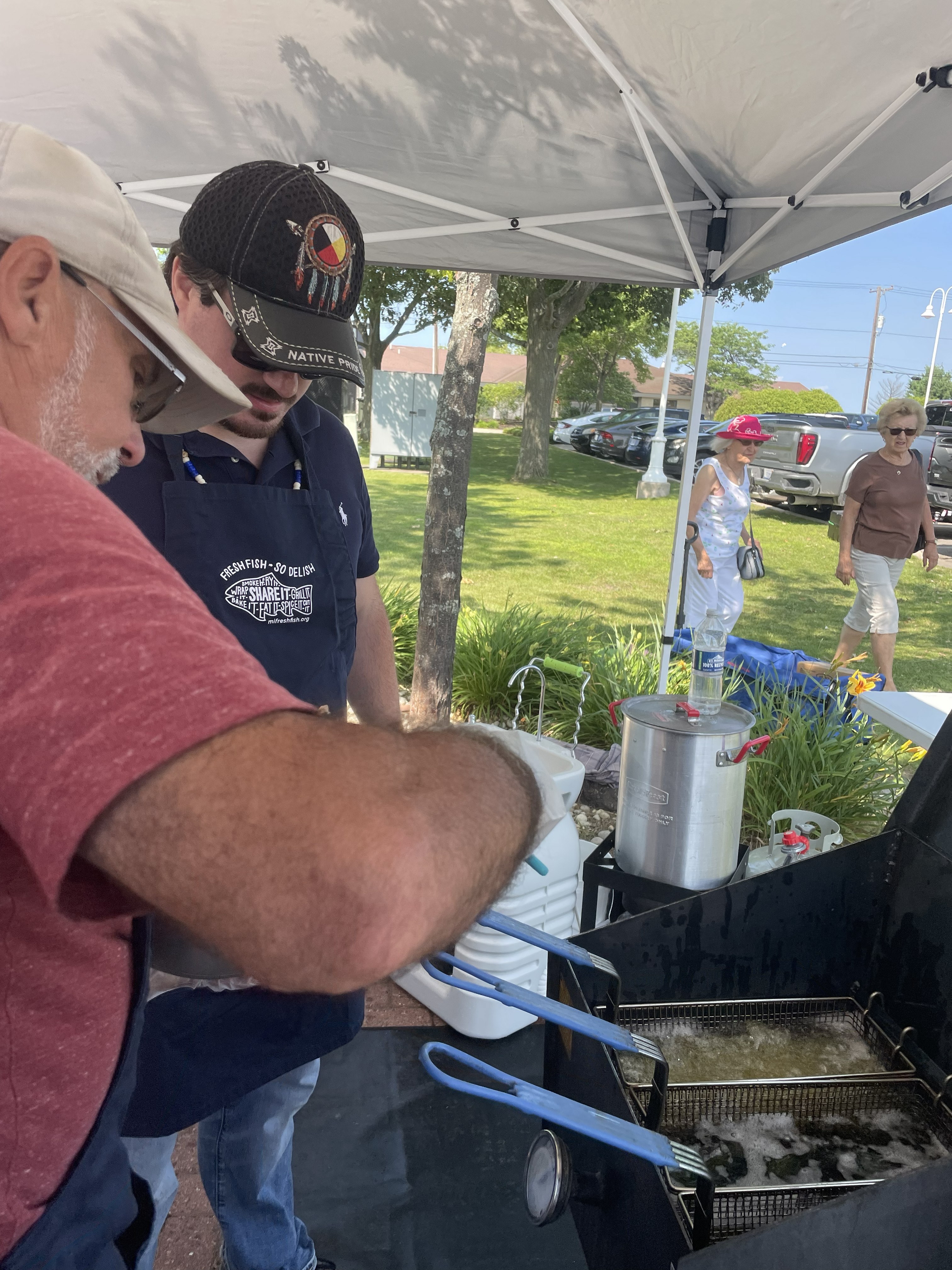
Zach is a tribal commercial fisherman and seafood processor from King’s Fish Market in Naubinway, and Bill is the president of Bay de Noc Great Lakes Sports Fishing Club. They represent two different relationships with fish that don’t always see eye-to-eye. However, the two exchanged phone numbers after Bill showed Zach how to cook fish to perfection using the on-site deep fryer, and Zach gave Bill advice on fishing in Lake Michigan waters. Despite their different viewpoints, the Mi Fresh Fish Fry brought them together over the shared values of fish, food, and fellowship.
The inaugural Escanaba Mi Fresh Fish Fry was made possible through the generous support of the Daniel J. Kobasic Foundation, whose investment strengthened Michigan Sea Grant’s ability to deliver meaningful impact across the Escanaba and U.P. communities.
Michigan Sea Grant helps to foster economic growth and protect Michigan’s coastal, Great Lakes resources through education, research, and outreach. A collaborative effort of the University of Michigan, Michigan State University and MSU Extension, Michigan Sea Grant is part of the National Oceanic and Atmospheric Administration (NOAA)-National Sea Grant network of 34 university-based programs.
This work was supported by The Great Lakes Aquaculture Collaborative under award NA22OAR4170627. This article was prepared by Michigan Sea Grant under award NA24OARX417C0157-T1-01 from the National Oceanic and Atmospheric Administration, U.S. Department of Commerce through the Regents of the University of Michigan. The statement, findings, conclusions, and recommendations are those of the author(s) and do not necessarily reflect the views of the National Oceanic and Atmospheric Administration, the Department of Commerce, or the Regents of the University of Michigan.