Keeping bears at bay: How to store your food when camping
 Print
 Email
An estimated 12,450 black bears live in Michigan. Knowing how to properly store your food is an important part of being a responsible backpacker and camper.
Michigan’s black bears are majestic creatures and a thrill to see in the wild under the right conditions. Most negative human-bear encounters can be traced to improper food storage or violations of other Leave No Trace principles. It is the responsibility of backpackers and campers to keep food securely stored to reduce negative human-wildlife interactions.
In general, black bears are not aggressive towards people unless they are surprised, approached or threatened. However, bears can become aggressive over time when they learn to associate people with food due to improper food storage practices. Many camping areas, such as state and national parks, will post notice when bears have been seen frequenting a campsite and may close areas where there have been frequent human-bear encounters. If you have concerns about camping in areas where bears are active, visit the park website or reach out to a park official before your visit.
When camping in bear-populated regions, planning ahead can reduce the risk to both people and animals. Michigan State University Extension provides the following tips and guidelines for cooking and storing food, as well as other scented items.
General tips
Regardless of how or where you are camping, the following are universal tips for proper food storage to avoid attracting bears and other wildlife to your campsite. Remember, food storage requirements vary in different areas: be sure to know the specific rules for the area you are visiting.
- When setting up your campsite, designate separate areas for sleeping, cooking/eating and food storage. When possible, keep these zones at least 70 big steps from each other.
- Wash your dishes in your cooking zone and have food packed up before dusk.
- Never store or use anything scented in your tent. This includes food and any other scented items such as deodorant, toothpaste or bug spray. Treat all scented items like food.
- If you notice signs of recent bear activity or improper food storage at a campsite, take photos so you can report it to camp authorities and consider relocating to a different site if possible.
- Follow the rule of “arm’s away, you’re okay.” Anytime you will be further than an arm’s length from food or other scented items, pack them away properly.
- Pack out all food scraps and trash. Keep food scraps/trash, food and other scented items separated in heavy-duty, resealable bags and store them properly.
- Never burn food or trash in a firepit, as bears can smell the odors from far away and long after they are burned.
Options for storing food
There are several food storage options to choose from, dependent on where you are camping. Campers should research ahead of time and make a storage plan based on the options and rules at each campsite. The important thing is to keep food and scented items secured so they are difficult for bears to access and separate from your sleeping area.
- Car camping: Your car serves as a safe food storage area when you are car camping, if you have a hard-topped vehicle and the windows are rolled up. Do not store food in a vehicle with a soft-top, such as a convertible, or in truck beds with soft covers. Always park your car away from your tent and near your cooking or food storage zone.
- Bear canisters: Bear-resistant food containers are becoming an increasingly popular option for backpackers, and certain national parks and other areas require them. While these canisters can be bulky, they can also be used to store food and scented items in your backpack to avoid empty space and keep other items from absorbing odors. The Interagency Grizzly Bear Committee (IGBC) has developed criteria and testing for bear-resistant certification and maintains a list of certified options. Containers with this certification can simply be stored on the ground away from your sleeping area.
- Food lockers: Some camping areas provide food storage lockers at each campsite. Simply store your food and scented items in these lockers and set your tent up in a separate area. You should only store food and scented items in a food locker. The rest of your pack and materials should be stored elsewhere.
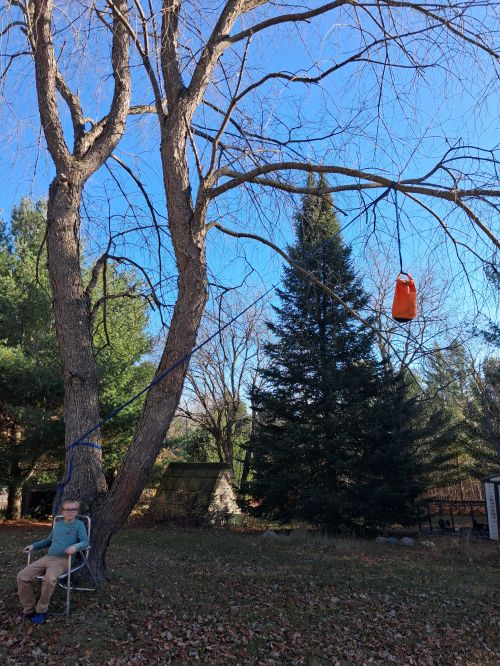
- Bear hangs: Hanging food is another option that is especially handy in the backcountry but takes some practice. Place your food and other scented items in a sack, attach it to a rope, and hang it from a tree branch at least 12-15 feet from the ground and eight feet from the tree trunk. Tie the loose end of the rope around the tree trunk. There are several techniques for “bear bagging,” and it’s highly recommended that you practice and consider tree availability on your route before relying on this method.
Specific mandates
Some areas in Michigan and around the country have specific mandates for how food must be stored. Here are some examples:
- Isle Royale National Park requires the use of IGBC-certified bear canisters where food storage lockers are not available on the island.
- Porcupine Mountains Wilderness State Park provides bear poles at most backcountry campsites and requires their use. Upright poles are equipped with a hook to hang your food sack 12-15 feet from the ground and a separate pole is provided to raise and lower the sack.
- Grand Island Recreation Area provides food storage lockers or bear poles at all backcountry campsites and day use areas.
Keep in mind that where specific options are provided, their use is mandatory. Following these food storage guidelines is an important part of being a responsible camper. More information on food storage and other bear safety topics can be found through BearWise.