MSU Extension programs build skills and confidence for people managing chronic conditions
 Print
 Email
Through evidence-based chronic disease and chronic pain self-management workshops, Michigan State University Extension helps people build practical skills for navigating the everyday realities of living with ongoing health conditions.
Chronic conditions are a growing part of life across the adult lifespan. As the U.S. population ages, many adults are also managing more than one health condition at a time, and chronic conditions are becoming more common earlier in adulthood. In 2023, the CDC reported that 51% of U.S. adults, about 130 million people, reported living with two or more chronic conditions. Among adults ages 65 and older, that figure was 79%. Even among adults ages 35 to 64, more than half reported multiple chronic conditions.
The likelihood of having a chronic condition increases with age and a shocking one-in-three Michiganders are over age 55. Michigan also ranks near the bottom nationally, 43rd, in health rankings because of the high percentage of residents with multiple conditions. These statistics show a need to support those living with chronic conditions.
These trends are helping broaden conversations about chronic disease beyond what happens during a doctor’s visit or at the end of life. Health systems, public agencies and community organizations are increasingly considering how people can be supported in living with and managing health in the places where daily life actually happens. While medical care is an important part of managing chronic conditions, the day-to-day realities of living with them extend far beyond healthcare settings to people’s homes, workplaces, families and communities.
It has long been Michigan State University Extension’s role to connect university research and resources with the knowledge, experiences and needs of Michigan communities. Through chronic disease and chronic pain self-management education, MSU Extension helps make evidence-based information and practical strategies accessible and useful in people’s everyday lives. The public value of health education programs reaches far beyond individual participants, contributing to healthier communities, increased workforce participation, reduced health care costs and a stronger state economy.
Building skills for everyday life
MSU Extension’s Personal Action Toward Health (PATH) series are six-week workshops that help adults build practical skills for managing ongoing health conditions. The Chronic Disease PATH program supports people living with a range of chronic conditions and their caregivers, while Chronic Pain PATH focuses specifically on living with persistent pain and includes a focus on communication, medications, physical activity, healthy eating and managing the emotions that can accompany living with chronic conditions. PATH programs cannot replace medical intervention. Instead, the workshops focus on skills participants can use while navigating their conditions in everyday life, including when interacting with the healthcare system itself.
Many PATH participants are managing complex health circumstances. Among those completing MSU Extension surveys, over three-quarters (75.8%) reported more than one diagnosed chronic health condition. Participants nevertheless entered classes with relatively high confidence in their ability to manage their health and reported even higher self-efficacy after the program.
That confidence, also known as self-efficacy, is accompanied by reports of concrete action. Among participants who completed the post-program survey after Extension workshops:
- 87% reported starting or continuing to exercise since the program began.
- 73% reported making changes to the foods they chose.
- 61% reported talking with a family member or friend about their health.
The survey specifically asks participants about actions they have taken since the program began, allowing these findings to describe what MSU Extension program participants reported doing during the six-week program period.
As a master trainer and Health Extension Educator providing leadership to all of MSU Extension’s PATH programming, Christi Demitz sees action planning as an especially important part of the workshop experience.
“At the end of almost every workshop, participants mention action planning as their favorite tool. Action plans increase participants’ confidence they can make changes. The sense of accomplishment often helps them try other activities to improve their quality of life. Participants also enjoy helping each other solve problems by offering solutions that have worked for them. It’s a magical workshop!”
PATH self-management education often leads to meaningful changes in how participants manage their health day to day. Participants can choose which strategies are most useful to them and build those skills over time, rather than trying to make every change at once. Weekly action planning provides structure and accountability, while movement, portion awareness, meditation, breathing exercises and communication strategies can become part of how people manage their health.
One participant described these strategies collectively as a PATH “toolbox”, one that comes with the additional reassurance that “you are not alone.”
Communication with healthcare providers is another part of that picture. Nearly half (49%) of post-survey respondents of MSU Extension PATH programs reported talking with a healthcare provider about how they could better manage their chronic condition. One participant described, after experiencing a four-day hospitalization, putting what they had learned about communicating with healthcare providers to use during the discharge process: “It empowered me to communicate more clearly, stay focused, and advocate for myself.”
For people living with persistent pain, self-management may be less about eliminating pain than developing alternative ways to respond to it. After nearly 20 years of chronic pain, a Chronic Pain PATH participant described using tracking, realistic goals, physical activity and relaxation techniques to shift their focus from “constant pain to proactive management.”
Reaching people across Michigan
Since 2023, and as of August 2026, 371 participants have taken part in MSU Extension PATH programming through an ACL-funded project. PATH participants have come from at least 59 of Michigan’s 83 counties, more than 70% of counties statewide.
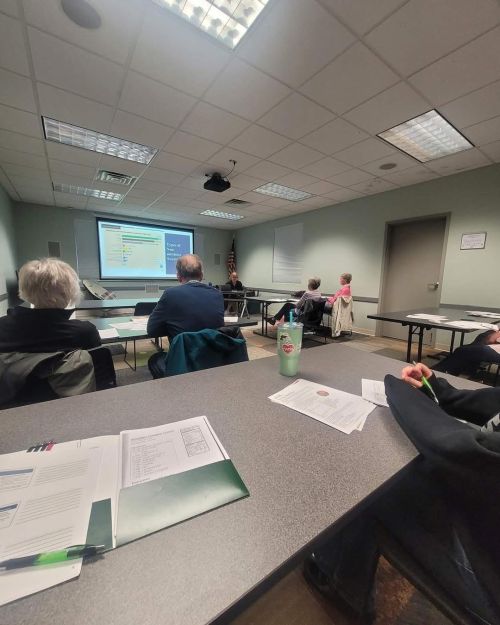
Programs are available in person, online and by telephone, providing different ways for participants to take part in the six-week workshops and making health education accessible to people with different needs and circumstances.
MSU Extension Educator Sheilah Hebert describes how familiar community settings and opportunities for connection can help participants engage with PATH:
“I think people are able to commit to the class when we bring it to places they regularly are like churches, libraries and community centers. I do more (classes) in person because I feel like the community that people find with others suffering with chronic pain and those connections are invaluable.”
MSU Extension also offers both chronic disease and chronic pain self-management education in Spanish through Tomando Control de su Salud and Programa de Manejo Personal del Dolor Crónico. Since 2023, 93 participants have taken part in Spanish-language PATH programming.
MSU Extension bilingual Health Extension Educator Naomi Hyso describes how offering PATH in Spanish helps create opportunities for participants to speak more openly about their health.
“When people can talk about their health in their native language, they can share their actual experiences without a language barrier getting in the way. It turns a standard workshop into a safe, supportive space where they can talk openly about family, food and life.”
The confidence building at the center of PATH’s approach is also reflected in feedback from Tomando Control de su Salud. After participating in a Muskegon County workshop, one participant wrote, “Ahora me siento más segura manejando mi salud con las herramientas que aprendí” (“Now I feel more confident managing my health with the tools I learned.”)
Naomi also points to the importance of being able to practice communicating with healthcare providers in Spanish:
“The action planning and doctor communication pieces are where it matters most. Learning how to advocate for yourself or ask a physician the right questions takes a lot of confidence. Doing this in Spanish gives participants the clarity and tools they need to navigate the healthcare system safely.”
Managing chronic conditions is not only about managing symptoms. It can also be part of maintaining the ability to participate in everyday life.
As the number of Americans living with chronic conditions grows, and as more people navigate multiple conditions at once as they age, supporting health means considering what happens between healthcare visits. Skills for setting achievable personal health goals, communicating about health with others, making decisions, managing symptoms and drawing on support can help people navigate the day-to-day realities of living with chronic conditions.
For MSU Extension, that creates an important connection between evidence-based health education and community engagement, working alongside Michigan communities to make knowledge and resources useful in the places where people live their lives.
Living with a chronic condition can mean making decisions about your health every day. PATH offers a place to learn and practice strategies for navigating those decisions alongside others who understand some of the challenges involved.