Gaming the garden way
 Print
Print Email
EmailPlant-powered play for the budding botanist. A short guide to plant-centric board games from the curator of the Michigan 4-H Children’s Garden.
Game-based learning (GBL) and gamification of education has exploded in popularity. It is relevant to increasing active learning in both formal and nonformal educational settings. After all, learning doesn’t stop when you’ve finished school. Read on in this Michigan State University Extension article to discover the plant-themed board games we love in the Michigan 4-H Children’s Garden and how they help curiosity bloom in learners of all ages.
Nearly anything can be a learning experience, even a home game night with family or friends. Now I know that doesn’t sound particularly exciting to some. Who wants to learn when you are trying to have fun? But I’m here to tell you that good gamification keeps fun at the forefront and the best gamification, well, you probably won’t even realize you are learning along the way.
As a plant scientist and educator, I am constantly trying to get students excited about plants. But when the first thing people think of when you say “nature” is charismatic megafauna (lions, tigers, bears, elephants [oh my]) that can be a bit tough. I cannot begin to tell you the number of adults that I have encountered that do not realize baking flour, chocolate and cotton clothing all come from plants. Plant scientists have named this inability to recognize the plants around us as “plant blindness” or “plant awareness disparity” (PAD): terms meant to describe how modern society has distanced many people from the plants that support their lives.
Gamification is one of many methods in the modern educational toolkit to improve both the learning experience and knowledge retention of students. You don’t need to be extraordinarily creative either. There is no need to design your own game or lesson from scratch (unless you’re a board game geek like me)! There are plenty of board games on the market that help increase botanical knowledge.
Most off-the-shelf board games work best for middle- or high school-age students and above because of their potential for long game length and complex rules. However, there are some games that can be played with upper elementary-aged students. Just keep in mind that the younger a player is, the shorter and simpler a game should be to keep everyone engaged. At the Michigan 4-H Children’s Garden, we aim for approximately 15 minutes for elementary-level activities, 30 minutes for middle school-level activities, and 60 minutes for high school-level activities. Below are a few of my favorites but by no means exhaustive list of plant-centric board games.
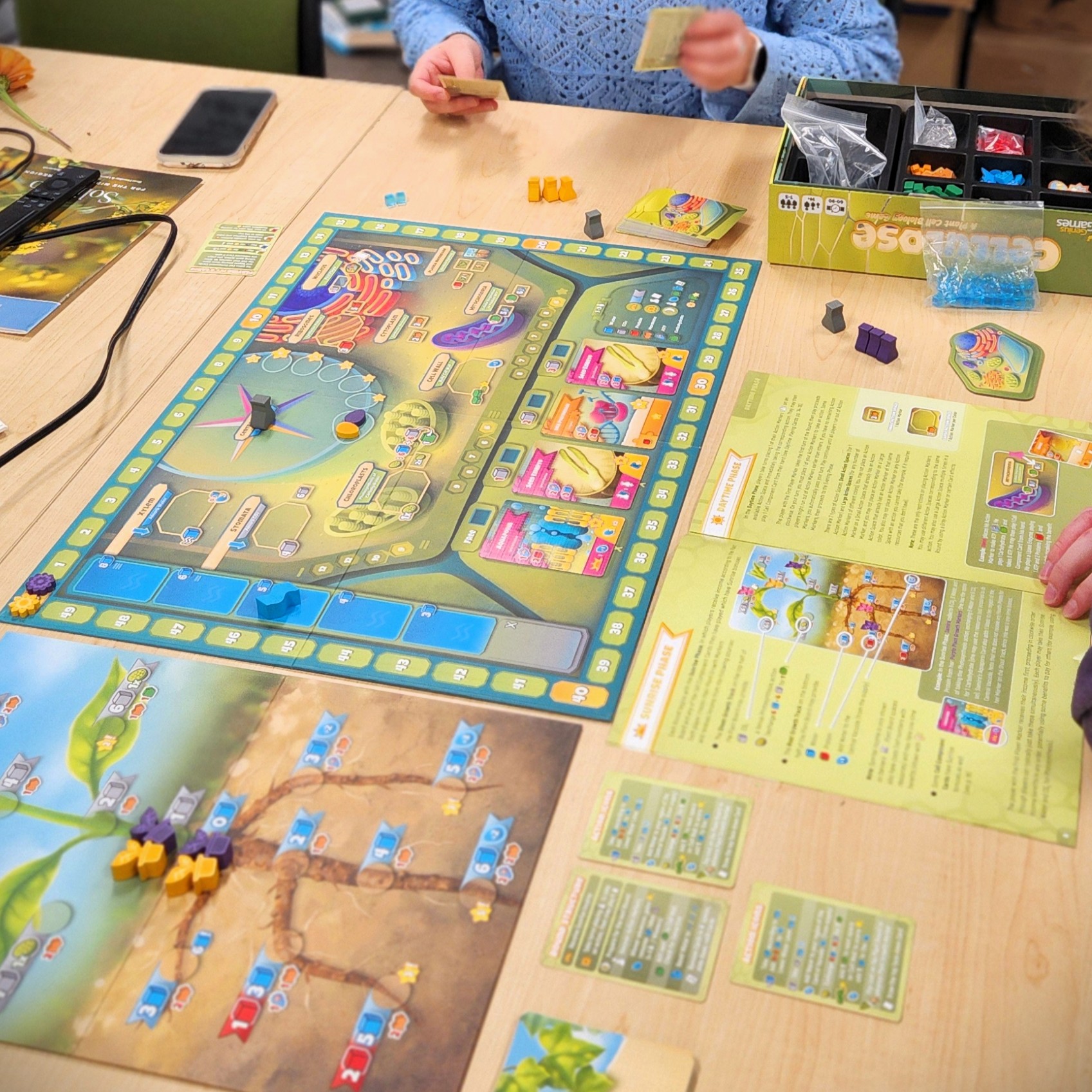
High School+: Cellulose
For plant cell biology I cannot recommend Cellulose enough! Each player is a “worker” within a plant cell competing for resources to complete photosynthesis, produce carbohydrates and build up the cell wall to score points. This can be a bit challenging the first time you play, so having someone that has played before makes it easier and more fun.
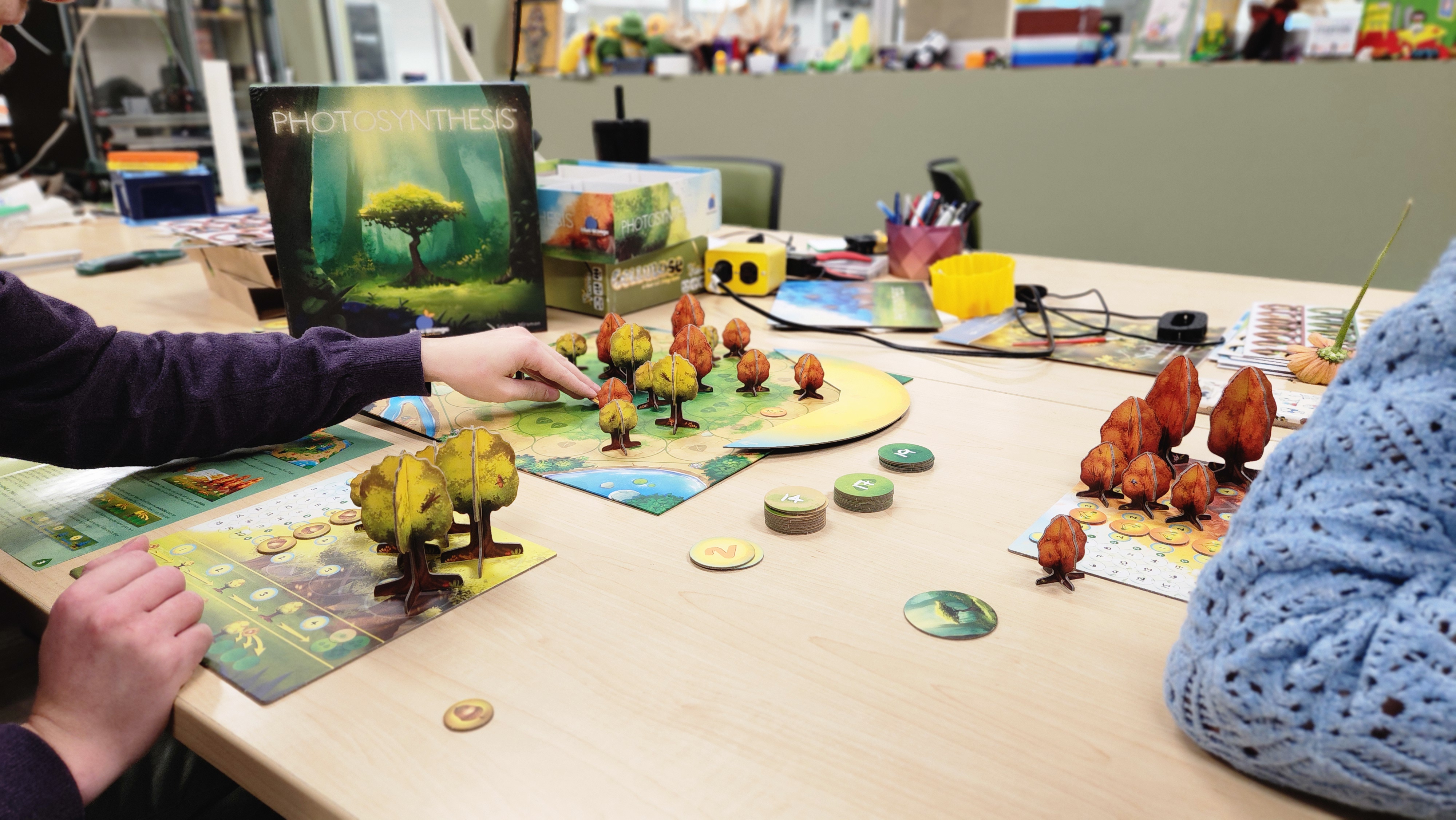
Middle School+: Photosynthesis
Photosynthesis is a beautifully designed game based on real ecological principles like light availability, shade casting and the energy cost of growth. It highlights competition in nature, canopy structure and resource allocation in a way that doesn’t feel like you’re being taught. Plus, it’s easy enough for most middle schoolers and still fun for adults.
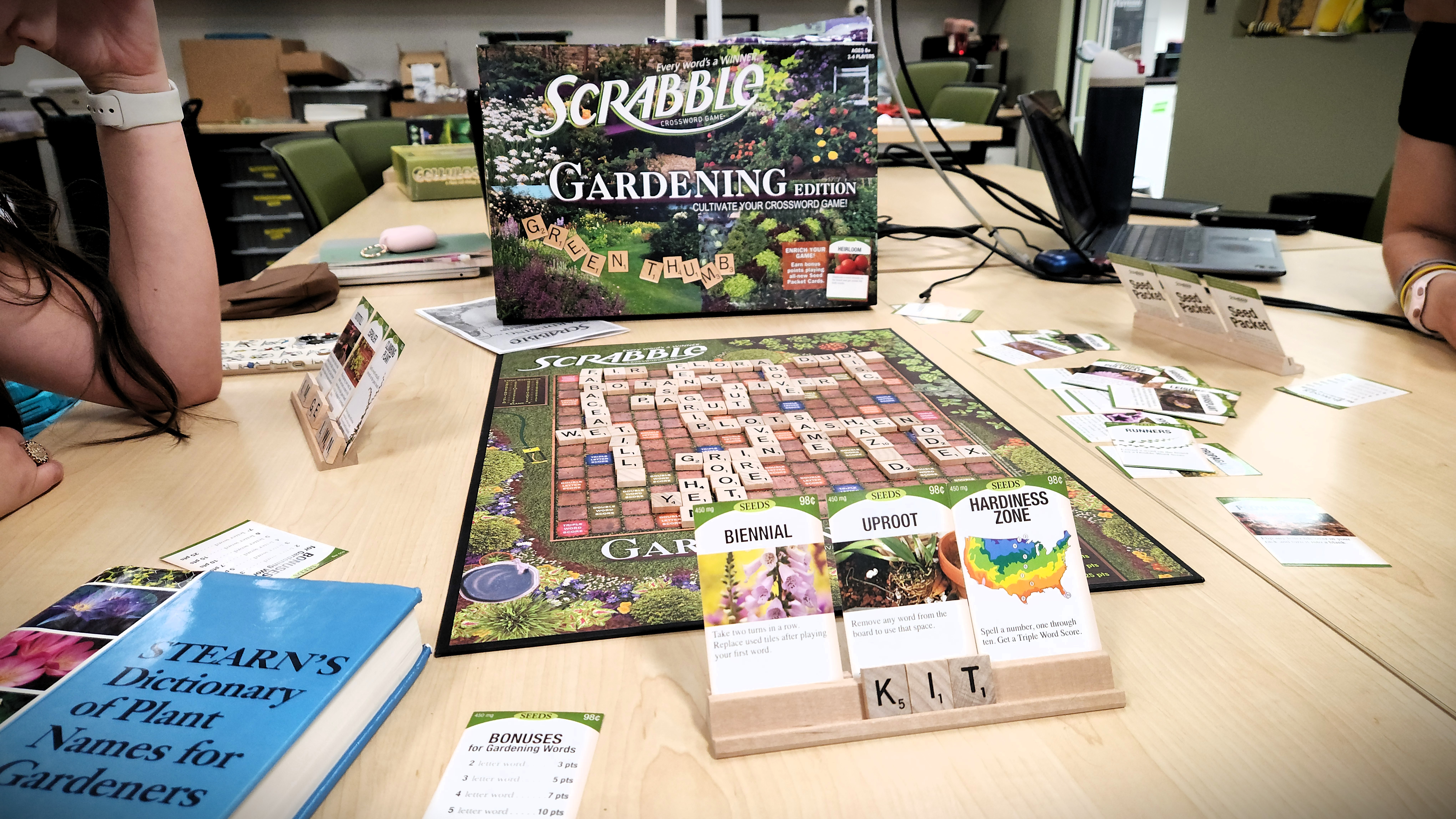
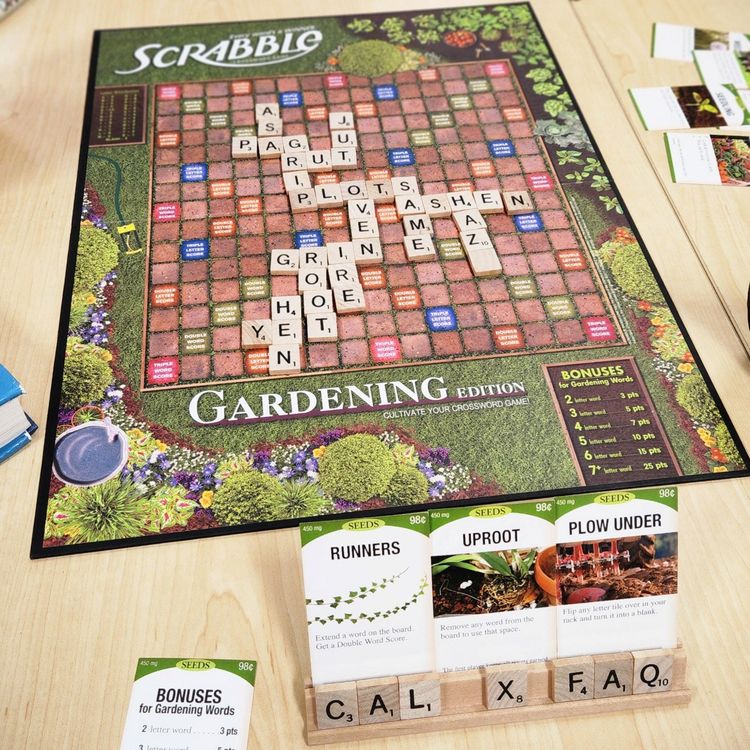
Elementary+: Gardening Scrabble + Plant Vocab Book
Most people have played scrabble at least once in their life. It may not be the most exciting game, but let me tell you they got something right with this version. I’ve been playing this version for years with self-described “not-a-plant” people, and giving them a copy of Harris & Harris’ Plant Identification Terminology, Castner’s Photographic Atlas of Botany or Stearn’s Dictionary of Plant Names for Gardeners to level the playing field. Getting bonus points for having plant-relevant words and allowing acronyms and proper nouns for names of famous gardens, botanists and more really brings a fresh experience to this classic game.
Honorable Mentions: Mycelia & Leaf
While more whimsical than scientific and not technically about plants… Mycelia is an easy fast-paced game about guiding droplets of water through a forest floor to help mushrooms grow. It is surprisingly fun, has beautiful and scientifically accurate art, and is perfect for introducing the idea of fungal networks and the world hidden beneath our feet to nearly all age groups.
Leaf is a cozy, nature‑themed strategy game where you place different leaf shapes to create connections on the forest floor. Each placement triggers small ecological actions like growing mushrooms, attracting animals or gathering seasonal resources which makes the game feel like a gentle puzzle rather than a competition. While not strictly a plant‑science game, it highlights seasonal change, forest diversity and the way organisms share space. It’s easy to learn, the leaves are based on real plants and works well for upper elementary students and older players who enjoy thoughtful, low‑stress gameplay.
Whether you are teaching in a classroom, leading a 4-H club, or looking for a new way to spark curiosity at home, plant-centric board games are a great entry into the world of plants (especially on rainy days!). They turn abstract concepts into tangible objects you can see, touch and play with; often without players realizing how much they are learning along the way. If we want the next generation to be plant-aware, we need to spark curiosity and interest and what better way to do that by making it fun. After all, in the Michigan 4-H Children’s Garden, we believe learning should be as interesting and exciting growing the plants we love.
For more information and examples of game-based learning, improving plant awareness and more, please visit the MSU Extension website.
This information is for educational purposes only. Reference to commercial products or trade names does not imply endorsement by MSU Extension or bias against those not mentioned.