From research orchard to community table: Volunteers help harvest MSU apples for Greater Lansing families
 Print
 Email
Each fall, community volunteers help harvest apples from MSU's tree fruit research orchard for the Greater Lansing Food Bank, connecting agricultural research with fresh food for families across the region.
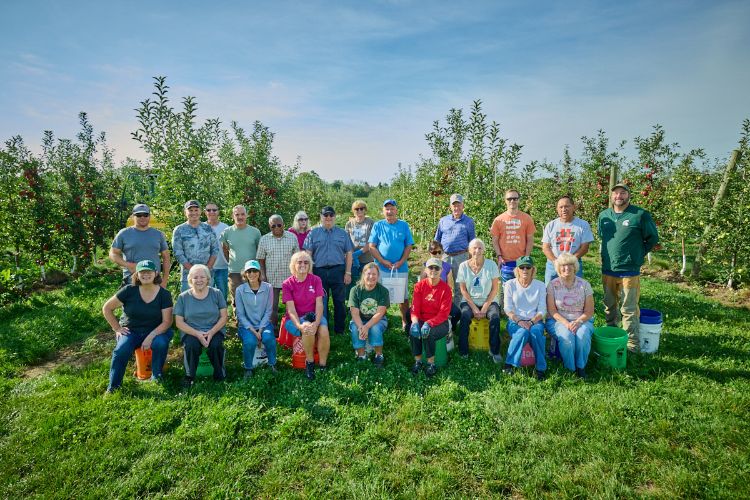
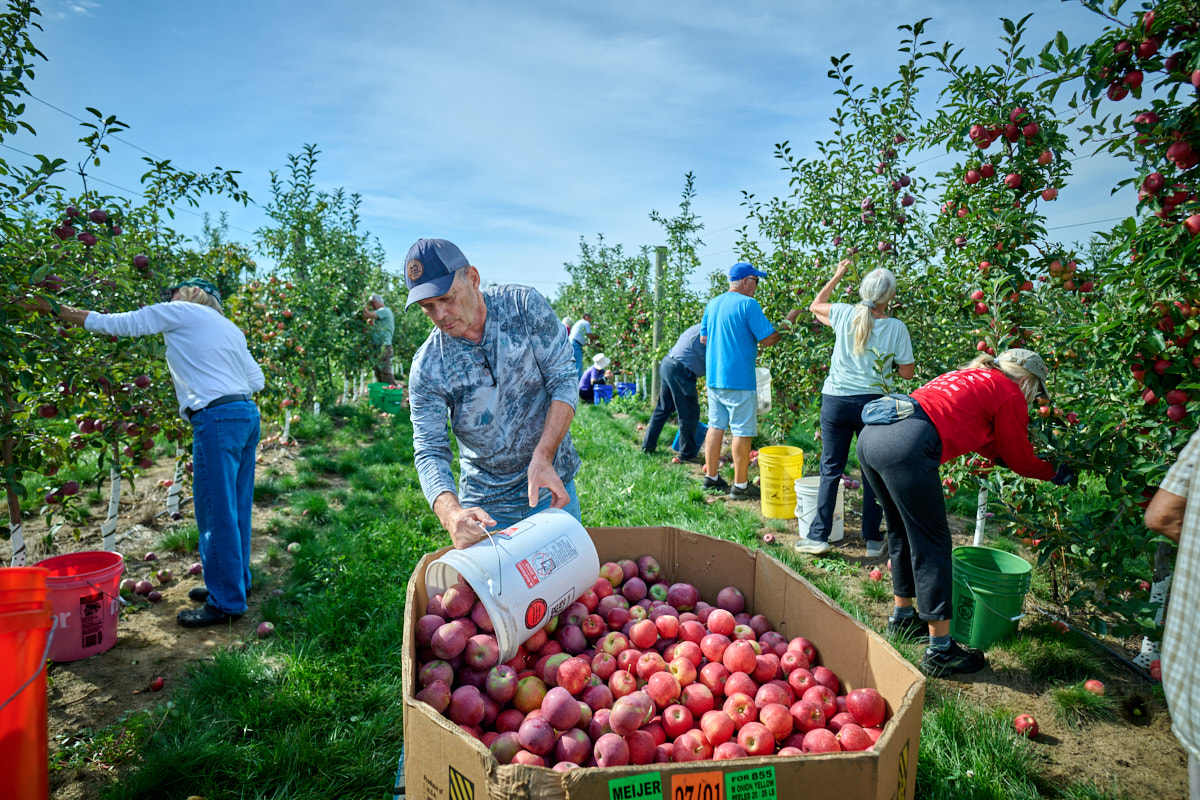
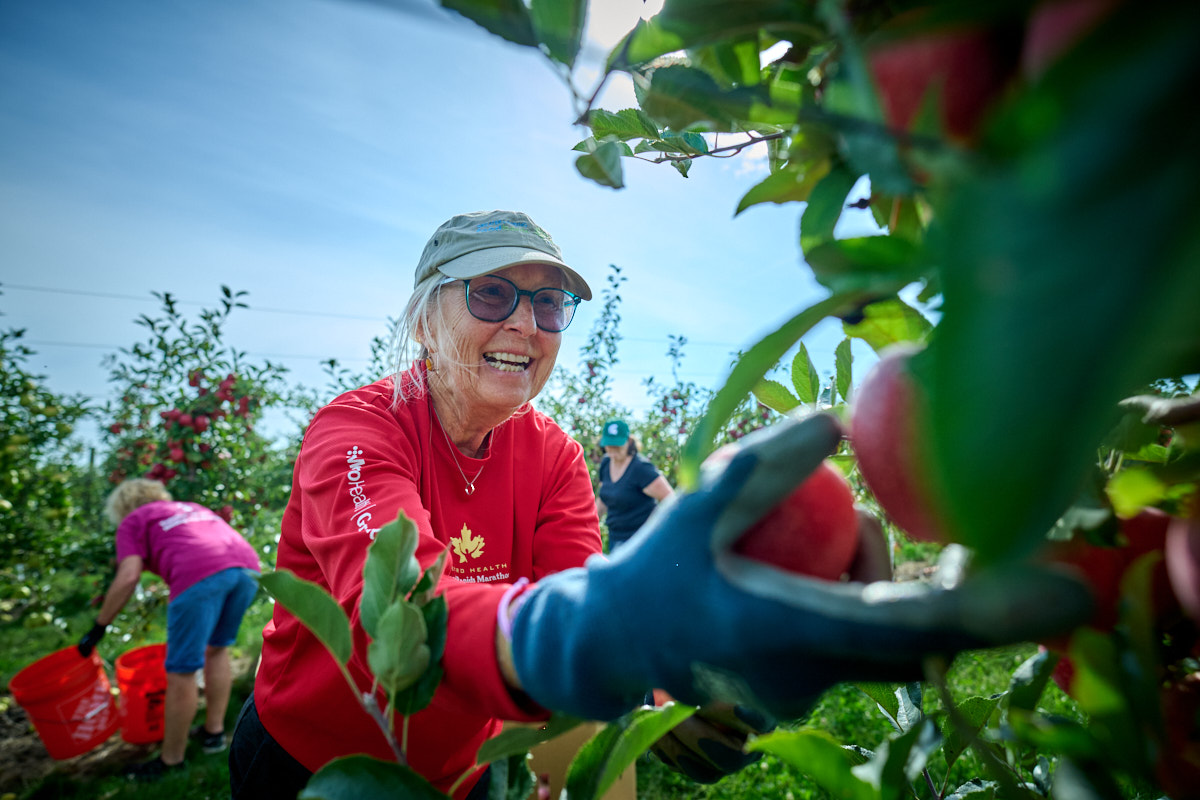
The steady thump of apples landing in buckets echoed through rows of trees as volunteers moved down the orchard, twisting ripe fruit from branches and carrying full loads back to waiting bins.
On a warm October morning, dozens of community members gathered at Michigan State University's tree fruit research orchard with a shared goal: harvest apples that would soon be distributed through the Greater Lansing Food Bank.
For some, the annual harvest is a decades-long tradition. For others, it's a chance to see firsthand how agricultural research connects with the community. For everyone, there is a simple purpose behind the work.
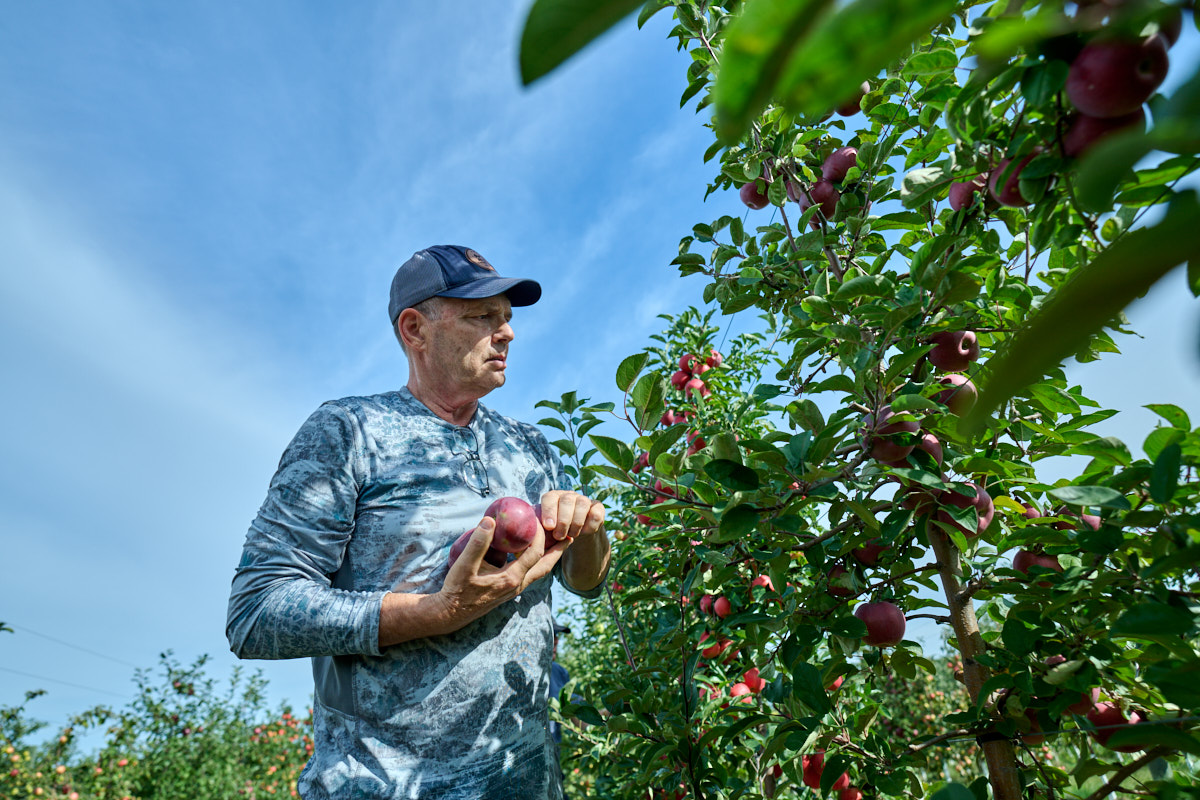
“We're helping to feed people,” said longtime volunteer Jim Arduin. “That's near and dear to my heart because nobody should go without. And if a partnership like this wasn't in place, these apples would just go to waste anyway. So let them do their research. Then, at the end of the year, we get to come in and help the community.”
Where research meets harvest
The orchard's primary purpose is not food production. Located at MSU's Plant Pathology Farm, the trees serve as a living laboratory where researchers study diseases that affect apple production and explore ways to help growers manage them more effectively.
The orchard supports research led by George Sundin, University Distinguished Professor and Extension specialist in the Department of Plant, Soil and Microbial Sciences. His team studies diseases such as fire blight, apple scab, powdery mildew and fruit rots, testing new management strategies and helping growers protect orchards from threats that require active management throughout the growing season.
Cory Outwater, who manages tree fruit disease research activities at the farm, said its location provides an important advantage for disease research. Unlike research sites located in commercial fruit-growing regions, the farm is surrounded by other crops, allowing researchers to work with high populations of plant pathogens without risking nearby commercial orchards.
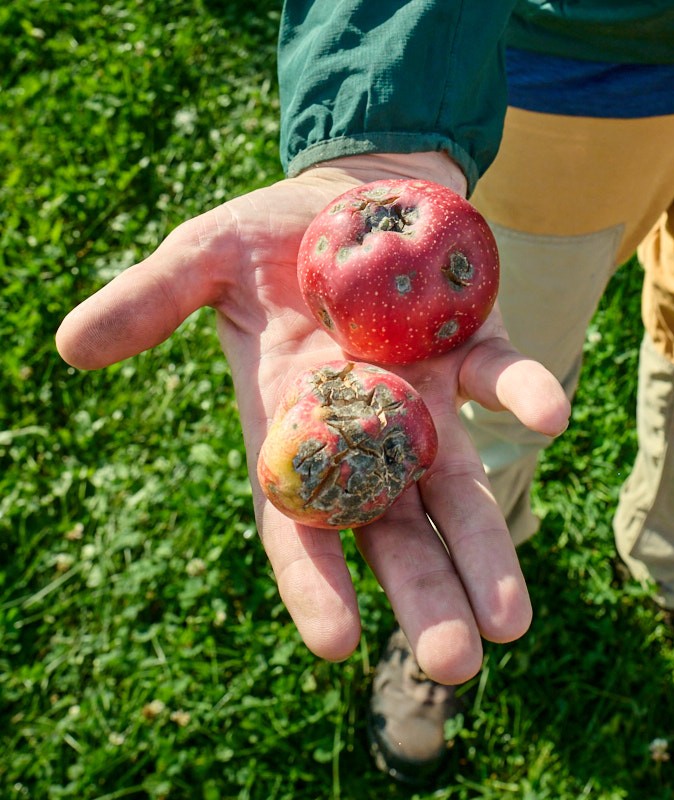 “This farm gives us a unique opportunity,” Outwater said. “We can have these pathogens at really high populations and test control strategies. It allows us to learn about the biology to try to figure out different ways of controlling it here and not have to worry about the growers.”
Research conducted at the site informs disease-management recommendations for fruit growers in Michigan and other fruit-growing regions, including efforts to improve management of fire blight and other common apple diseases.
But once researchers have gathered the data they need, the fruit has served its purpose in the orchard.
That is where the partnership with the Greater Lansing Food Bank comes in. Outwater said the arrangement began with a simple problem: disease research requires buffer trees that cannot be used in research trials every year, leaving an abundance of fruit with no purpose. Previous farm managers worked with the food bank to put that surplus to use in the community.
Today, volunteers gather each September and October to pick apples that are no longer needed for research. The fruit is transported to the Greater Lansing Food Bank, where it is bagged and distributed across the region.
The partnership has evolved over the years. When Outwater took over, the orchard shifted from individual banana boxes to bulk harvesting, allowing the food bank to process larger quantities more efficiently. He estimates the partnership has been in place for close to 50 years.
A harvest with a history
For Jakob Veldhuis, volunteer program manager at the Greater Lansing Food Bank, the annual harvest is one of the organization's most anticipated partnerships.
“Our neighbors love these apples. They look forward to them every year and often comment on how they appreciate having fresh, local produce right in their homes,” said Veldhuis. “We really appreciate the opportunity to work with MSU in this way.”
For some volunteers, the process has become a familiar part of fall.
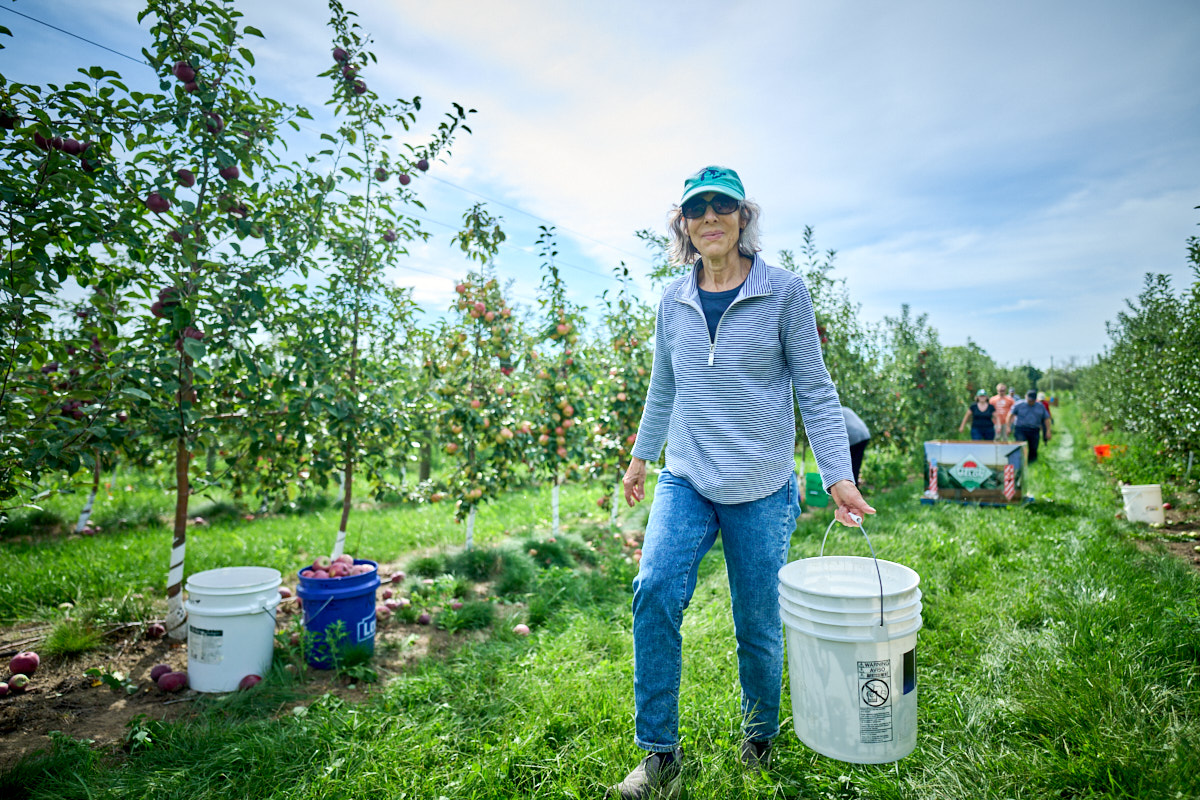
Midge Clemonson has been volunteering at the orchard for 26 years. She first heard about the program while working at a dental office.
“You're out here in nature,” Clemonson said. “You're doing something that's helping people and you just walk away with a great feeling.”
Over the years, many of the volunteers she met when she started have moved on, but Clemonson has kept returning.
“There are so many wonderful people,” she said. “We just have fun.”
Seeing agriculture up close
The harvest also allows volunteers to see agricultural research and fruit production up close.
One example is the orchard's newer high-density plantings, where trees are grown closer together than in traditional orchards. The approach looks different from the widely spaced trees many people associate with apple orchards.
Peter Teholiz, who works in agricultural lending, said the orchard gave him a different perspective on something as familiar as an apple.
“Most people go to a farmer's market or a grocery store and buy apples. You don't really think about what goes into it or how things are done,” he said. “Then to come here and see all this stuff, well, now I understand how and why.”
Arduin also enjoys talking with researchers, asking them about the decisions they make and even for advice about his own apple trees.
“I love being able to talk to the MSU researchers and find out why they're doing things the way they are,” Arduin said. “They educate us. I like learning things.”
Outwater said those conversations offer another way for researchers to connect with the community.
“A lot of the people who come out here had no clue that Michigan even grew much fruit,” he said. “This program gives us valuable time to educate some of the public and shed light on real agricultural practices.”
From orchard to table
For Cheryl Frazier, the harvest offers a chance to see the entire journey of the apples she helps provide.
Frazier began volunteering at the Greater Lansing Food Bank after retiring in 2020. For the past several years, she has helped pick apples at MSU before returning to the food bank to bag and distribute them. She also participates in mobile food distributions, giving her a firsthand view of what happens after the apples leave the orchard.
“When we bag the apples, we know they're going out into the community. When the kids see a bag of apples, their eyes light up. That's the part that really stays with you.”