


Building the Silicon Valley of Packaging: How C3PS Is Bringing Industry and Academia Together
 Print
 Email
NSF-funded center establishes framework for university research to address end-of-life needs of the packaging industry
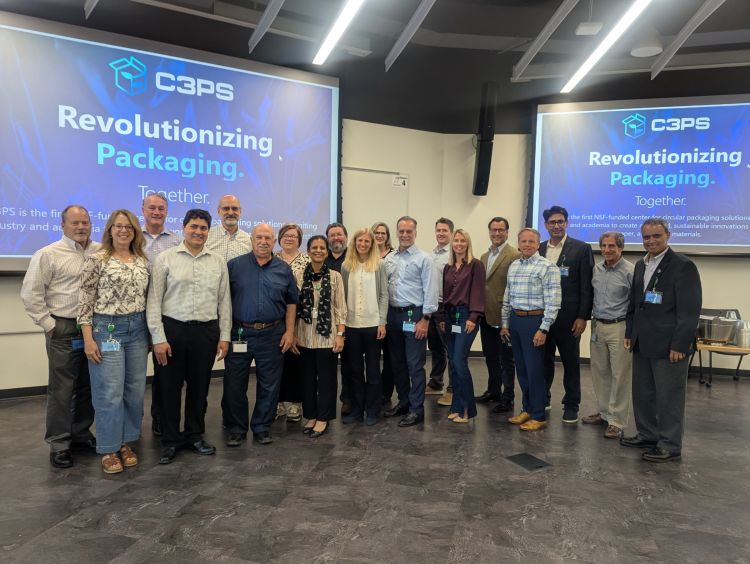
The Center for Plastic, Paper and Hybrid Packaging End-of-Life Solutions (C3PS), launched in April 2025 and led by Michigan State University School of Packaging (SoP), is the first and only NSF Industry–University Cooperative Research Center (IUCRC) dedicated to packaging end-of-life solutions. C3PS has grown in its first 18 months into a national network of 12 universities and more than 40 faculty experts, all working on problems defined by the packaging industry itself.
For member companies, the proposition is direct: pool resources on the fundamental science no single company can justify funding alone, then take the results into their own R&D and turn them into products of their own.
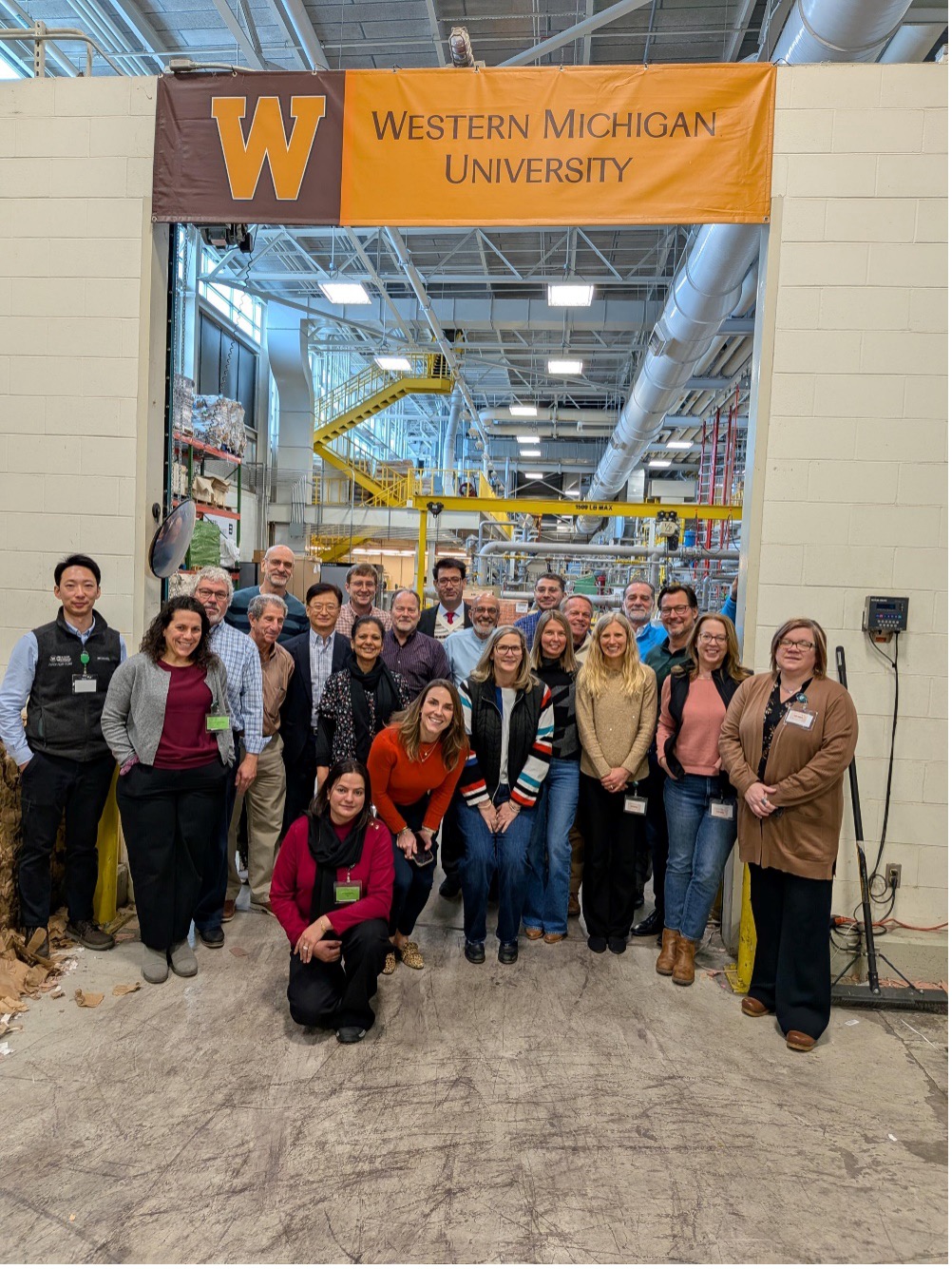
Michigan State University (MSU) serves as the lead university site and Western Michigan University as the initial partner site. The center currently has 10 industry members and is in advanced discussions with six to eight more expected to join by January 2027.
National Science Foundation support helps establish the collaborative research framework for academia and industry, provides center oversight and institutional support, and creates opportunities for the center to expand through additional university research sites to bring complementary expertise.
Industry members provide annual membership contributions that fund the shared research portfolio. Under the NSF framework, at least 90 percent of membership contributions directly support research. Companies participate in the full shared portfolio rather than paying separately for each individual project.
University partners contribute specialized faculty expertise, laboratories, instrumentation, pilot-scale capabilities, and research infrastructure.
“I describe C3PS as a once-in-a-generation opportunity for the packaging industry to benefit from federal investment in shared research infrastructure,” said C3PS Director Muhammed Rabnawaz, Ph.D. “I often compare this to public infrastructure. Companies depend on functioning roads, but it would make little economic sense for each company to build its own road network. Similarly, the packaging industry needs a shared scientific foundation upon which companies can build their own competitive innovations.”
The C3PS Mission
“C3PS is not another conventional academic research center. It is a strategic innovation platform designed to solve problems that no individual company can efficiently solve alone,” said Rabnawaz, a professor in the SoP.
C3PS was established in response to the growing need that sustainable packaging requires coordinated solutions extending beyond the capabilities and commercial interests of individual companies.
The research collaboration will establish fundamental science and engineering needed to create safer, more sustainable, and economically viable circular packaging solutions. Research focuses on plastic, paper, fiber-based, and hybrid packaging materials, with particular attention to their performance, recyclability, biodegradability, compostability and end-of-life management.
“Ultimately, our mission is to generate science and processes that enables technologies that industry members can transform into commercial innovations while advancing U.S. competitiveness in sustainable packaging,” Rabnawaz said. “While also developing the next generation of scientists and engineers through hands-on training on real industry challenges and benefit from the acumen of the industry mentors.”
Benefits for industry partners
Pregis, LLC, a leading global provider of innovative protective packaging materials and systems, was one of the first industry partners in the C3PS network. With over 30 facilities across North America, manufacturing operations in Europe, Pregis continues to scale with the growing demand for more sustainable packaging solutions.
Tom Wetsch is Chief Innovation Officer at Pregis and serves as the Chairperson of the C3PS Industry Advisory Board. In addition to his contributions to C3PS, Wetsch supports MSU as a member of the MSU School of Packaging Advisory Board, which assists MSU graduates with their transition to the professional world.
“C3PS allows members early access to research, the capability to steer the research priorities, engagement with the professors working on the research, ability to hire those people after they graduate, and ability to really collectively fund things that would never get out of the university system, due to funding limitations,” Wetsch said. “This is an opportunity for industry to be driving the ideas that university researchers have the skills to make a reality.”
Packaging must protect products, preserve food quality and safety, and remain economically and technically feasible. At the same time, the industry must address increasing concerns about packaging waste, environmental impacts, recycling and material recovery.
“Corporate R&D teams are primarily responsible for developing proprietary technologies, differentiated products, and competitive advantages for their companies. It is difficult to justify using those resources to solve fundamental scientific and systems problems whose solutions may benefit the entire industry,” Rabnawaz said.
The NSF award established the center's foundational scientific mission, bringing together expertise in packaging, polymer science, paper and fiber engineering, manufacturing, recycling, biodegradation, environmental assessment, predictive modeling, and related fields. However, an important feature of the NSF-IUCRC model is that the specific research agenda is primarily driven by industry members.
Industry members identify the scientific challenges that matter most to their businesses, and researchers develop proposals to address those challenges. Faculty across the growing national network then develop research proposals addressing those industry-defined challenges. Industry members evaluate the proposals and participate in selecting projects for funding according to the center's governance procedures set by the NSF.
"Pregis has gained not only valuable insights but also meaningful influence on research that drives innovative packaging solutions we can apply to our future portfolio,” Wetsch said.
Once projects begin, industry members remain engaged through technical mentoring, research reviews, progress reports, and two annual Industry Advisory Board meetings.
“The C3PS model works well. We meet twice a year, and the researchers will come and present these research opportunities. We're voting on them, and so collectively the industry members are deciding the priorities,” Wetsch said. The resulting discoveries, research findings, and intellectual property are made available to members for royalty-free non-exclusive licensing in accordance with the center's membership agreement and bylaws.
What the University-Industry Model provides
Unlike a conventional university research program in which faculty independently select research topics, C3PS begins by asking member companies what fundamental scientific and technical problems they need solved.
“Each year, typically in late January or early February, we bring our industry members together to identify their priority challenges,” Rabnawaz said. “Our leadership team consolidates these challenges into research priorities and returns them to members for review, additional input, and ranking. This ensures that participating companies have meaningful opportunities to influence the research agenda before university researchers submit proposals.”
What makes the opportunity particularly significant is that C3PS can bring together complementary intellectual expertise and technical capabilities from leading universities and programs across the United States through one coordinated national research platform.
The network has grown to 12 participating universities and more than 40 faculty experts, most recently adding North Carolina State University and Auburn University's Alabama Center for Paper and Bioresource Engineering.
Expanding industry membership
Growing industry membership will allow C3PS to conduct more research, solve more problems, and deliver greater value to participating companies. C3PS received more than 30 proposals and funded ten projects, representing approximately $800,000 in research investment in the first year.
The center’s ten active projects fall into three areas.
- High-performance circular materials, such as oxygen barriers that keep working at high humidity without sacrificing recyclability.
- Recovery of paper, fiber and hybrid packaging. Work here includes PFAS-free barriers for molded fiber, compostable paper coatings, and a science-based coated-paper recycling protocol now advancing toward larger-scale trials.
- Focus on the reliability of recycled content and on packaging optimization. Projects use artificial intelligence to predict the quality of recycled PET, apply mechanics-guided design to lightweight corrugated packaging, and use life-cycle assessment to identify ways to reduce carbon footprints.
“We have 10 companies in the group right now contributing proposals and funding, so if we could triple that or quadruple that, it means more dollars coming in for research and more research projects being delivered to industry,” Wetsch said. “I think we have a good selection process, and we also have a good roadmap to produce results. We want to continue to bring in even more companies, because it's not really a competitive landscape. C3PS is not about competition. It’s about opportunity from a circular packaging perspective.”
Wetsch said the beauty of the program is seeing three or four competitors looking for some of the same solutions to problems they all have. Each company can then capitalize on the research findings in their own way. “It’s fundamental research, but you have to then go commercialize it, so, I think having more members will bring more funding and accelerate the findings coming out of the lab.”
For a standard annual membership investment currently set at $50,000, companies gain access to a shared research portfolio, can help steer research priorities, and benefit from the intellectual and technical capabilities of a growing national university network. As membership grows, the program has the capacity to expand the research portfolio toward approximately 20 or more active projects annually.
“We do not want to expand simply for the sake of increasing membership numbers. Our priority is ensuring that the center continues delivering meaningful value to every member. More members should mean more relevant science, faster scientific progress, and greater opportunities for commercial innovation—not simply a larger organization,” Rabnawaz said.
Workforce Development

The packaging industry has relatively few educational programs dedicated specifically to packaging science and engineering, Rabnawaz said. However, many of the scientific skills required for packaging innovation also exist in other disciplines, including polymer chemistry, chemical engineering, materials science, paper engineering, manufacturing, environmental science, and data science.
C3PS is connecting these disciplines through a growing national research network.
Students work on real challenges identified by industry rather than purely academic research questions. They receive hands-on experience in material synthesis, polymer processing, paper manufacturing, barrier testing, recycling, biodegradation, material characterization, and environmental assessment.
C3PS provides a direct connection between university researchers and companies looking for highly trained scientists and engineers. Through center-funded projects, undergraduate students, graduate students, and postdoctoral researchers develop experience solving real technical challenges that companies are actively facing.
Industry members have opportunities to observe these researchers over time through project meetings, technical mentoring, research presentations, and poster sessions. Companies can develop relationships with emerging researchers who are already working on problems relevant to their businesses.
C3PS researcher moves into industry
Syeda Hamdani, Ph.D., started working with Rabnawaz as a research fellow while she completed her doctoral program in Chemistry. As a research fellow, she focused on coating formulation development for paper coatings and formulation optimization and testing to evaluate the performance of coated papers.
After graduation, Hamdani came to MSU to serve as a research associate, leading a C3PS-funded project titled "Development of Standardized and Economically Feasible Recycling Methods for Emerging Coated Paper Technologies."
“I felt this work was particularly important because the packaging industry is moving toward paperization as a sustainable alternative to conventional plastics, with increasing emphasis on recyclability and circularity,” Hamdani said. “I felt we were contributing to a real industry need by helping make sustainable paper packaging not only functional but also recyclable at the end of its life.”
Hamdani now works as a Lead Application Engineer at Henkel, a C3PS industry member. Her role focuses on translating optimized formulations into practical, scalable solutions and ensuring consistent coating performance under real production conditions.
“At MSU, I gained hands-on experience in coating formulation development, paper packaging, and barrier performance testing. Later, working with C3PS, I developed project management, leadership, student mentoring, and industry collaboration skills,” Hamdani said. “One of the most valuable experiences was learning how to translate laboratory research into practical solutions while considering industry requirements. These experiences prepared me for my current role as a Lead Application Engineer at Henkel.”
What's next for C3PS?
Over the next year, C3PS aims to grow to about 30 member companies and add at minimum 3 additional university research sites, strengthening capabilities in both paper and plastics manufacturing. Within two to three years, the center’s goal is for at least five member companies to introduce products or technologies enabled by C3PS research.
The longer-term target is for 30–40% of members to achieve at least one commercialization outcome. By 2035, Rabnawaz envisions a network of 16–20 universities that has trained hundreds of students and postdoctoral researchers for the industry.
For companies considering membership, timing matters. The next round of research priorities will be set in early 2027, so companies that join by mid-January 2027 can help shape upcoming research plans.
"I envision C3PS becoming the Silicon Valley of packaging—a national hub where the country's leading scientific expertise, advanced research capabilities, and industry stakeholders come together to solve problems that no company can solve alone,” Rabnawaz said. “Our success will be measured not by how many research papers we publish or how many members we recruit, but by how many companies turn our science into successful innovations and products, how many future industry leaders we train and how much we contribute to making packaging safer and more sustainable.”
Learn more at c3ps.org.


