2025 Farm Bill Program payment estimates available
 Print
Print Email
EmailDoes PLC or ARC-CO offer more support in your county?
This October, many Michigan farms will receive the first Farm Bill program payments for corn and soybean acres harvested in 2025. As part of H.R.1., the One Big Beautiful Bill Act (OBBBA), the Price Loss Coverage (PLC) and Agricultural Risk Coverage (ARC) programs were revamped to improve payment potential. As part of the OBBBA, farms will automatically receive the higher of the PLC or ARC payment rates. With pricing data recently finalized by USDA, payments can be estimated to identify which program may offer more support.
Background on Price Loss Coverage vs. Agricultural Risk Coverage
PLC focuses on price losses by comparing the market-year average (MYA) price against a statutory or effective reference price, whichever is higher. If the market price is lower than the reference price, a payment will be issued. For the 2025 payment, the effective reference price is $4.42 per bushel on corn and $10.71 per bushel on soybeans. The 2025 MYA prices are $4.15 per bushel for corn and $10.50 per bushel for soybeans.
ARC-CO focuses on a combination of benchmark prices and county yields to calculate a guaranteed revenue. If the final MYA price or county yields are low enough to bring actual county revenues below the benchmark revenue value, a payment will be issued. Benchmark price is $5.03 per bushel for corn and $12.17 per bushel for soybeans.
Both PLC and ARC-CO payments are made on 85% of base acres and subject to a 5.7% budget sequestration reduction. They also use an Olympic five-year average to determine the effective reference price and guaranteed revenue. The 2025 payment is expected to be the first in a potential three-year window where both Price Loss Coverage and Agricultural Risk Coverage will issue payments. In prior years, neither program provided steady payments for either crop. However, when payments were made, they were often received from ARC-CO.
Program payment estimates
On September 30, 2026, the 2025 market-year average (MYA) prices were finalized and published alongside final county yields have been made available.
Using the information from USDA, Kansas State University has created two maps that illustrate the estimated programs for both PLC and ARC-CO (county). Michigan maps are available for PLC by each crop and ARC-CO by crop and yield designation (all, irrigated, or non-irrigated acres). For each map, estimated payment rates for individual counties can be viewed by clicking on a specific county. To view the maps, visit: https://www.agmanager.info/national-arc-county-20252026-estimates
Using the estimated payment information, Figures 1-4 were created by MSU Extension to illustrate which payment rate is expected to be the highest in each county, based on crop type and yield designations. Note: counties that do not track irrigated and non-irrigated acres are grouped in with the non-irrigated counties below.
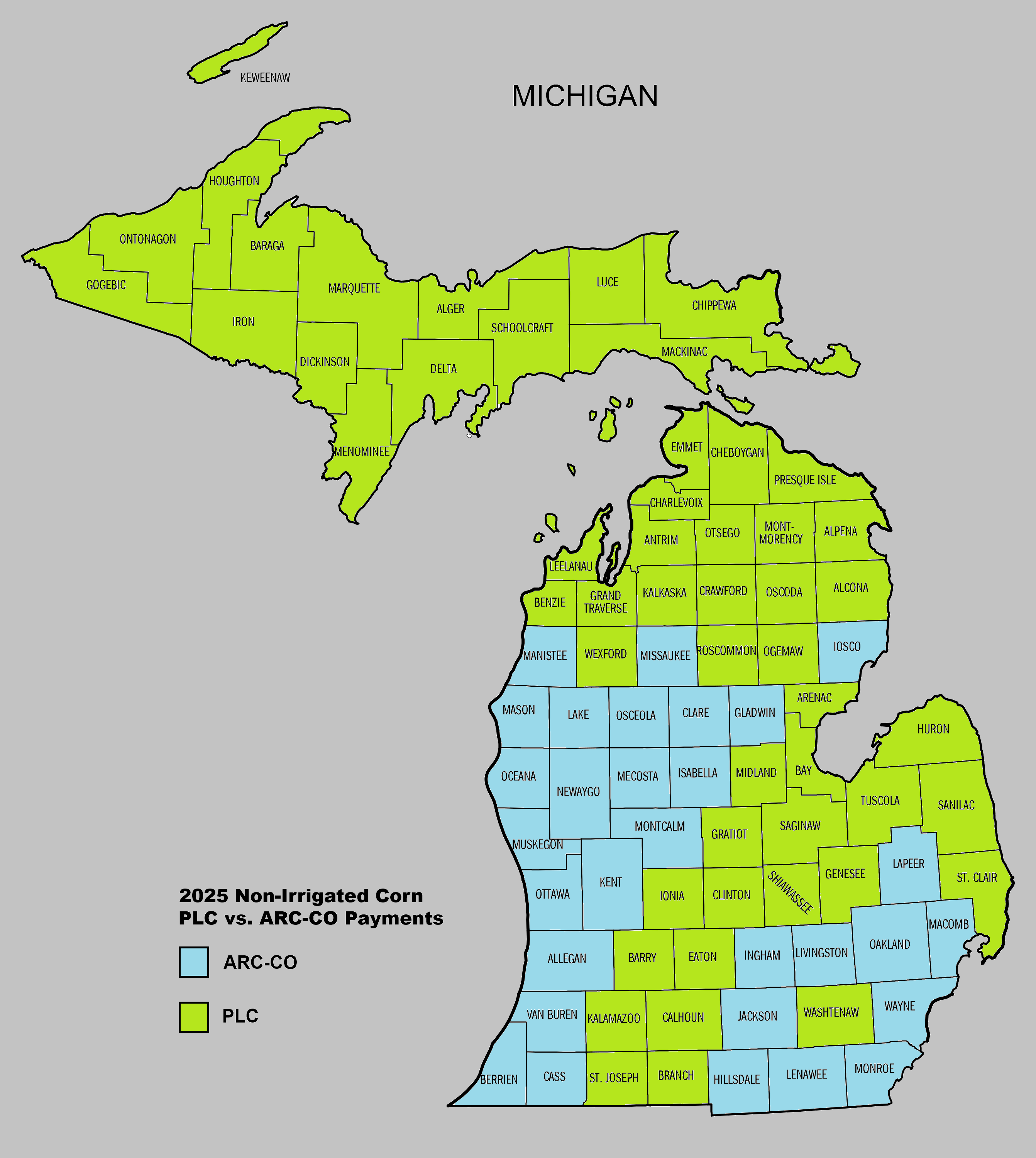
Figure 1 illustrates that the majority of counties with non-irrigated or “all” corn designations are estimated to receive the highest payment from PLC. The ARC-CO program still provides a payment to 31 counties, where yield losses were significant.
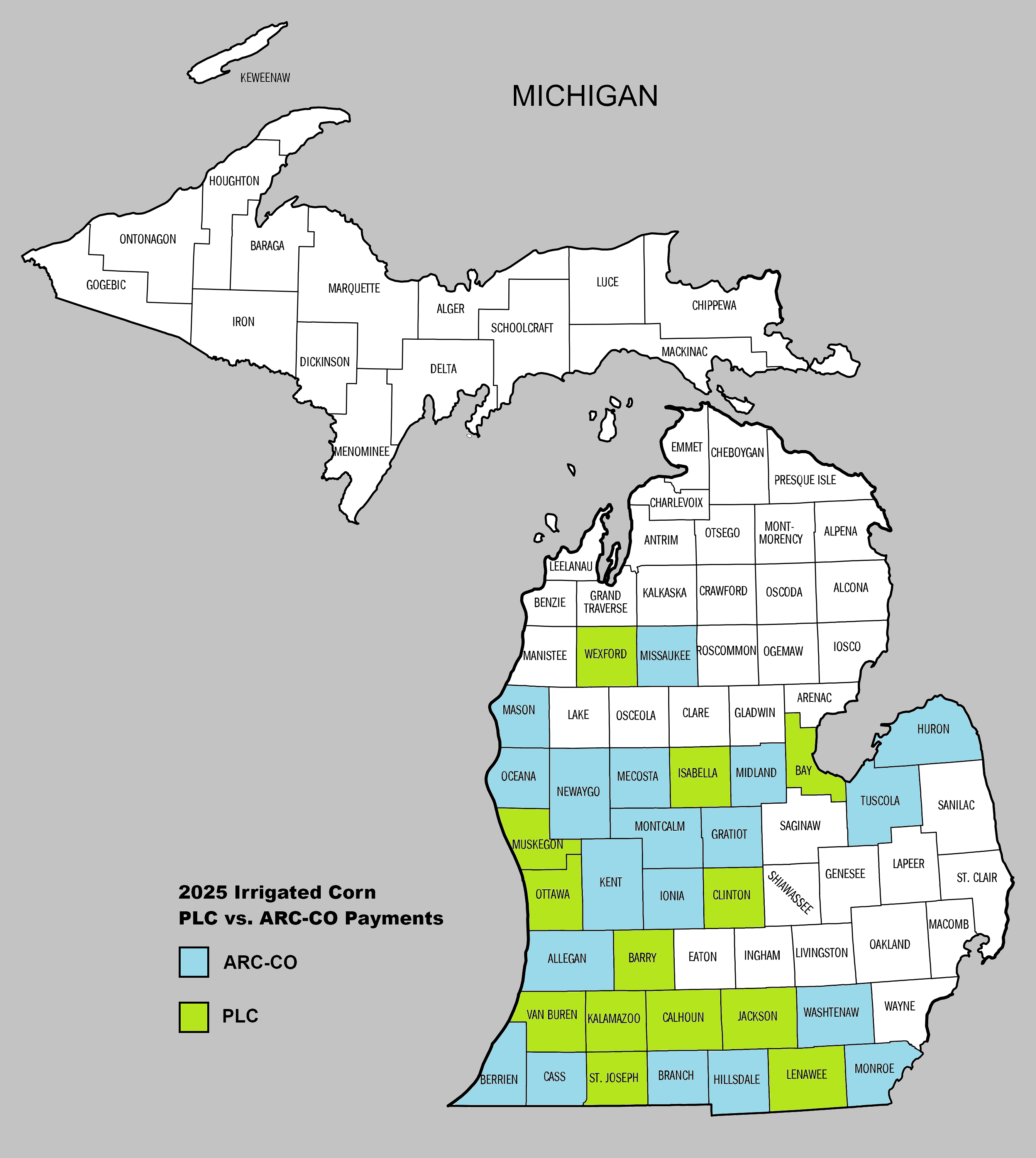
Figure 2 illustrates that 20 counties with irrigated corn designations are estimated to receive the highest payment from ARC-CO. However, the PLC program is still estimated to provide a payment for 12 counties, where yield losses were not significant.
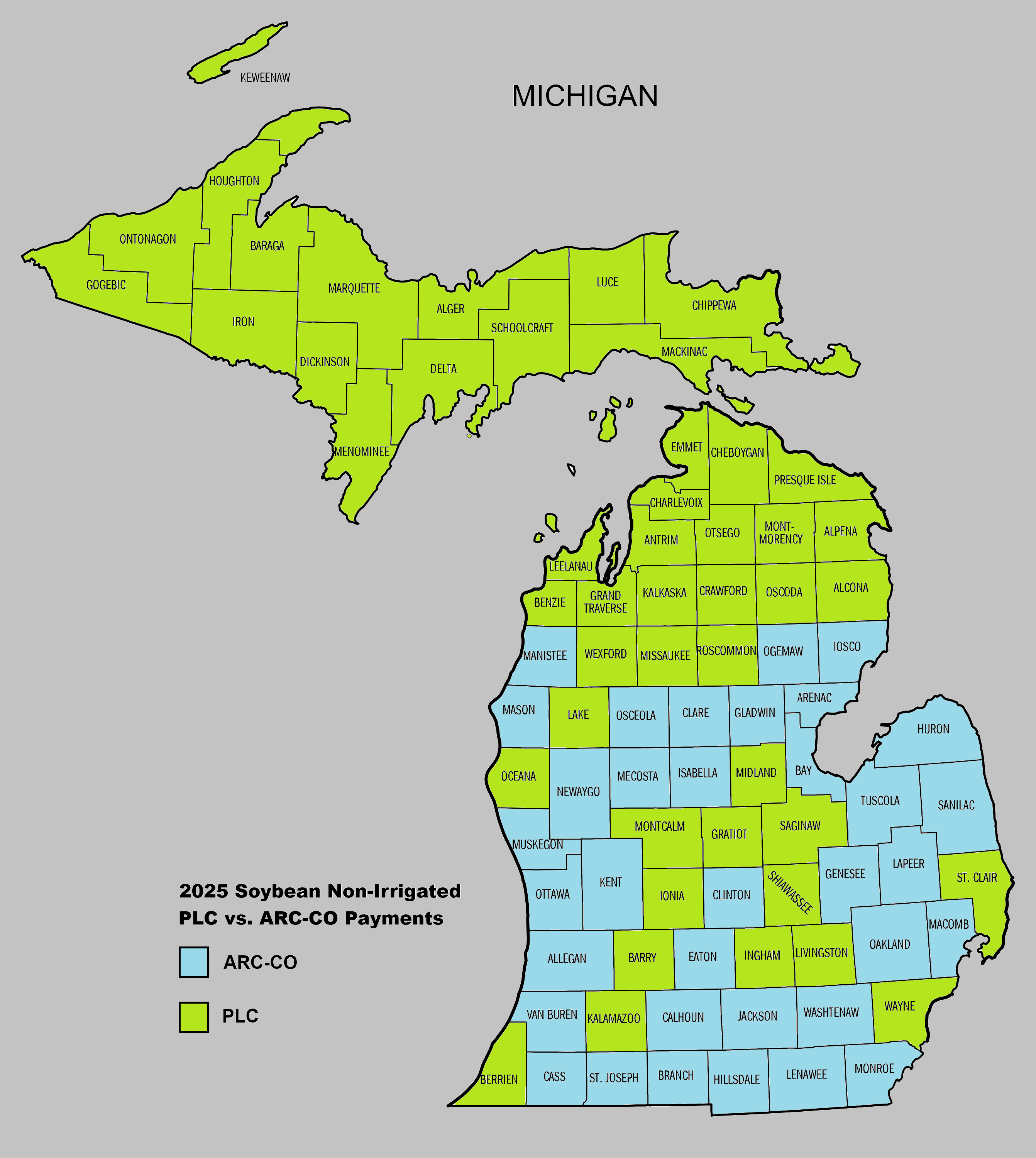
Figure 3 illustrates that the majority of counties with non-irrigated or “all” soybean designations are estimated to receive the highest payment from PLC. The ARC-CO program still provides a payment to 34 counties, where yield losses were significant.
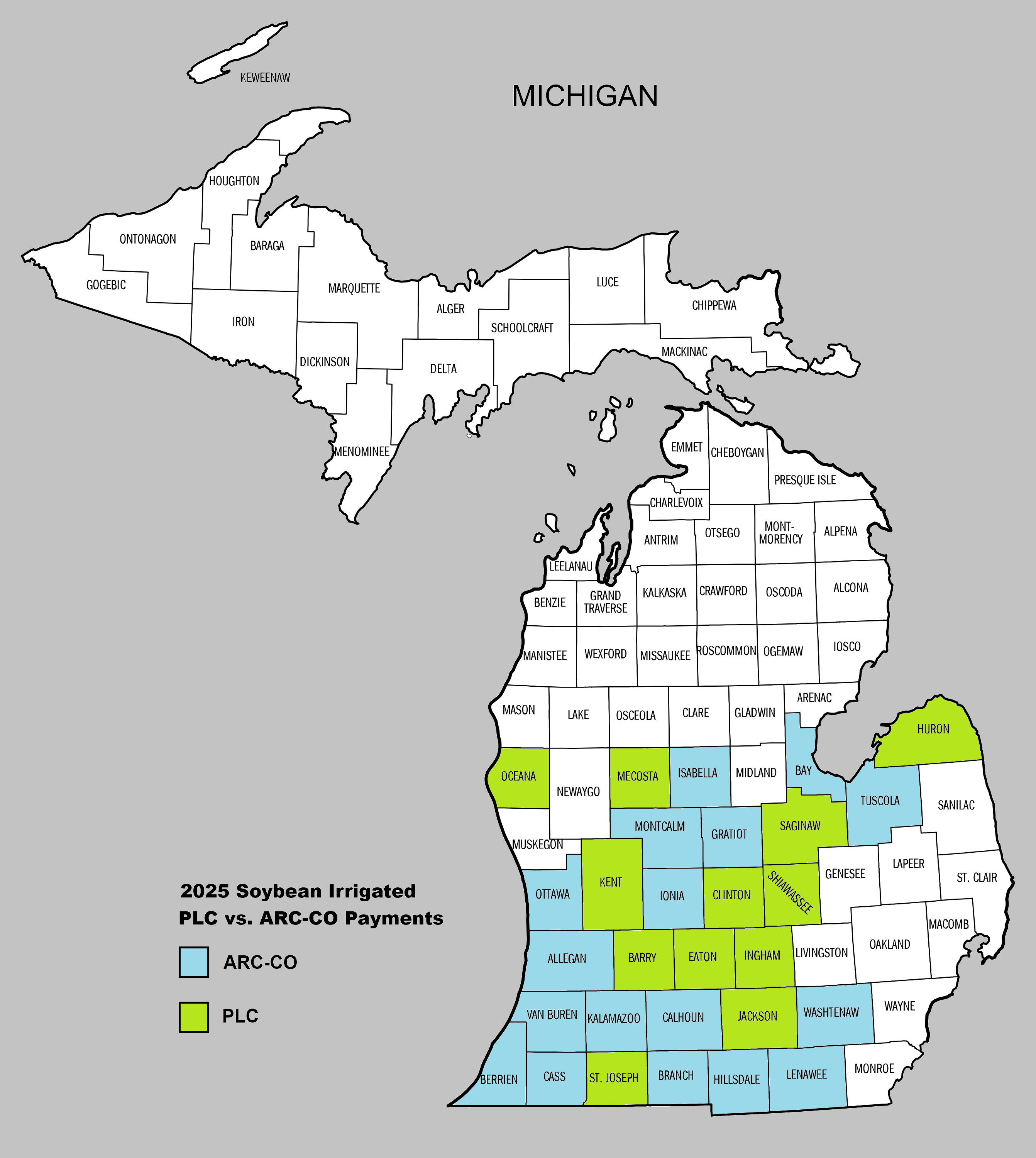
Figure 4 illustrates that 17 counties with irrigated soybean designations are estimated to receive the highest payment from ARC-CO. However, the PLC program is still estimated to provide a payment for 13 counties, where yield losses were not significant.
Looking ahead to 2026 Program Decisions
Farms received the benefit of the higher payment between the two programs based on the timing of when the OBBBA was passed. For the 2026 program year and moving forward, farms will have to select either PLC or ARC-CO on a yearly basis for each of their farms.
The 2026 program sign-up was opened on September 16, 2026, after being delayed in order to complete the base acre allocation process. Sign-up will conclude on December 11, 2026. One advantage of the late sign-up period is that farms will have some idea of potential county yields based on harvest conditions.
Producers need to be aware that sign-up is required in order to receive any potential payments. Per USDA, “if producers do not submit their 2026 election by Dec. 11, 2026, their election remains the same as their 2025 election for crops on the farm, and the farm is ineligible for payments for the 2026 program year.”
Combining harvest conditions with Figures 1-4 can offer an important look at which programs may offer higher payment rates and risk protection for your farm. For example, non-irrigated corn acres in Huron County saw a higher payment rate from PLC in 2025 (Figure 1). If market prices and county yields for 2026 appear to be similar, signing up for the PLC program would be a logical choice for farms in that county.
For a more comprehensive look at potential program payments, the MSU Extension Farm Bill Analyzer helps showcase which programs may produce the most benefits for a producer’s individual needs.
To aid farms in making their Farm Bill sign-up decision, MSU Extension will be hosting a webinar program to walk through decision options. The Farm Bill Program Decisions: What Fits Your Farm? webinar program will be held on Thursday, November 5 at 1:00 PM and focuses on corn, soybeans, and wheat crops. Participation in the Farm Bill webinar is free, but registration is required. To register today, visit: https://pears.io/events/msuext/10717/.